

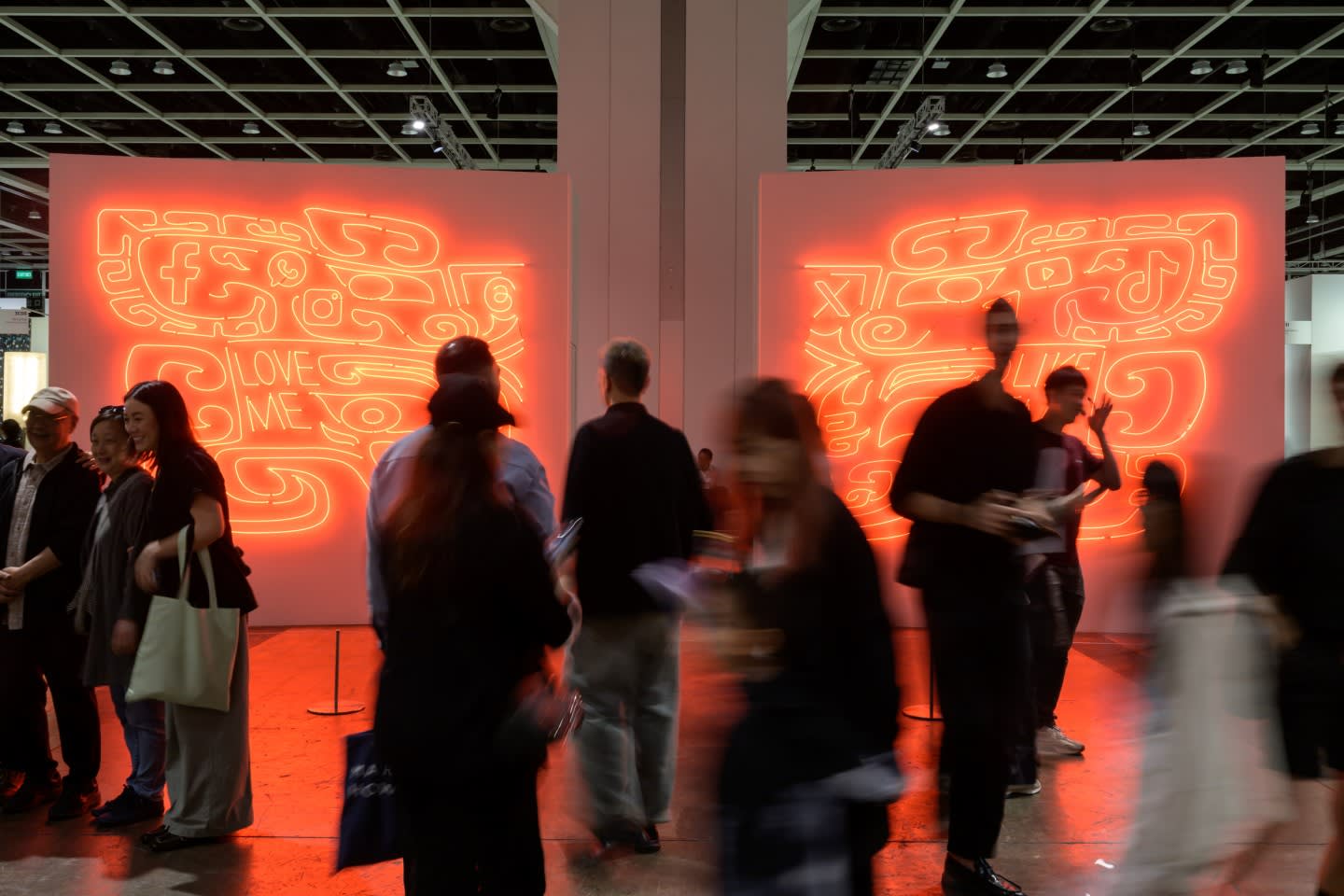
From AI to tradition, Art Basel’s cross-generational outing had something for everyone.
Art Basel 2026 officially wrapped yesterday, leaving us with 91,500 pairs of tired feet and a surprisingly hopeful outlook on the ‘state of the soul’.
If 2025 was the year of ‘wait and see’, 2026 was the year of ‘look closer’. There was less shouting and more whispering, a nuance that felt earned in a world that usually prefers its art loud and speculative.
Here are some of the pieces that garnered our attention this year.
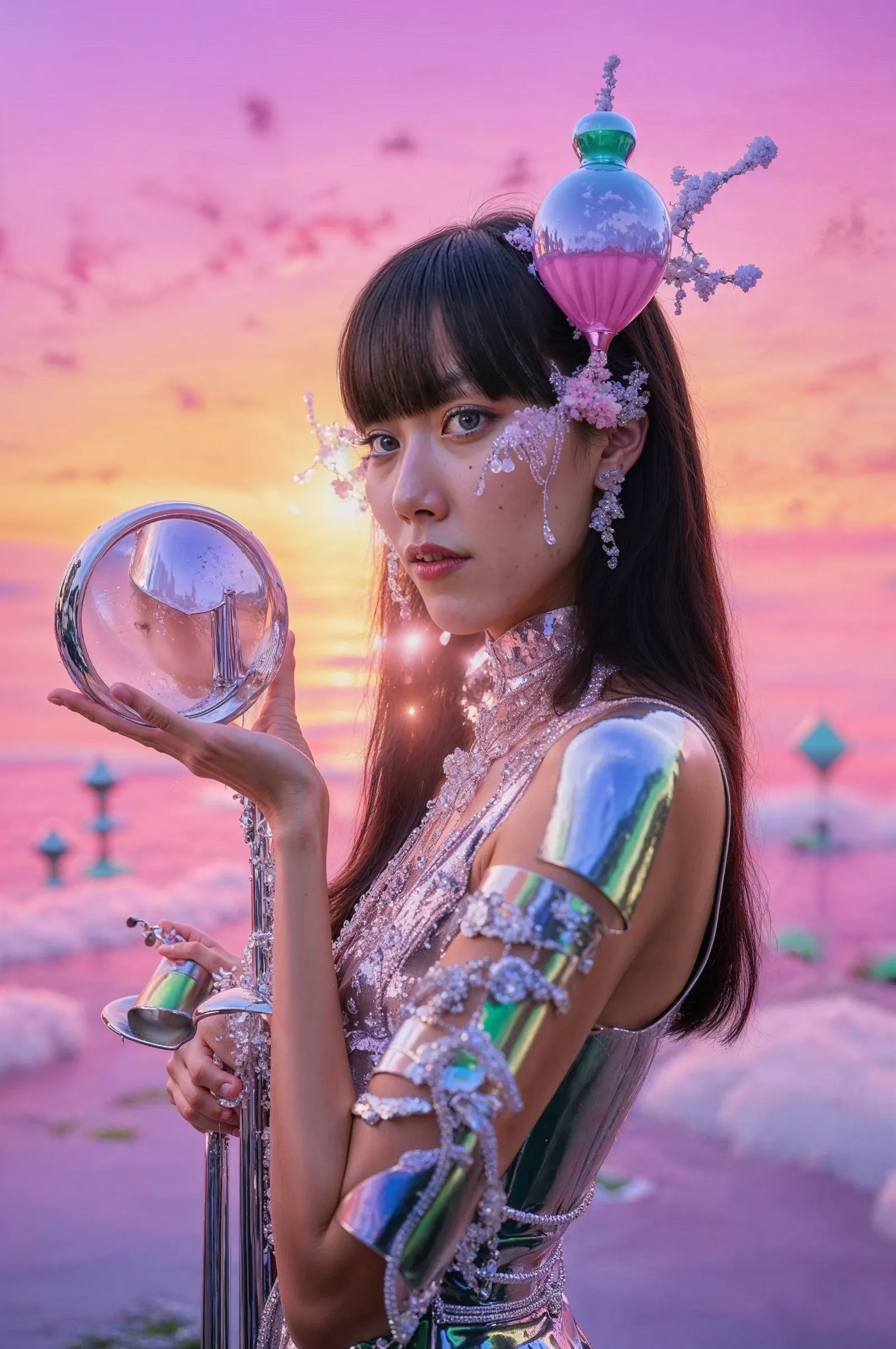
Emi Kusano’s Recursive Hearts
While everyone else is busy worrying if AI will replace us, Emi Kusano used it to show us exactly how much we’ve already replaced ourselves. Her Ornament Survival - Recursive Heart was a masterclass in digital "magical girl" aesthetics. By using generative AI to multiply her own image into a kaleidoscopic loop, she didn’t just make a pretty screen; she anatomised the exhausting labour of modern self-optimization.
Lap-See Lam
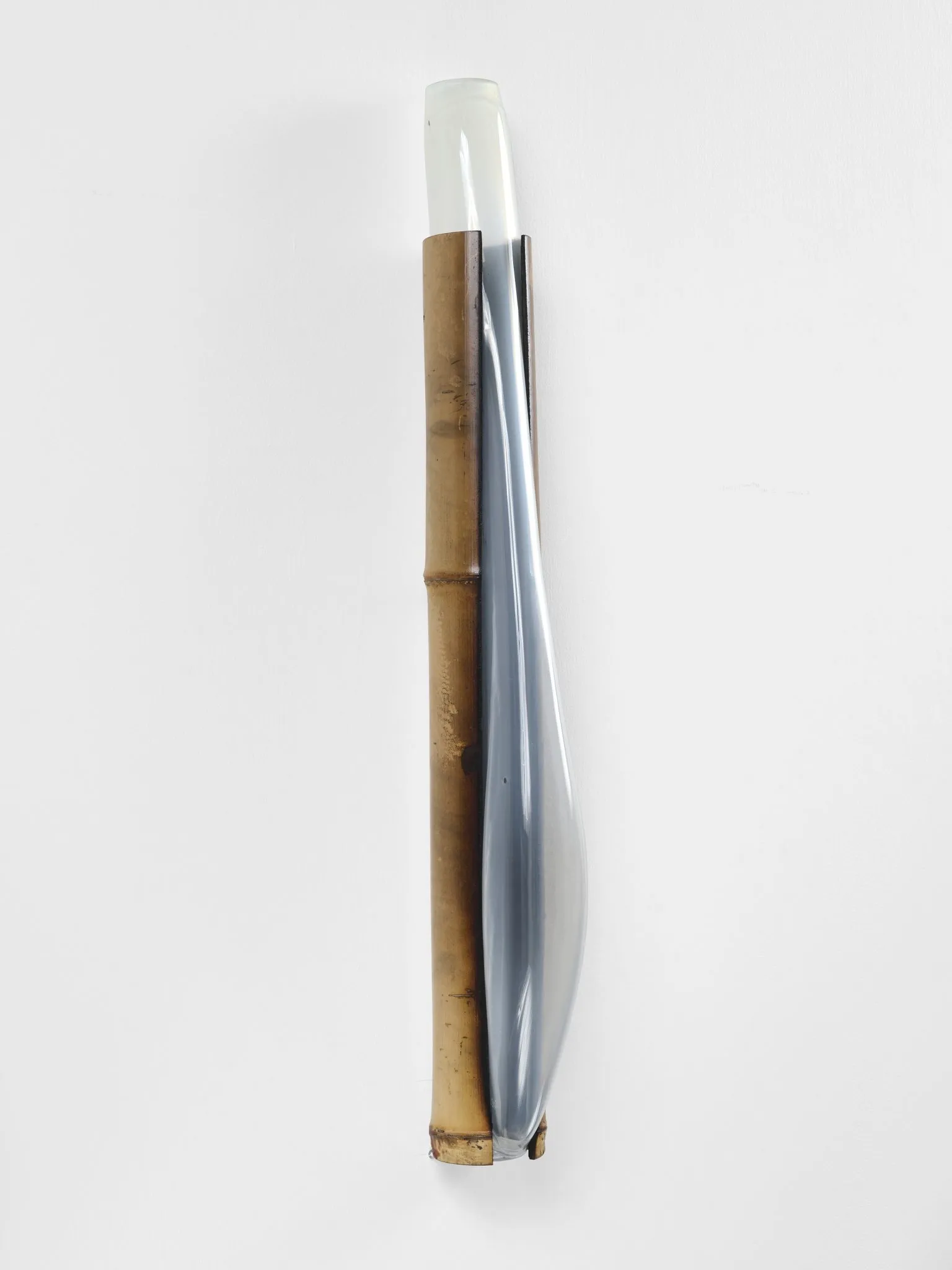
Lap-See Lam’s installation feel's like stepping into a dream of a home you’ve never actually visited. Her hand-blown glass sculptures, specifically a translucent raft brought a fragile, haunting weight to the migrant experience. It’s a "homecoming" for the mythical human-fish Lo Ting, a symbol of Hong Kong identity, but rendered in glass so delicate it felt like it might shatter if you looked at it with too much nostalgia.
Shinya Azuma
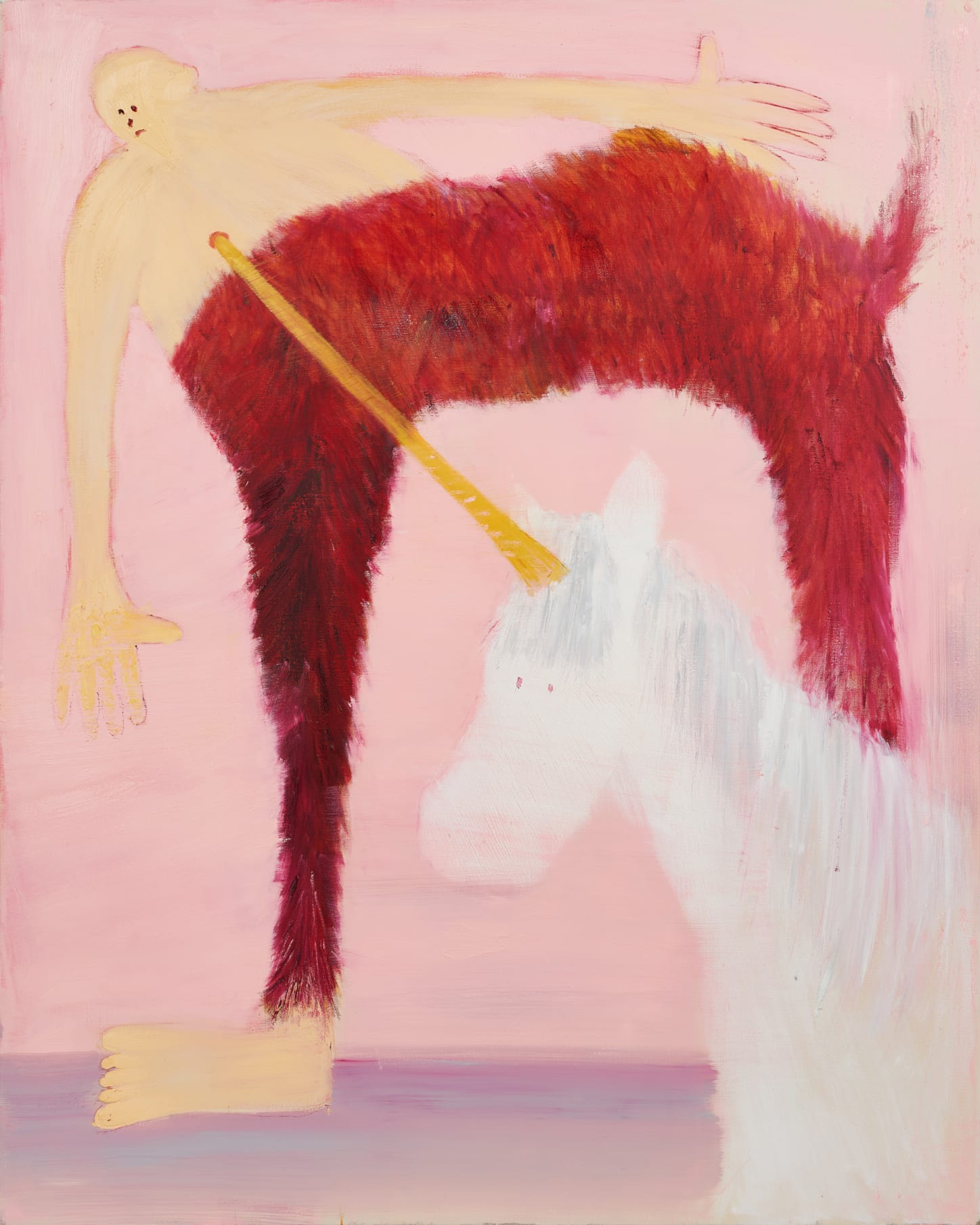
Shinya Azuma gave us the hero we didn't know we needed: a balding "everyman" in a sequence of quietly ridiculous scenarios. Whether the character was clumsily kicking a karate dummy or standing still while a giant bird vomited on his head, the work hit that sweet spot between a meme and a confession.
Suki Seokyeong Kang
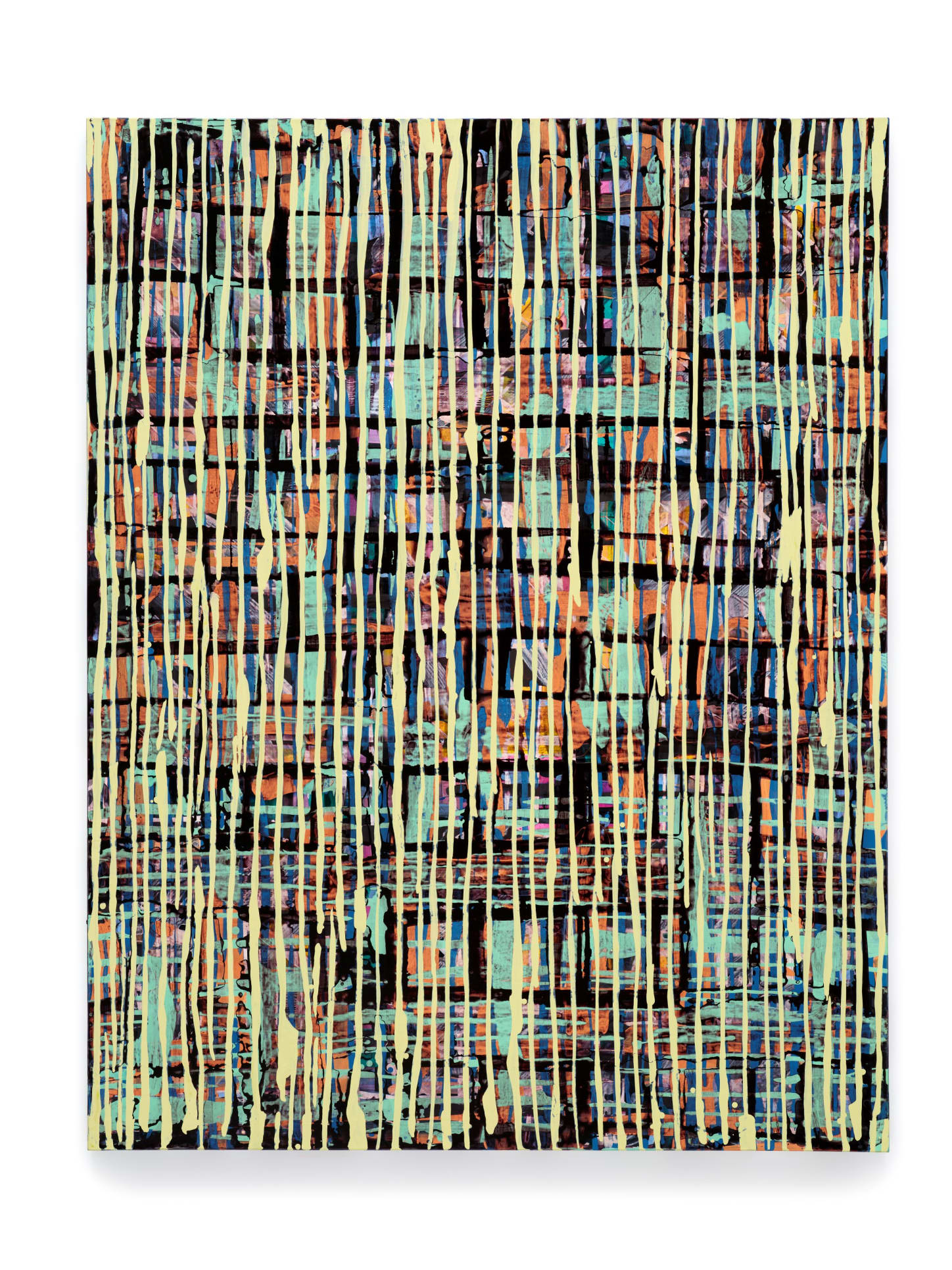
Over in the Encounters sector themed around the five elements this year, Suki Seokyeong Kang’s multimedia textile landscape stood as the "Space/Ether" anchor. In a fair that can often feel like a high-speed transaction, Kang’s work demanded a slower heart rate. It wasn't just an object to be bought; it was a geography to be inhabited.
The ‘speculative frenzy’ of the early 2020s has been replaced by a more deliberate, cross-generational curiosity. We came for the blue-chips, but we stayed for the artists who reminded us that even in a world of LED walls and AI algorithms, the most interesting thing in the room is still the person standing next to you, trying to make sense of it.
Art Basel 2026 officially wrapped yesterday, leaving us with 91,500 pairs of tired feet and a surprisingly hopeful outlook on the ‘state of the soul’.
If 2025 was the year of ‘wait and see’, 2026 was the year of ‘look closer’. There was less shouting and more whispering, a nuance that felt earned in a world that usually prefers its art loud and speculative.
Here are some of the pieces that garnered our attention this year.
Emi Kusano’s Recursive Hearts
While everyone else is busy worrying if AI will replace us, Emi Kusano used it to show us exactly how much we’ve already replaced ourselves. Her Ornament Survival - Recursive Heart was a masterclass in digital "magical girl" aesthetics. By using generative AI to multiply her own image into a kaleidoscopic loop, she didn’t just make a pretty screen; she anatomised the exhausting labour of modern self-optimization.
Lap-See Lam
Lap-See Lam’s installation feel's like stepping into a dream of a home you’ve never actually visited. Her hand-blown glass sculptures, specifically a translucent raft brought a fragile, haunting weight to the migrant experience. It’s a "homecoming" for the mythical human-fish Lo Ting, a symbol of Hong Kong identity, but rendered in glass so delicate it felt like it might shatter if you looked at it with too much nostalgia.
Shinya Azuma
Shinya Azuma gave us the hero we didn't know we needed: a balding "everyman" in a sequence of quietly ridiculous scenarios. Whether the character was clumsily kicking a karate dummy or standing still while a giant bird vomited on his head, the work hit that sweet spot between a meme and a confession.
Suki Seokyeong Kang
Over in the Encounters sector themed around the five elements this year, Suki Seokyeong Kang’s multimedia textile landscape stood as the "Space/Ether" anchor. In a fair that can often feel like a high-speed transaction, Kang’s work demanded a slower heart rate. It wasn't just an object to be bought; it was a geography to be inhabited.
The ‘speculative frenzy’ of the early 2020s has been replaced by a more deliberate, cross-generational curiosity. We came for the blue-chips, but we stayed for the artists who reminded us that even in a world of LED walls and AI algorithms, the most interesting thing in the room is still the person standing next to you, trying to make sense of it.


Must Reads
Must Reads


we are MOLTN
●
we are MOLTN
●
we are MOLTN
●
we are MOLTN
●
we are MOLTN
●
we are MOLTN
●
we are MOLTN
●
we are MOLTN
●
we are MOLTN
●
we are MOLTN
●
we are MOLTN
●
Subscribe to MOLTN

© We Are MOLTN
2026
we are MOLTN
●
we are MOLTN
●
we are MOLTN
●
we are MOLTN
●
we are MOLTN
●
we are MOLTN
●
we are MOLTN
●
we are MOLTN
●
we are MOLTN
●
we are MOLTN
●
we are MOLTN
●
Subscribe to MOLTN
© We Are MOLTN
2026
we are MOLTN
●
we are MOLTN
●
we are MOLTN
●
we are MOLTN
●
we are MOLTN
●
we are MOLTN
●
we are MOLTN
●
we are MOLTN
●
we are MOLTN
●
we are MOLTN
●
we are MOLTN
●
Subscribe to MOLTN
© We Are MOLTN
2026