

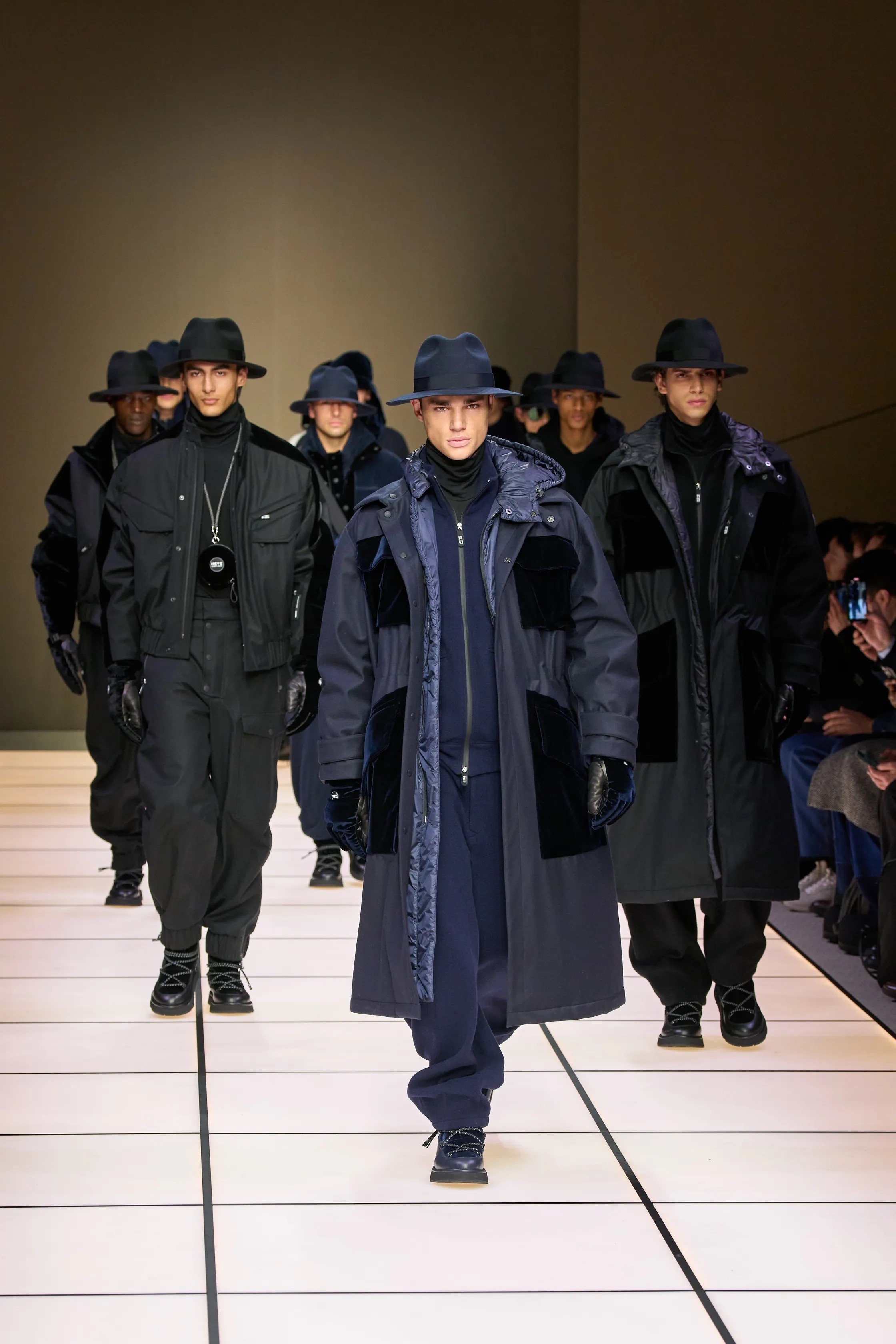
Giorgio Armani’s first menswear collection without the founder’s direct involvement was defined by continuity - careful adjustments over reinvention.
Presented inside Giorgio Armani’s longtime home, Leo Dell’Orco’s debut menswear collection for the label stayed firmly within the house’s established language. The approach was deliberate, quiet with no rupture, no grand gesture, just a steady refinement of proportions, texture, and colour.
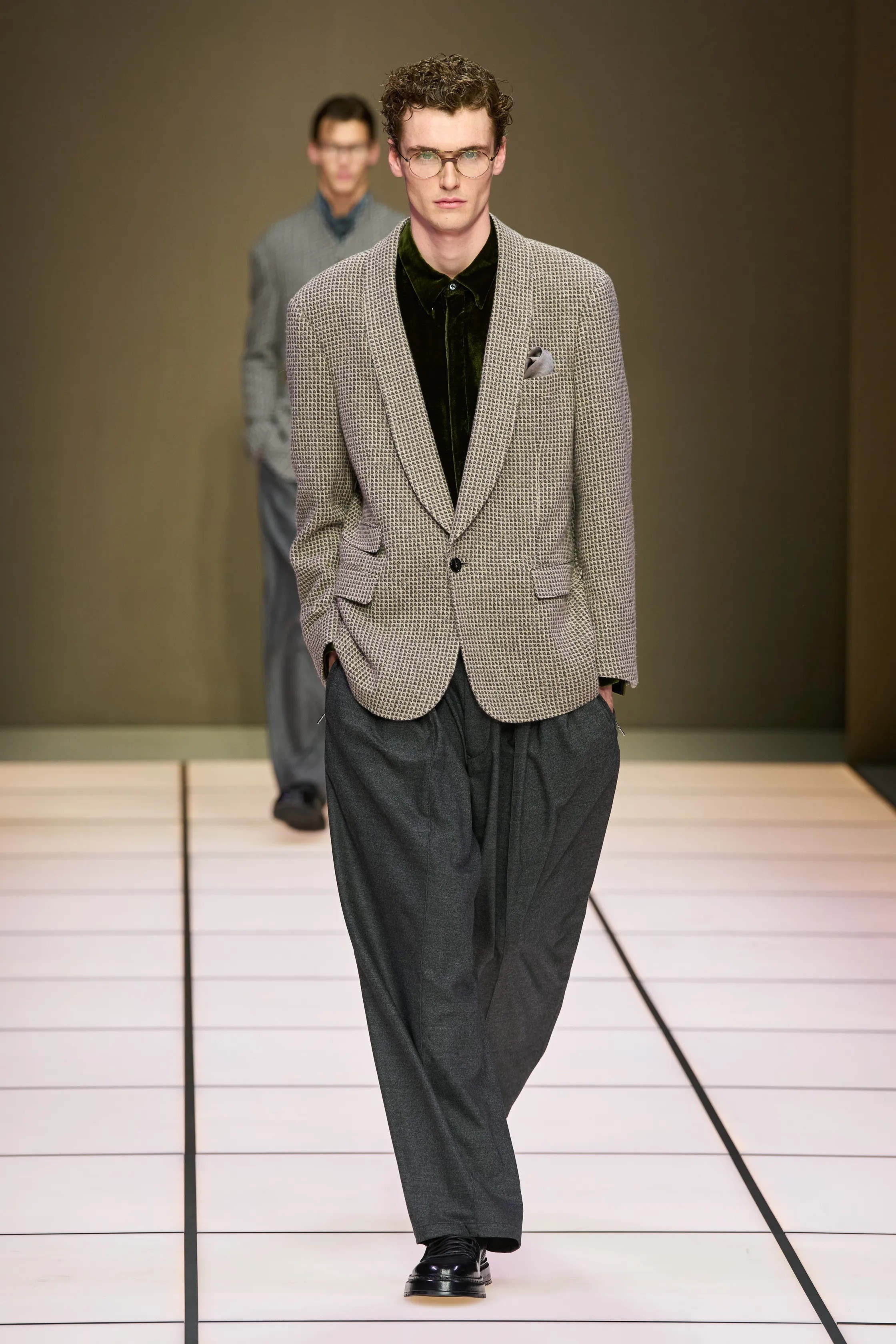
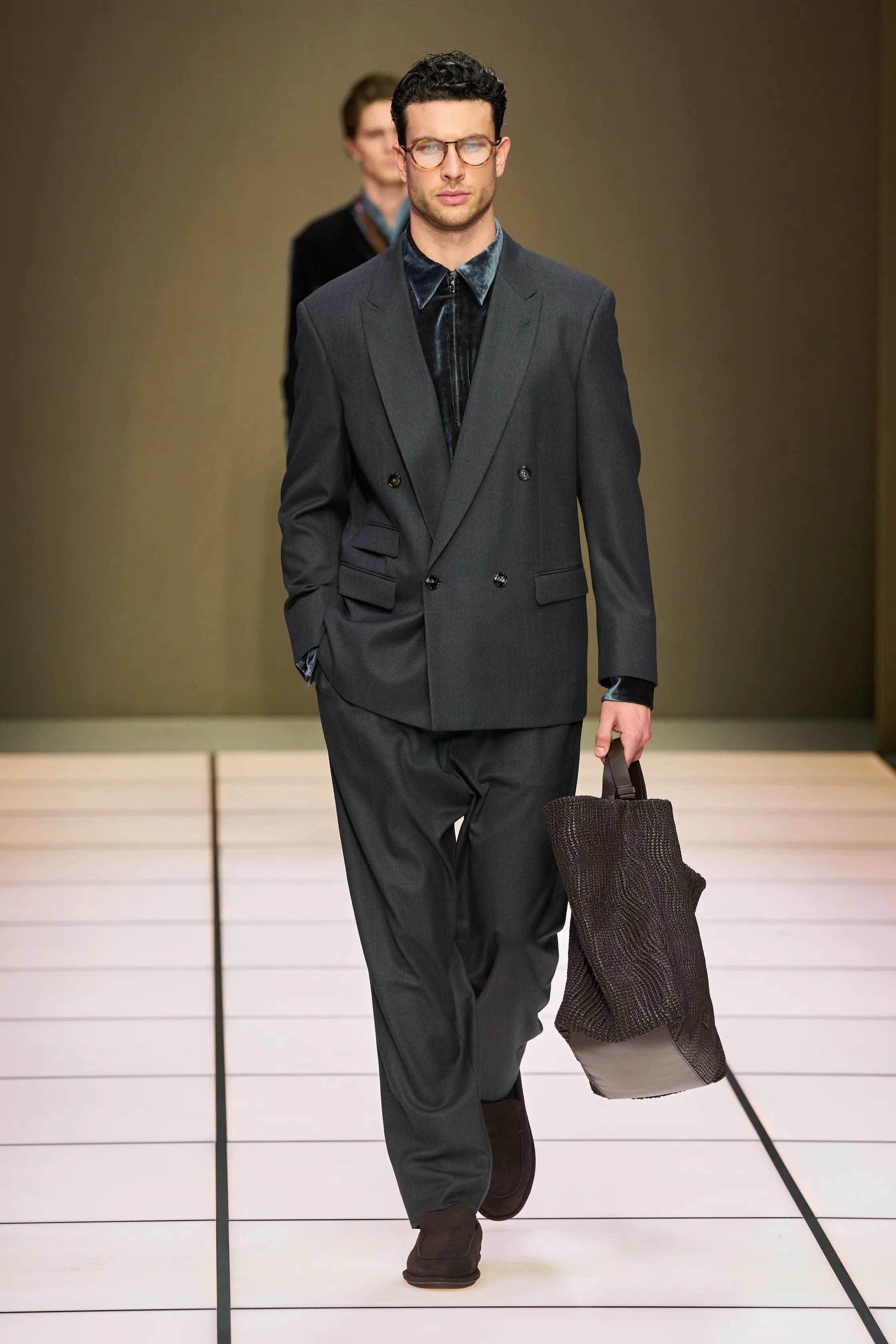
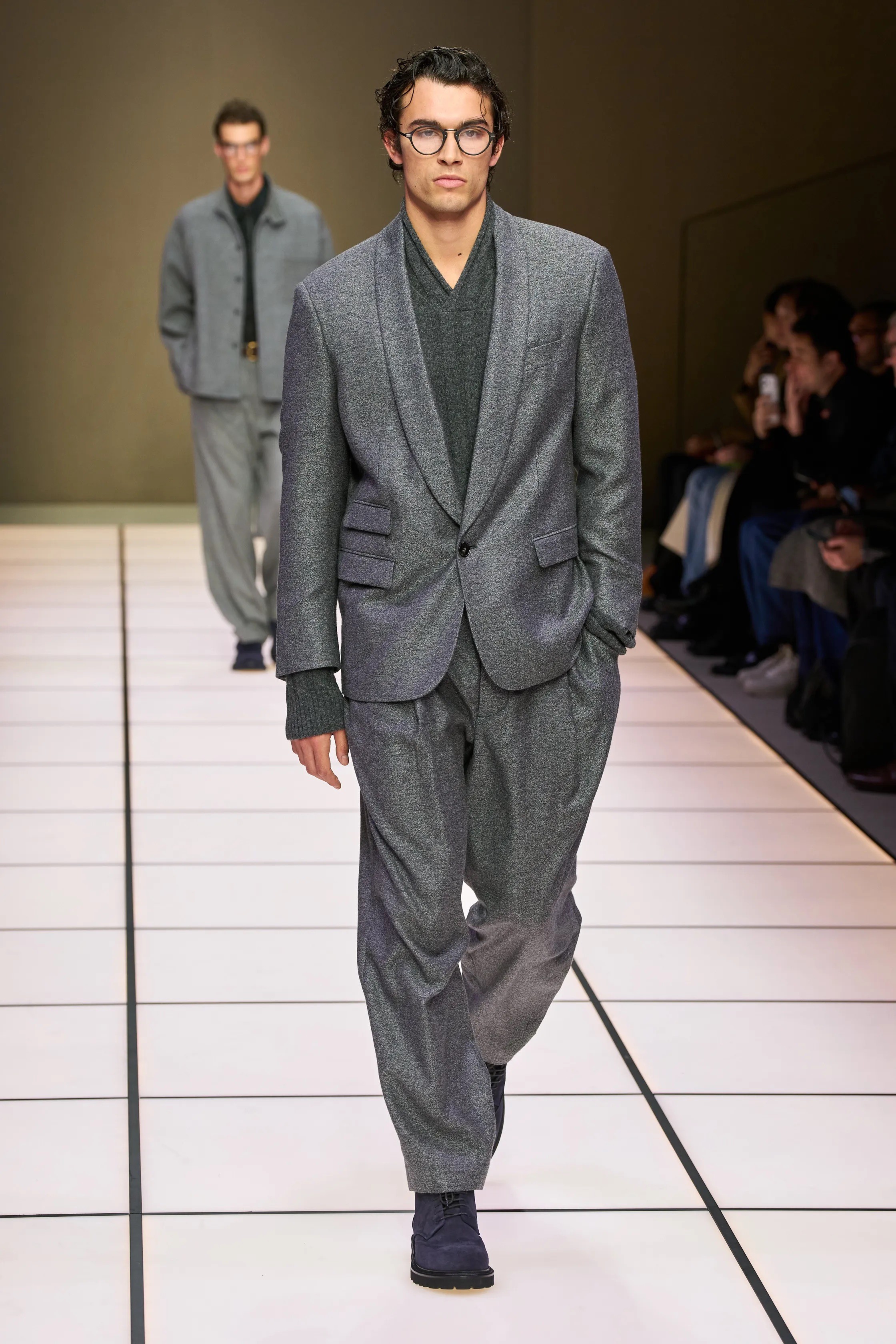
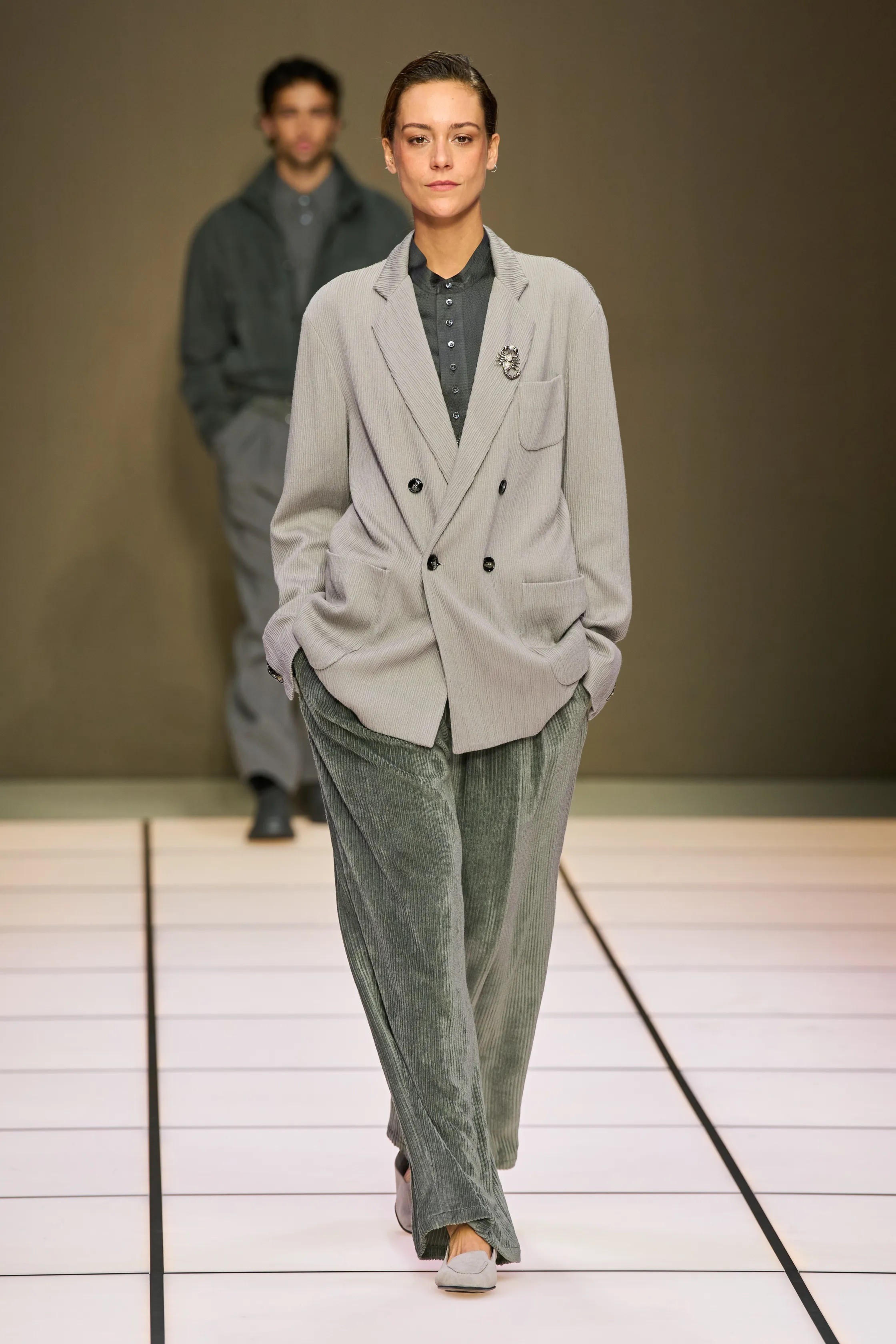
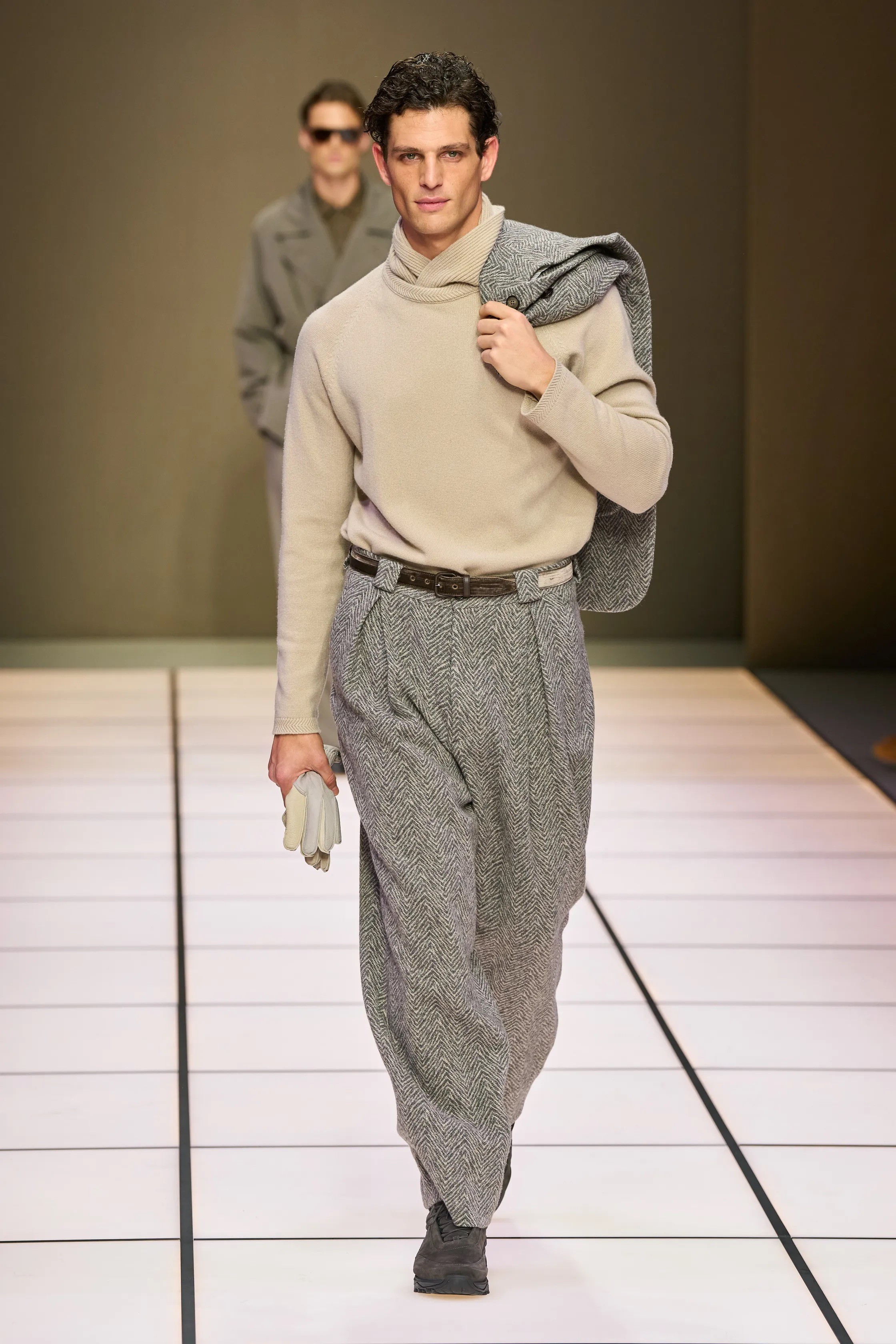
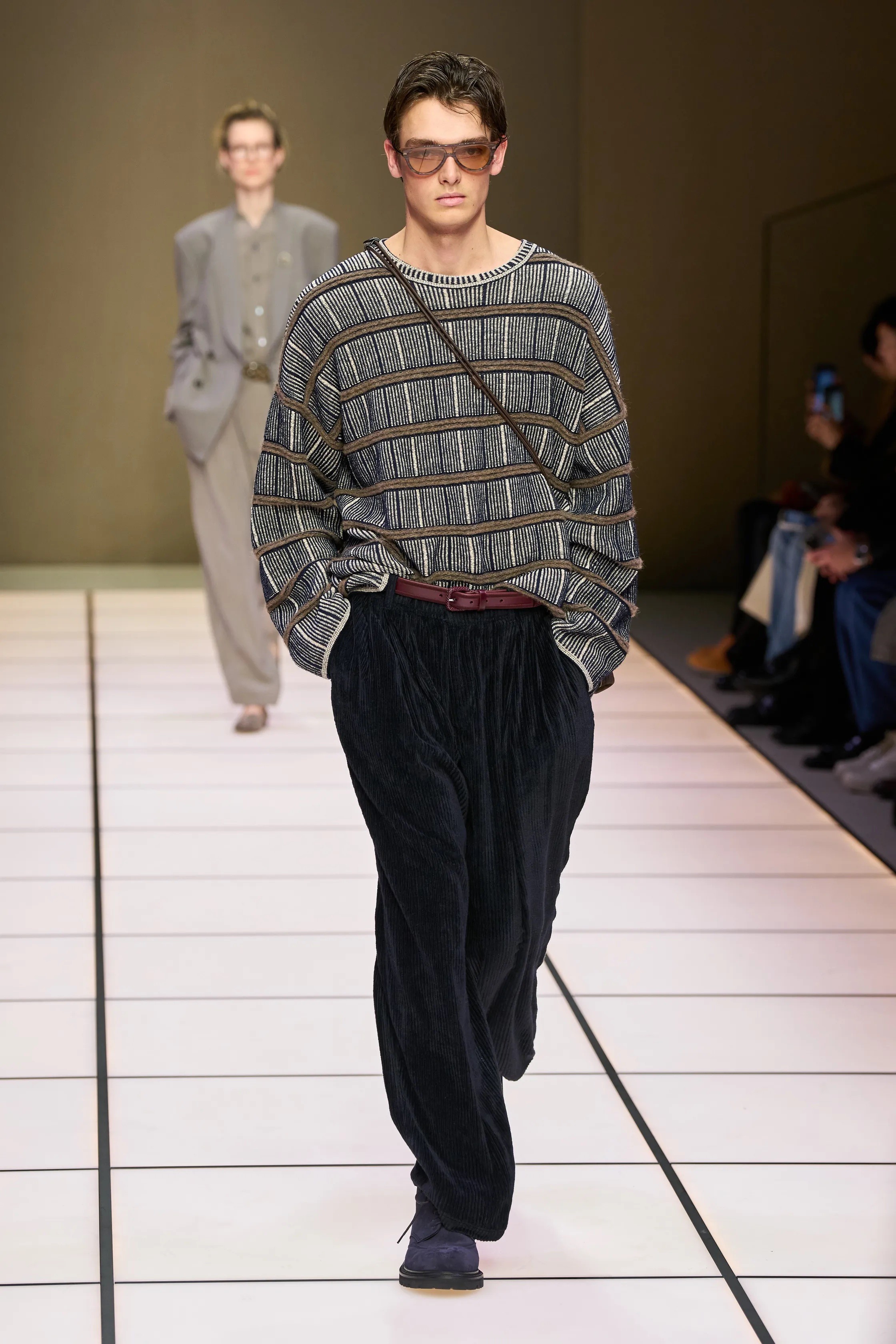
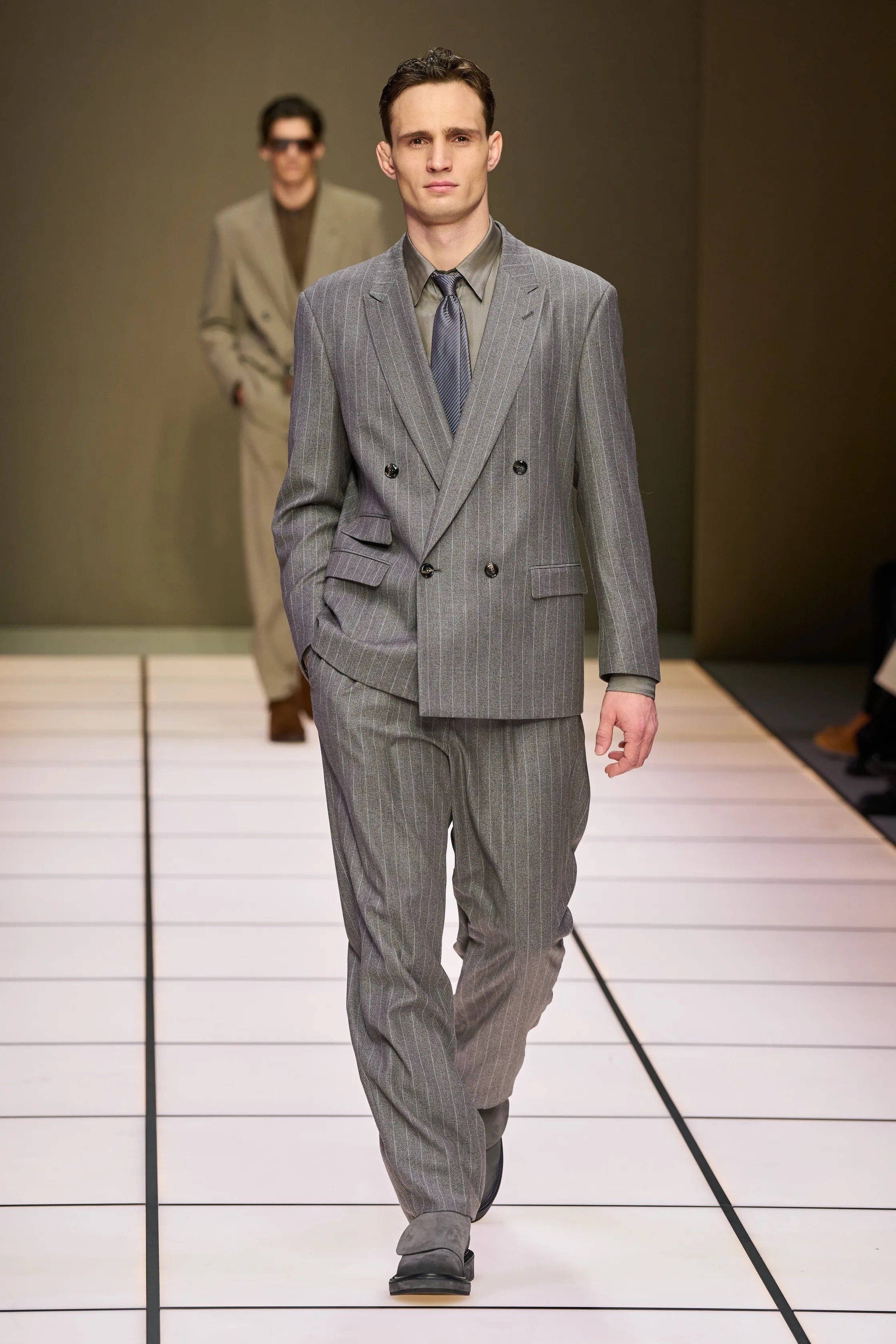
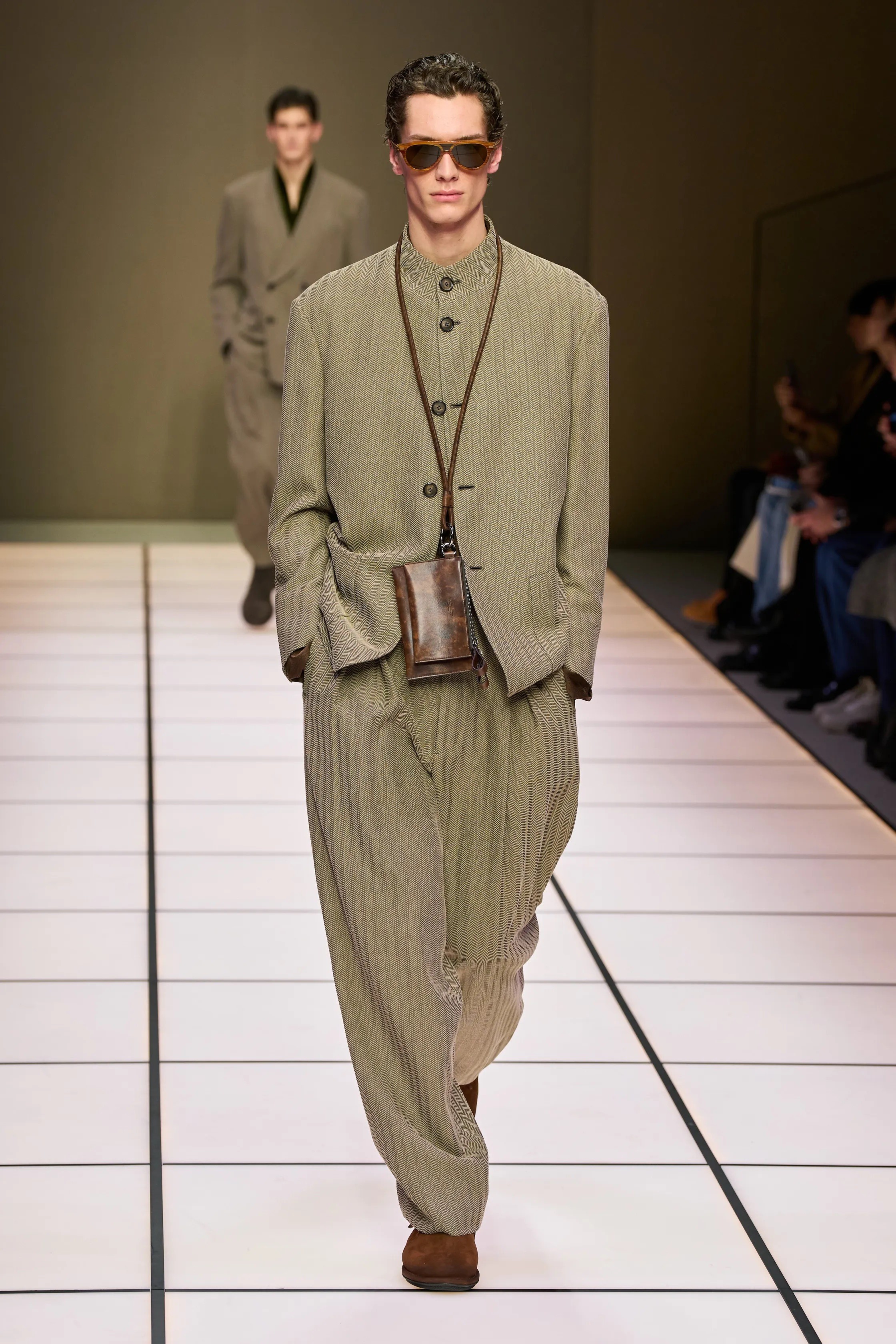
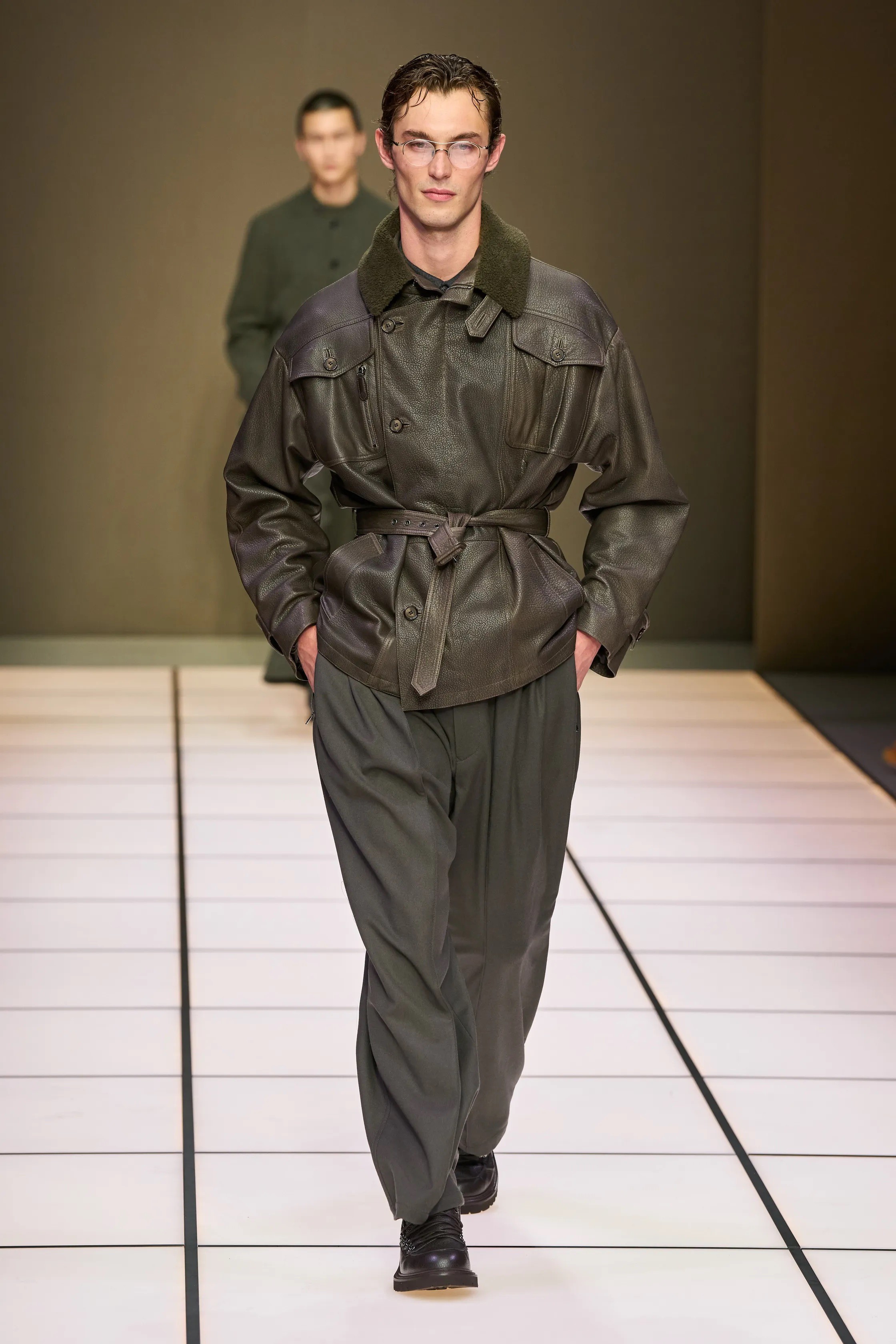
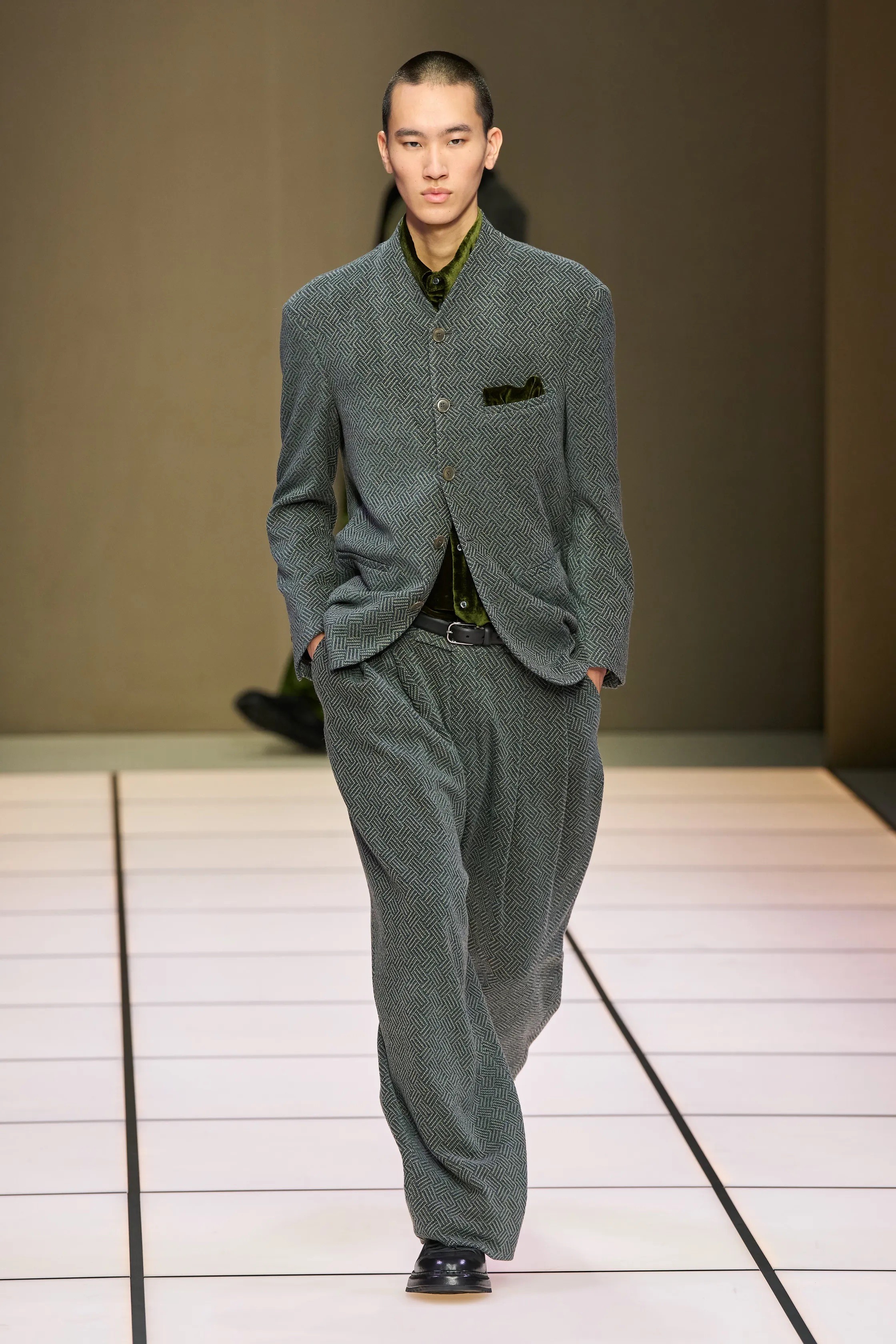
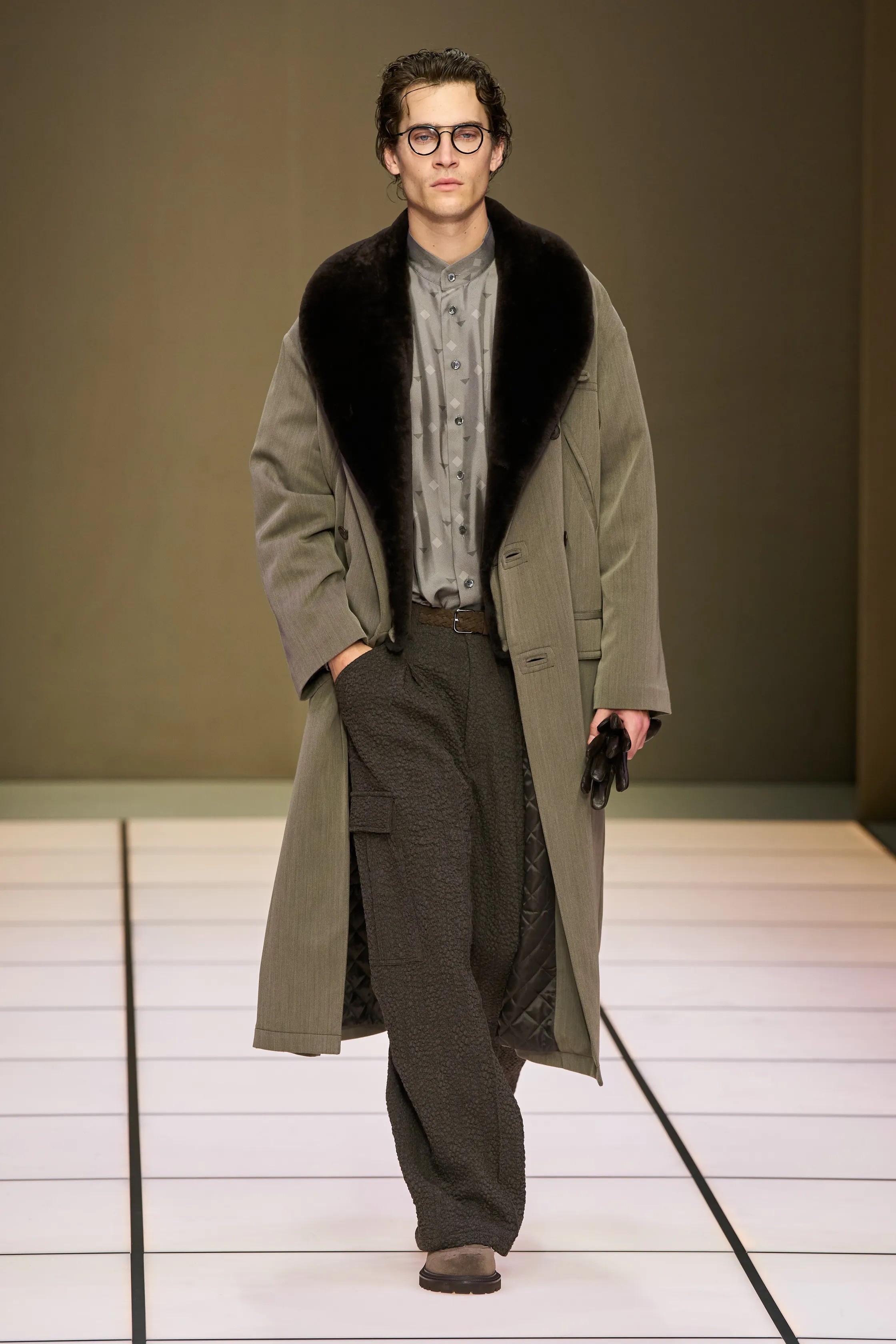
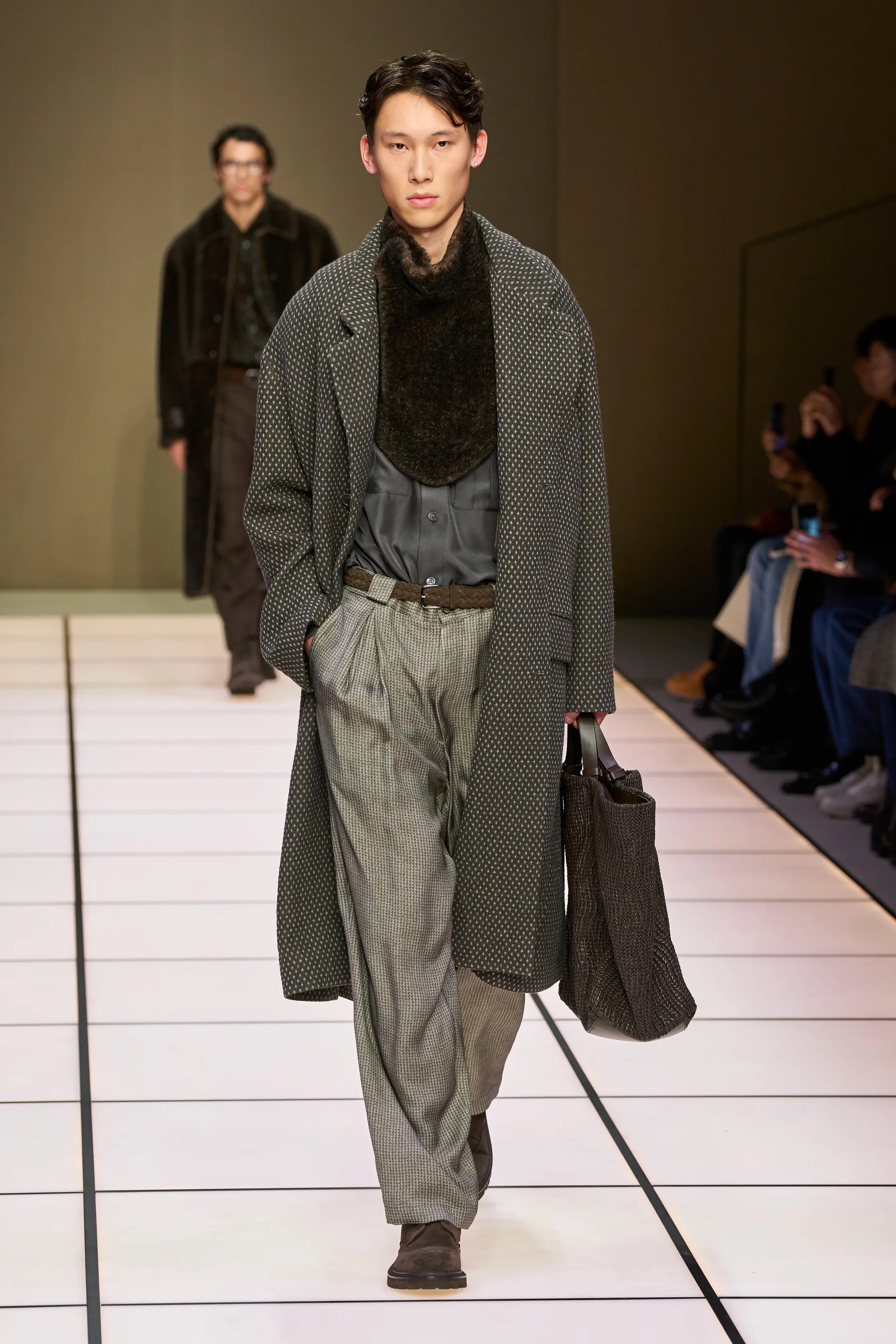
The opening looks centred on soft tailoring in shades of greige and charcoal. Jackets were cut slightly higher and largely without vents, maintaining the fluid shoulder line that has long defined Armani menswear. Trousers followed suit - relaxed but controlled - reinforcing the house’s preference for ease over sharpness. Accessories were understated, with gloves, eyewear, and bags integrated naturally into the looks.
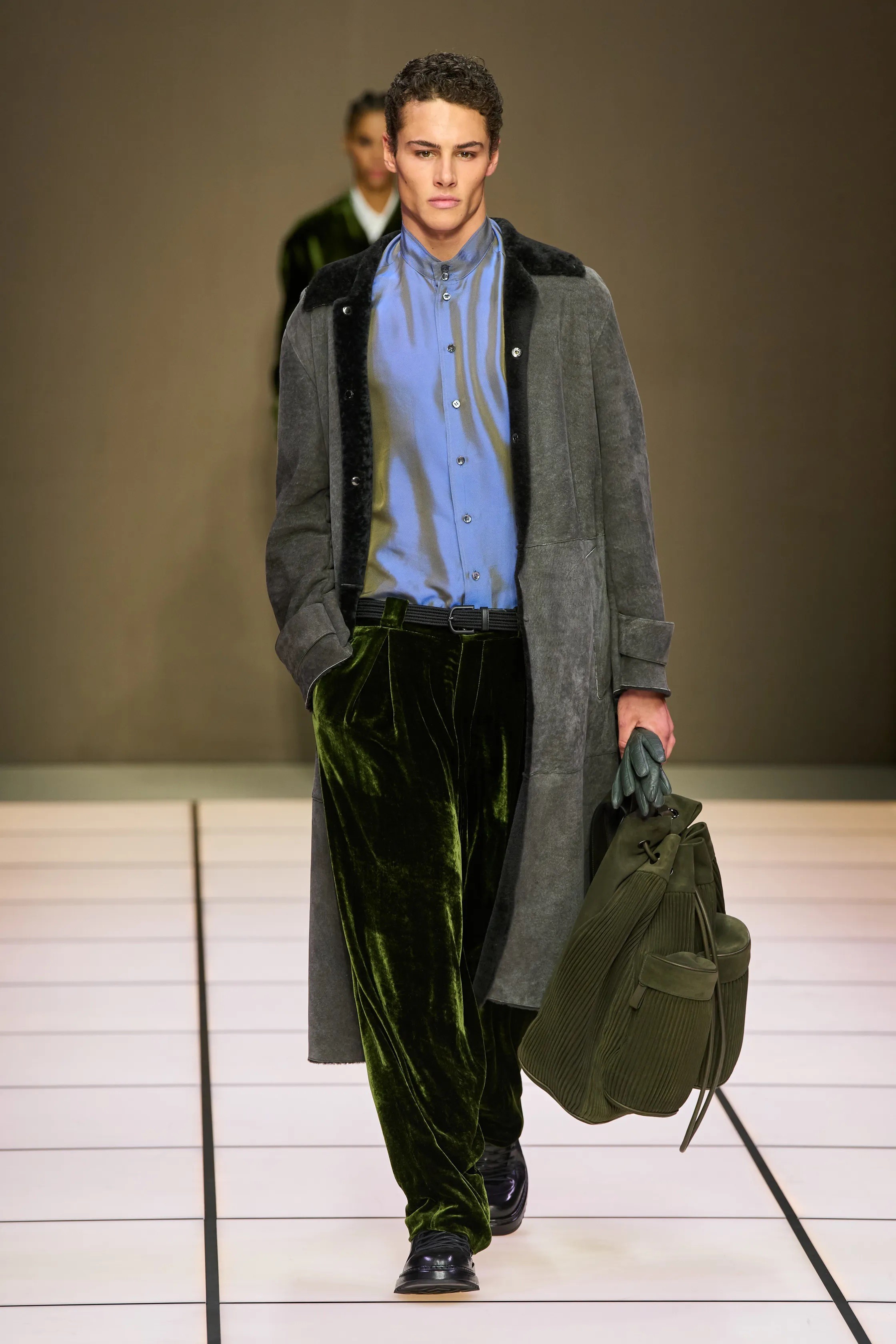
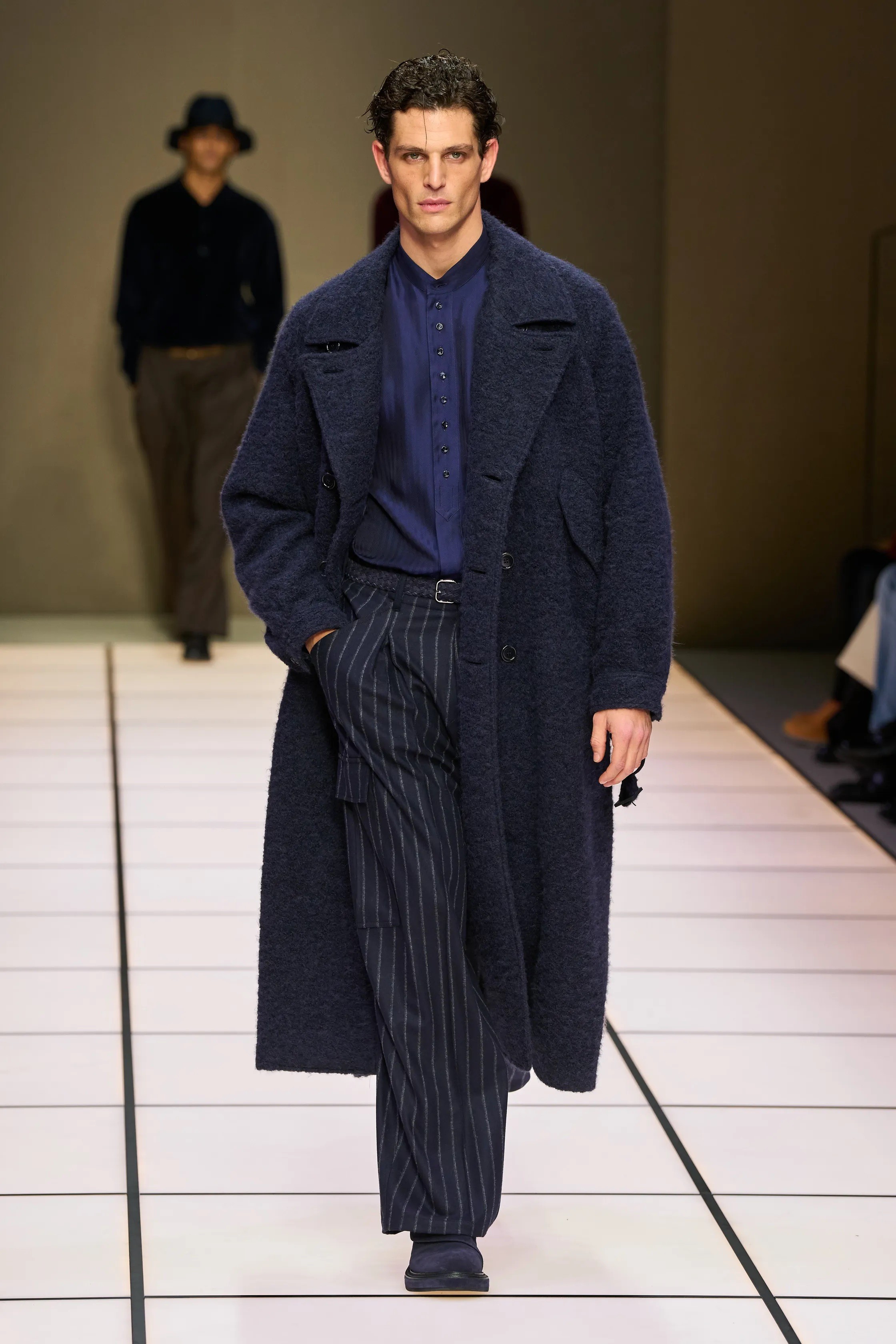
A subtle diamond motif ran throughout the collection, appearing in trouser patterns, quilted accessories, and work satchels. Outerwear played a larger role as the show progressed: long, double-breasted coats in velvet, printed fur, and shearling were worn at a diagonal across the body, introducing movement without disrupting the silhouette.
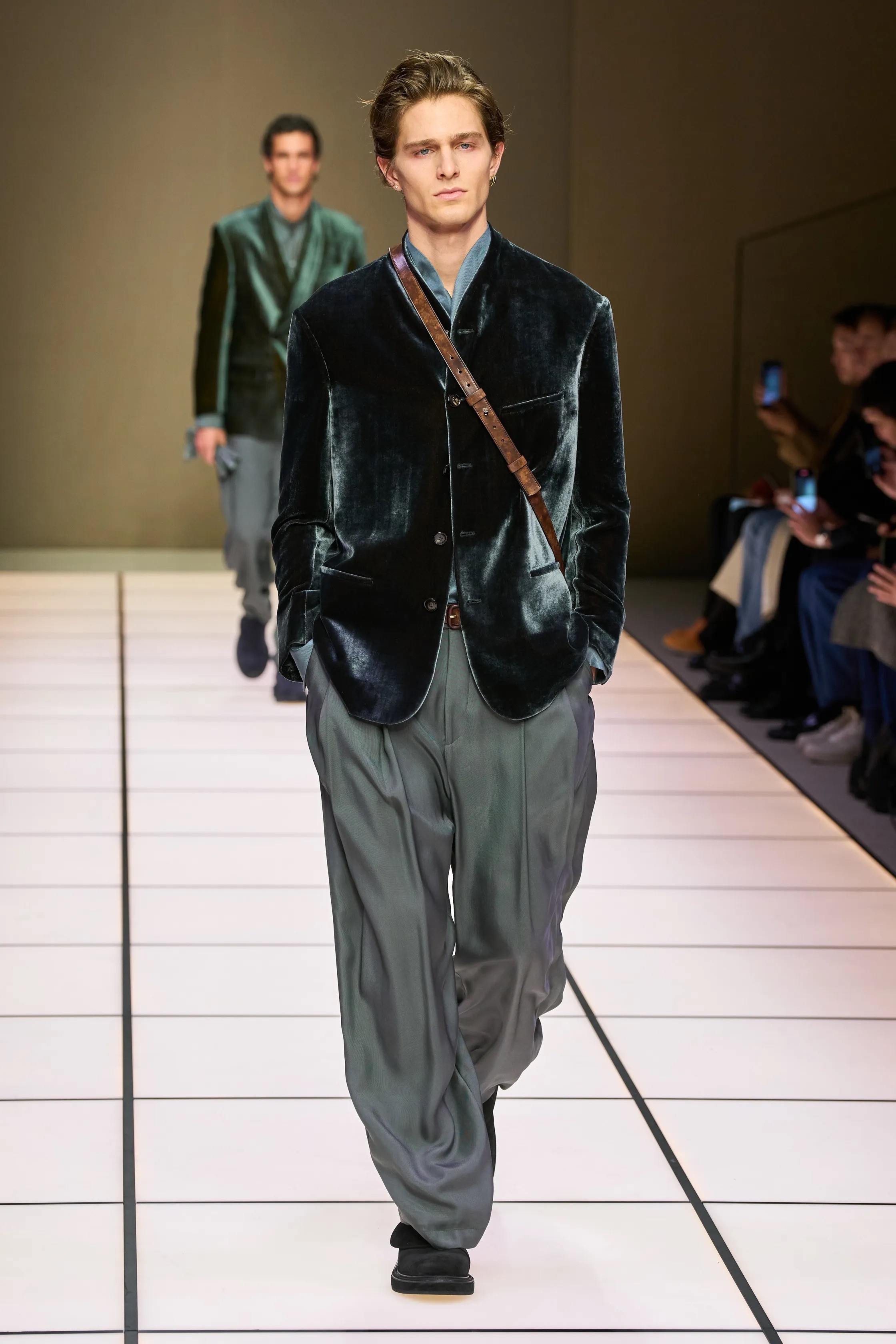
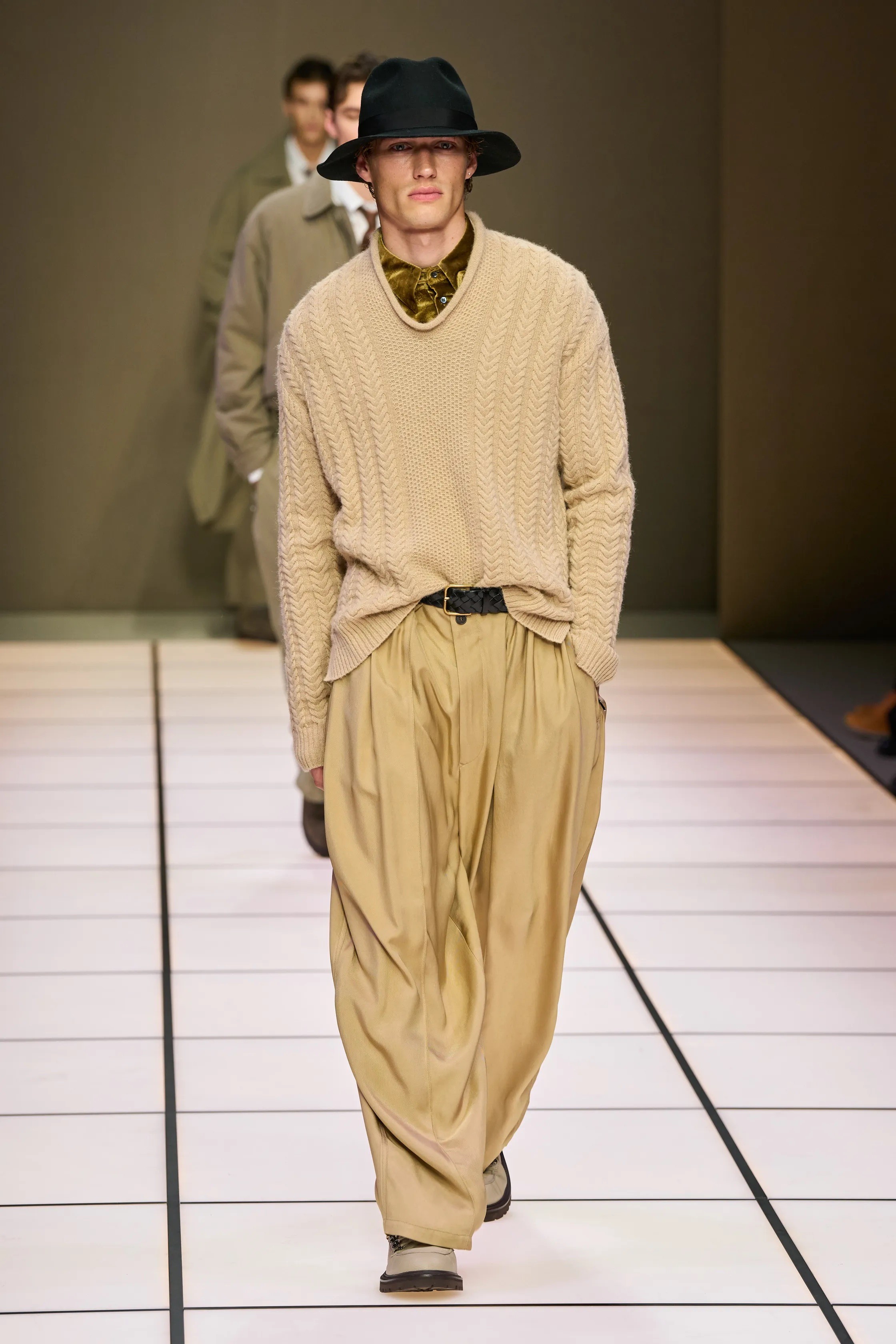
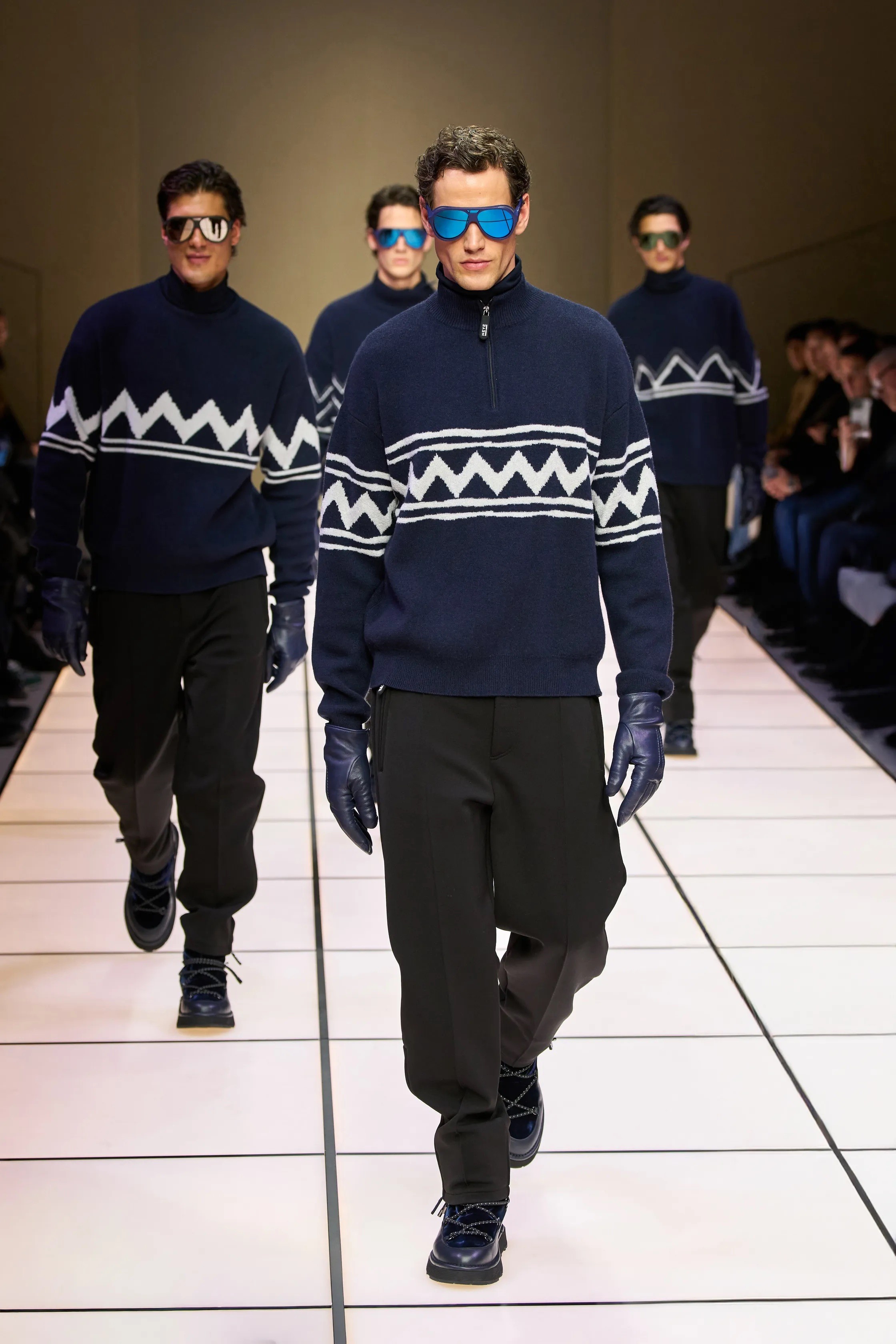
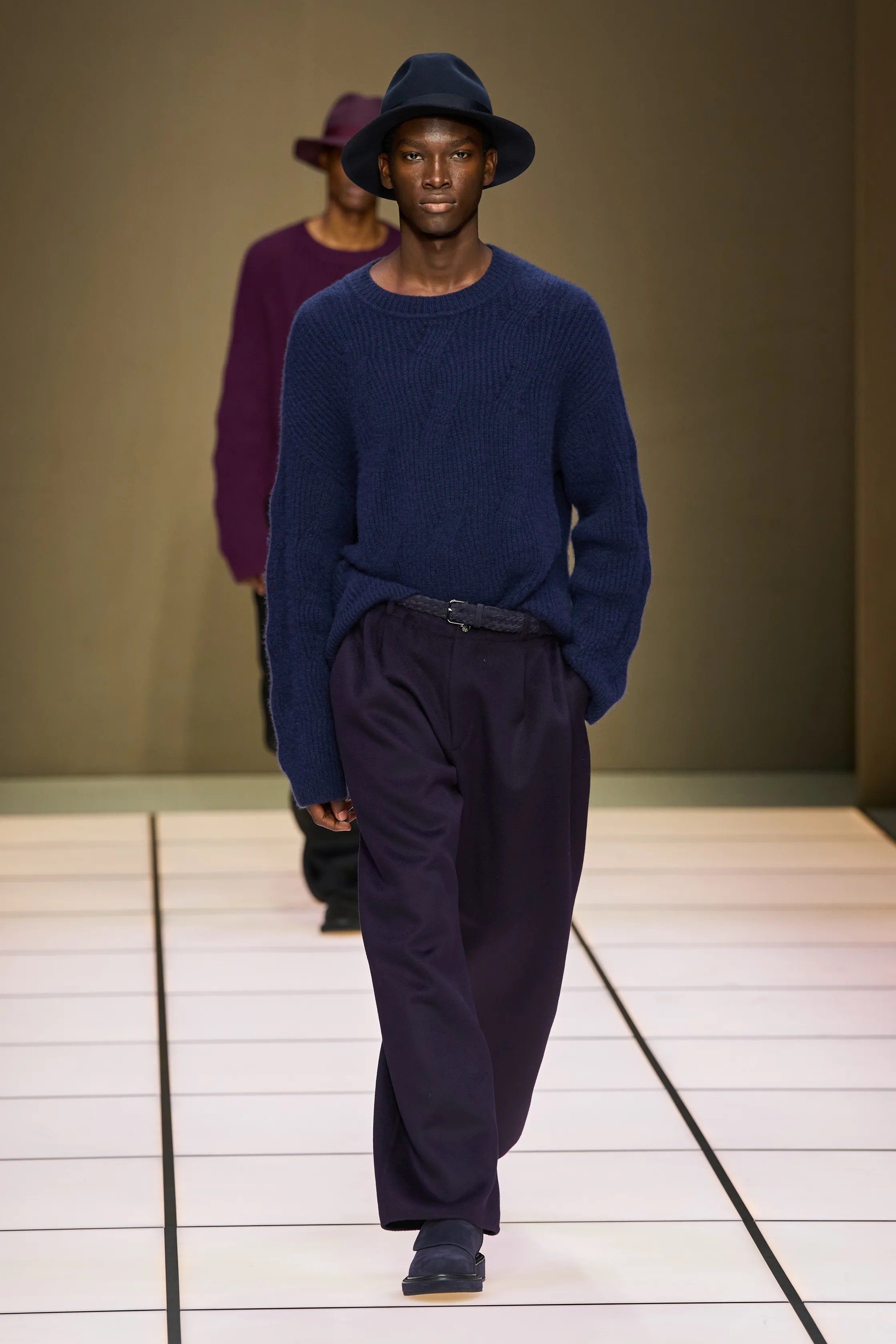
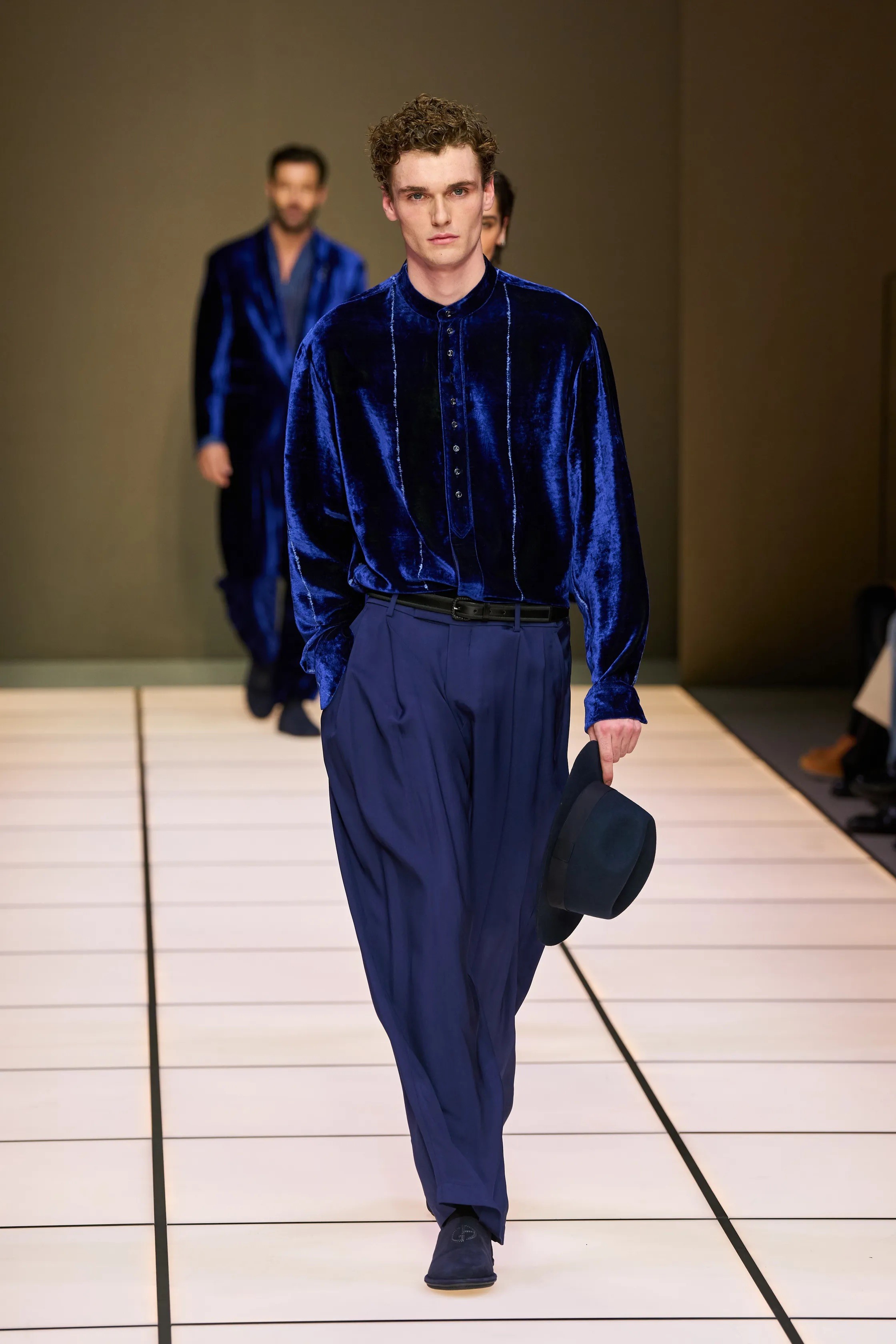
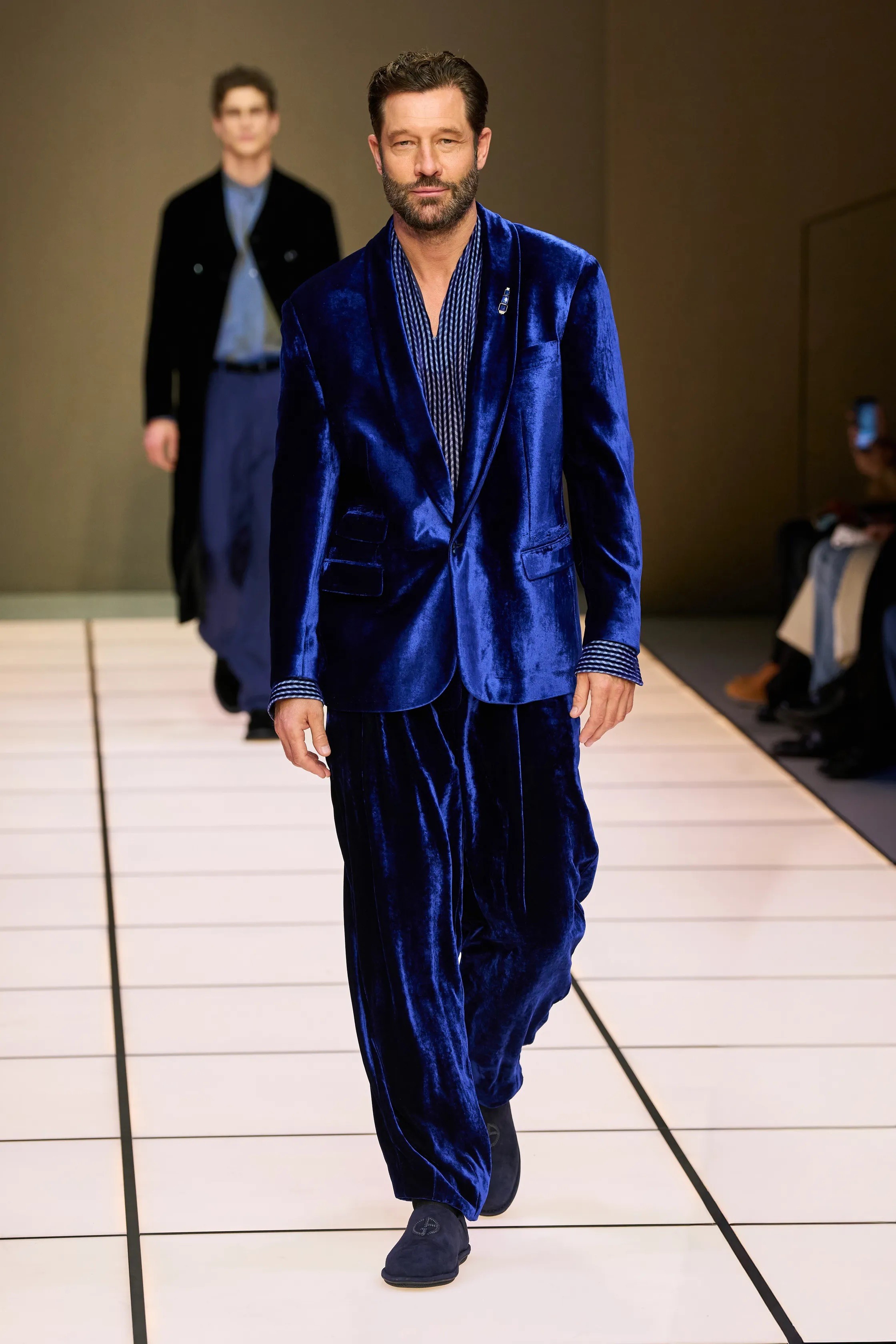
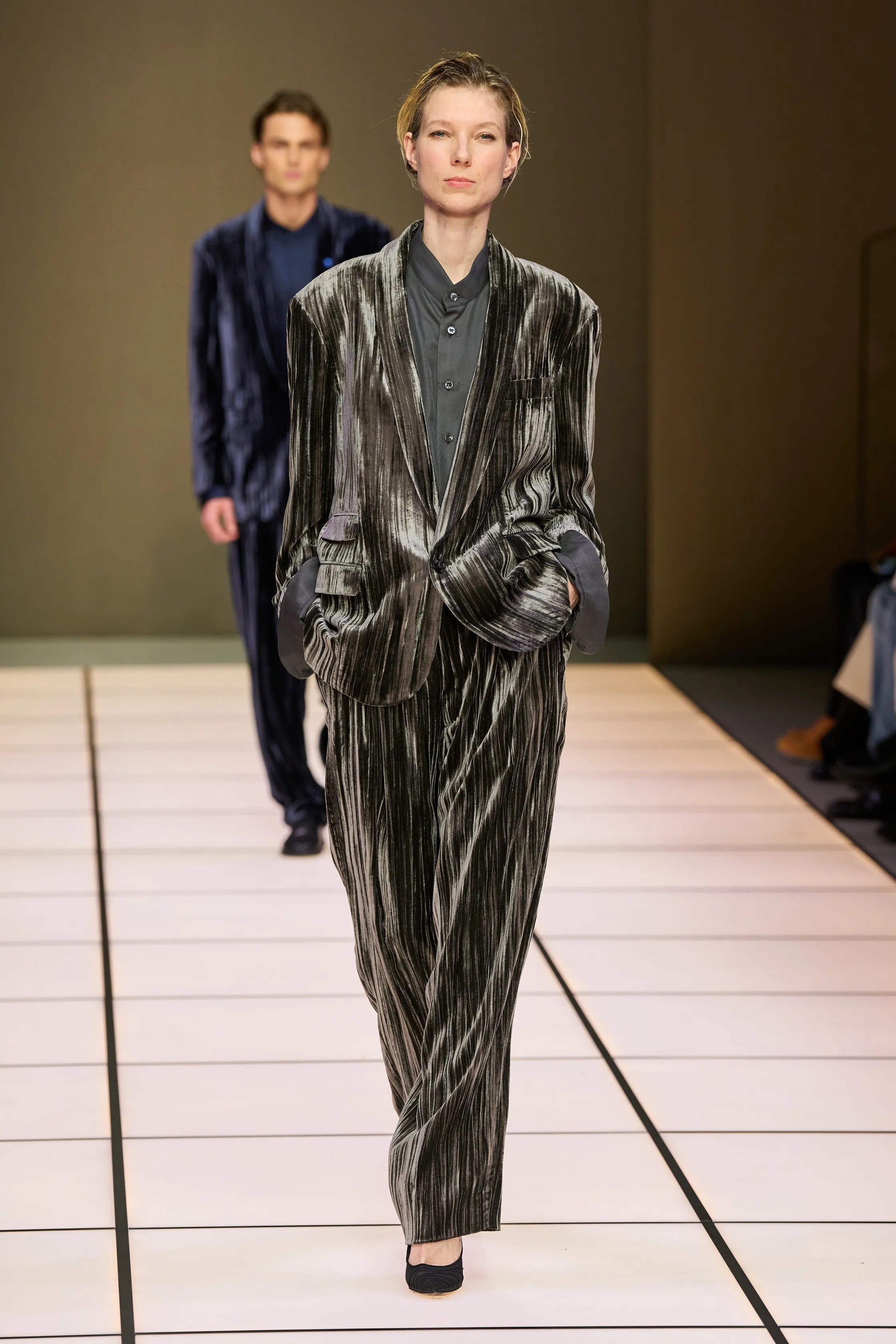
Midway, the palette shifted. Deeper browns gave way to more unexpected tones - purples and greens - used sparingly but with intent. Some shearling coats were cut closer to the body than usual for Armani, while velvet suits appeared semi-sheer and crushed, catching light in irregular ways. Knitwear and outerwear from the Neve line added a functional note, while a collaboration with Alanui introduced fringed, belted wrap cardigans.
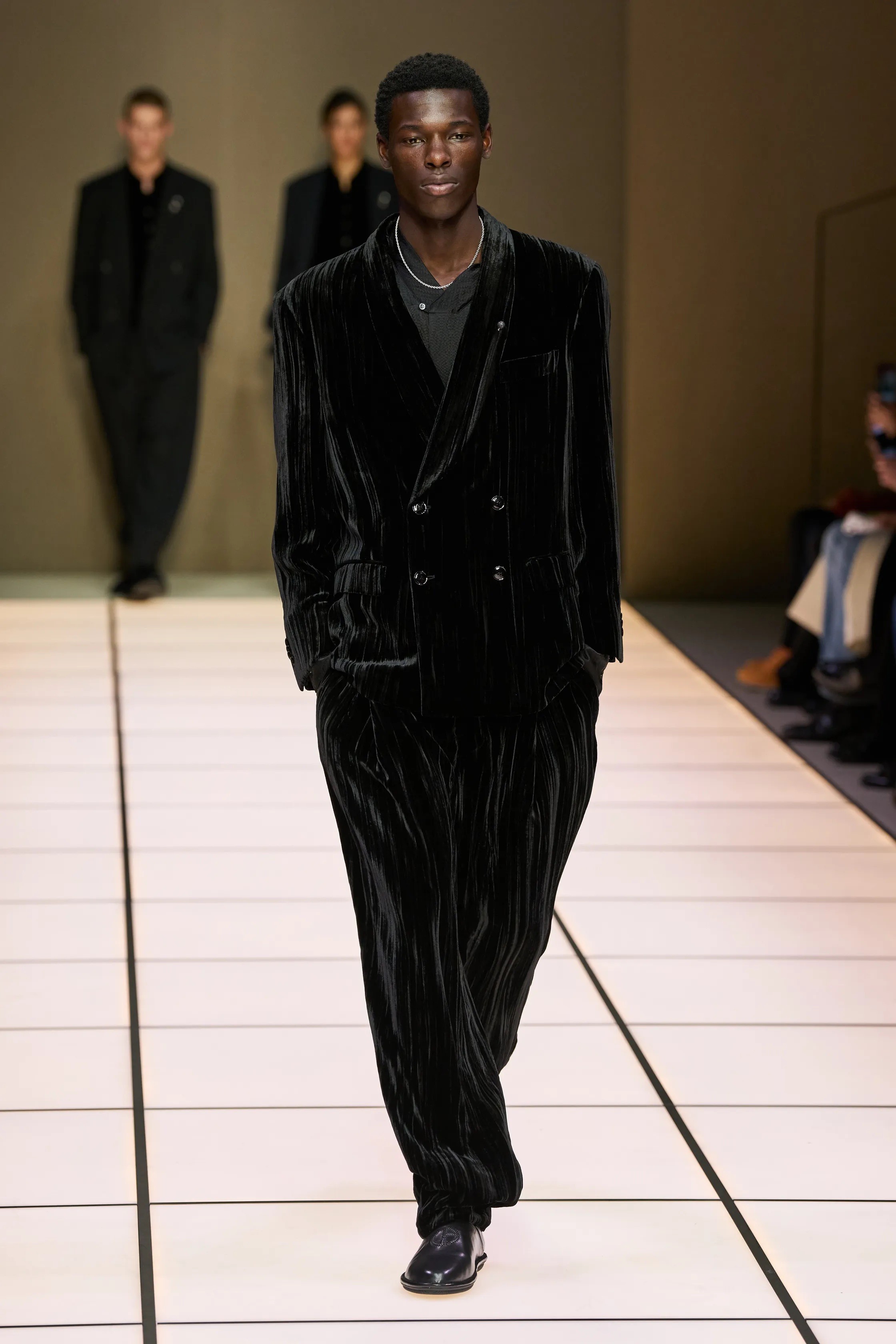
The collection closed with co-ed black-and-white evening looks, restoring visual discipline after these gentle deviations. Overall, the message was not about redefining Armani, but maintaining its codes while allowing for quiet evolution - a wardrobe built on familiarity, precision, and wearability.
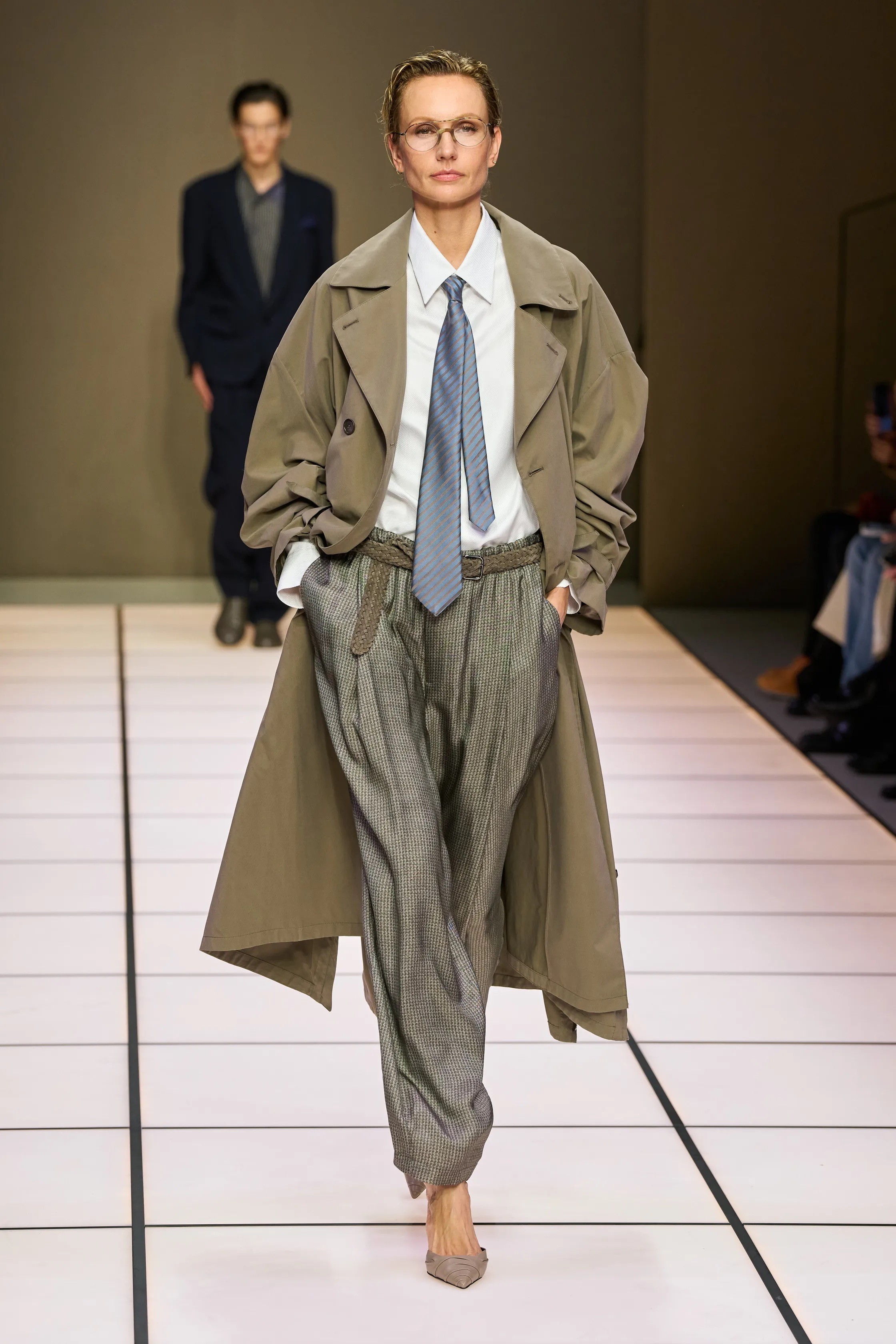
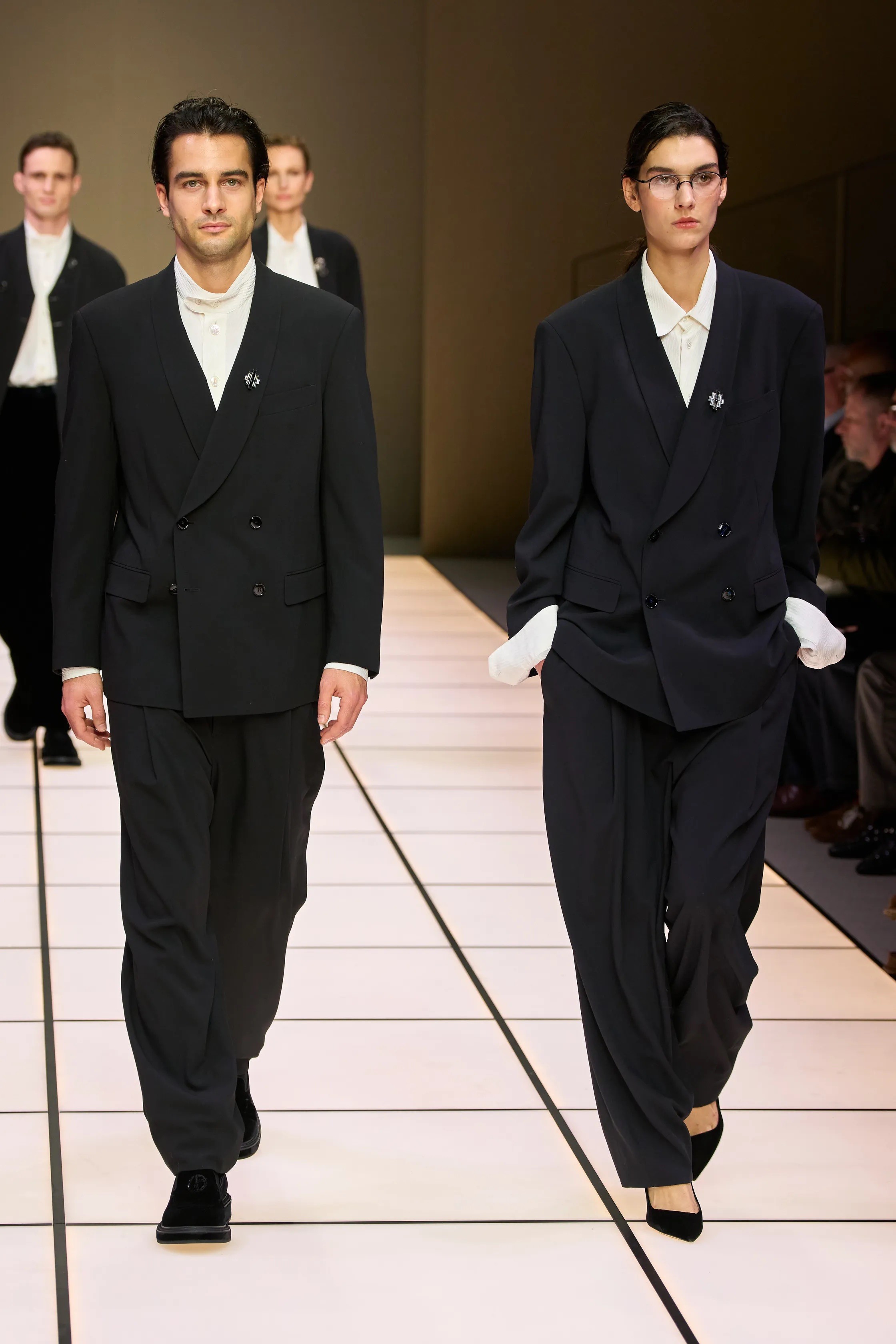
Presented inside Giorgio Armani’s longtime home, Leo Dell’Orco’s debut menswear collection for the label stayed firmly within the house’s established language. The approach was deliberate, quiet with no rupture, no grand gesture, just a steady refinement of proportions, texture, and colour.
The opening looks centred on soft tailoring in shades of greige and charcoal. Jackets were cut slightly higher and largely without vents, maintaining the fluid shoulder line that has long defined Armani menswear. Trousers followed suit - relaxed but controlled - reinforcing the house’s preference for ease over sharpness. Accessories were understated, with gloves, eyewear, and bags integrated naturally into the looks.
A subtle diamond motif ran throughout the collection, appearing in trouser patterns, quilted accessories, and work satchels. Outerwear played a larger role as the show progressed: long, double-breasted coats in velvet, printed fur, and shearling were worn at a diagonal across the body, introducing movement without disrupting the silhouette.
Midway, the palette shifted. Deeper browns gave way to more unexpected tones - purples and greens - used sparingly but with intent. Some shearling coats were cut closer to the body than usual for Armani, while velvet suits appeared semi-sheer and crushed, catching light in irregular ways. Knitwear and outerwear from the Neve line added a functional note, while a collaboration with Alanui introduced fringed, belted wrap cardigans.
The collection closed with co-ed black-and-white evening looks, restoring visual discipline after these gentle deviations. Overall, the message was not about redefining Armani, but maintaining its codes while allowing for quiet evolution - a wardrobe built on familiarity, precision, and wearability.


Must Reads
Must Reads


we are MOLTN
●
we are MOLTN
●
we are MOLTN
●
we are MOLTN
●
we are MOLTN
●
we are MOLTN
●
we are MOLTN
●
we are MOLTN
●
we are MOLTN
●
we are MOLTN
●
we are MOLTN
●
Subscribe to MOLTN

© We Are MOLTN
2026
we are MOLTN
●
we are MOLTN
●
we are MOLTN
●
we are MOLTN
●
we are MOLTN
●
we are MOLTN
●
we are MOLTN
●
we are MOLTN
●
we are MOLTN
●
we are MOLTN
●
we are MOLTN
●
Subscribe to MOLTN
© We Are MOLTN
2026
we are MOLTN
●
we are MOLTN
●
we are MOLTN
●
we are MOLTN
●
we are MOLTN
●
we are MOLTN
●
we are MOLTN
●
we are MOLTN
●
we are MOLTN
●
we are MOLTN
●
we are MOLTN
●
Subscribe to MOLTN
© We Are MOLTN
2026