

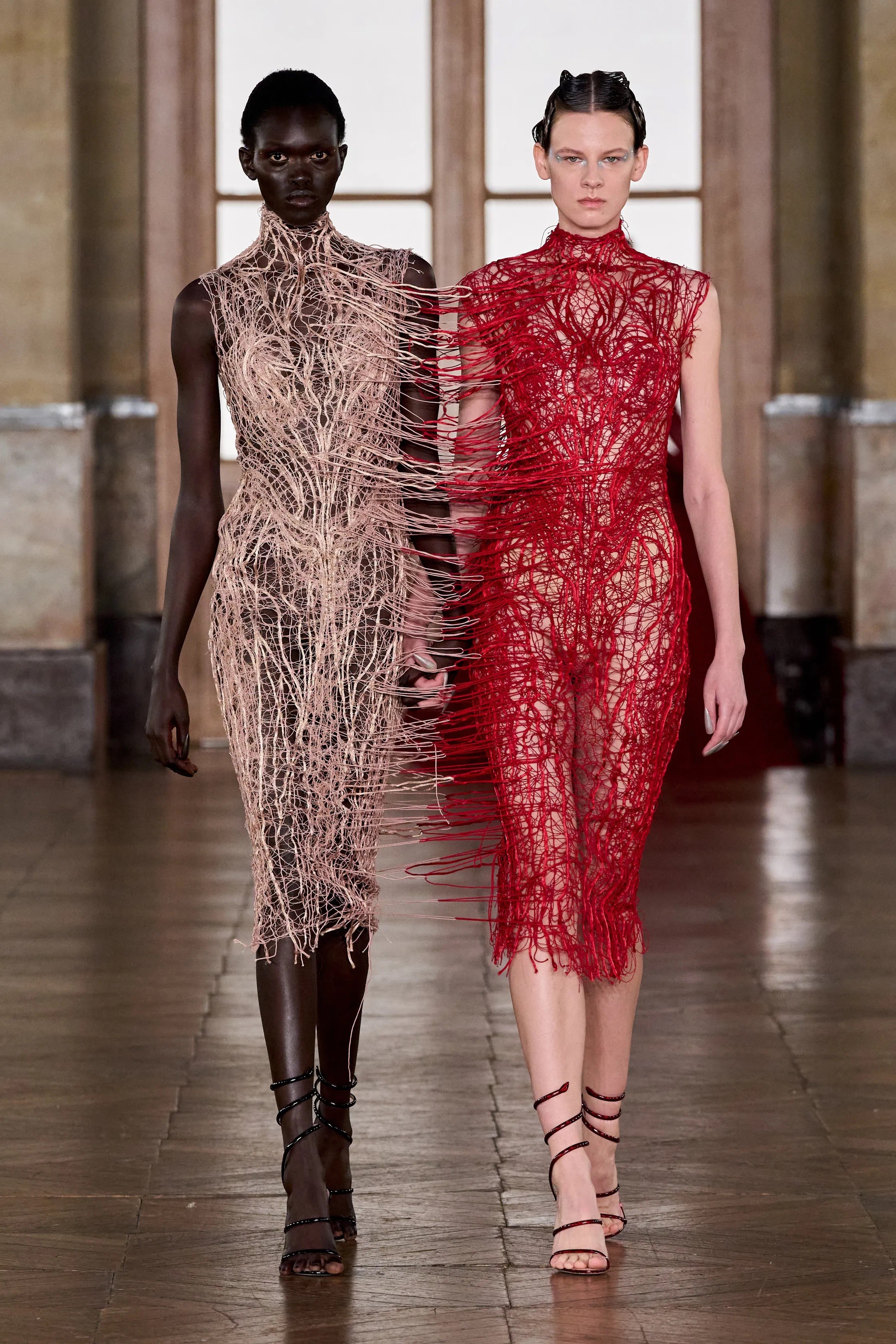
At couture week, Gaurav Gupta turned the runway into a study of balance - between strength and softness, tradition and futurism, the body and what moves beyond it.
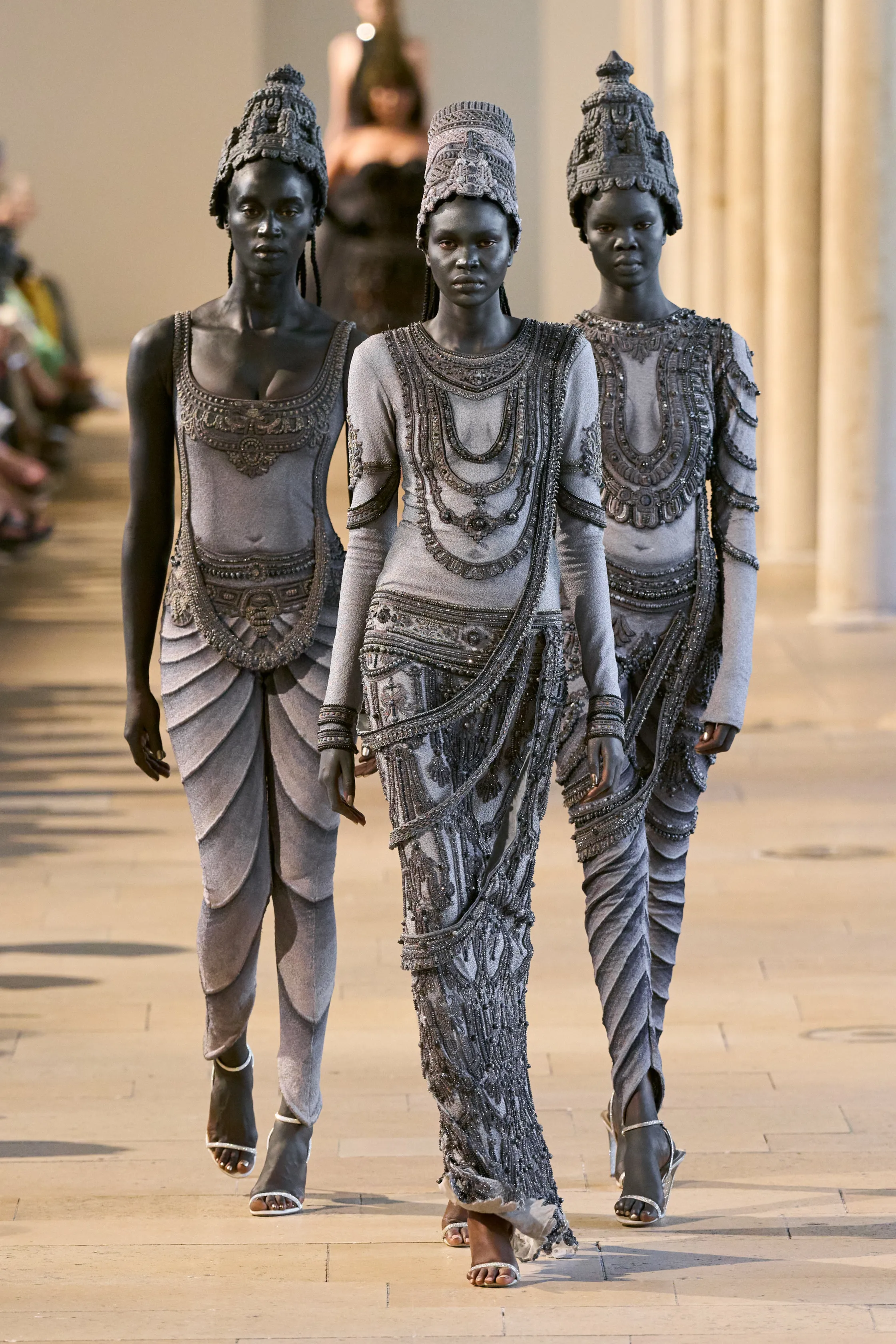
Gupta’s latest couture collection unfolded as a series of highly engineered silhouettes that treated the body as both structure and symbol. Forms were tightly contoured, often hourglass-shaped, with surfaces mapped by lace, filaments, and embroidery that appeared to chart invisible forces across the torso. These weren’t decorative gestures - they gave the clothes a sense of internal logic, as if each piece was built around an unseen framework.
Pairs of looks appeared in dialogue, connected by ribbons and strands that bound garments - and concepts - together. Colour played a deliberate role too. Deep blacks and metallics were interrupted by flashes of red, pale pinks, mogra (jasmine buds) adorned on ethereal white, creating tension between softness and severity.
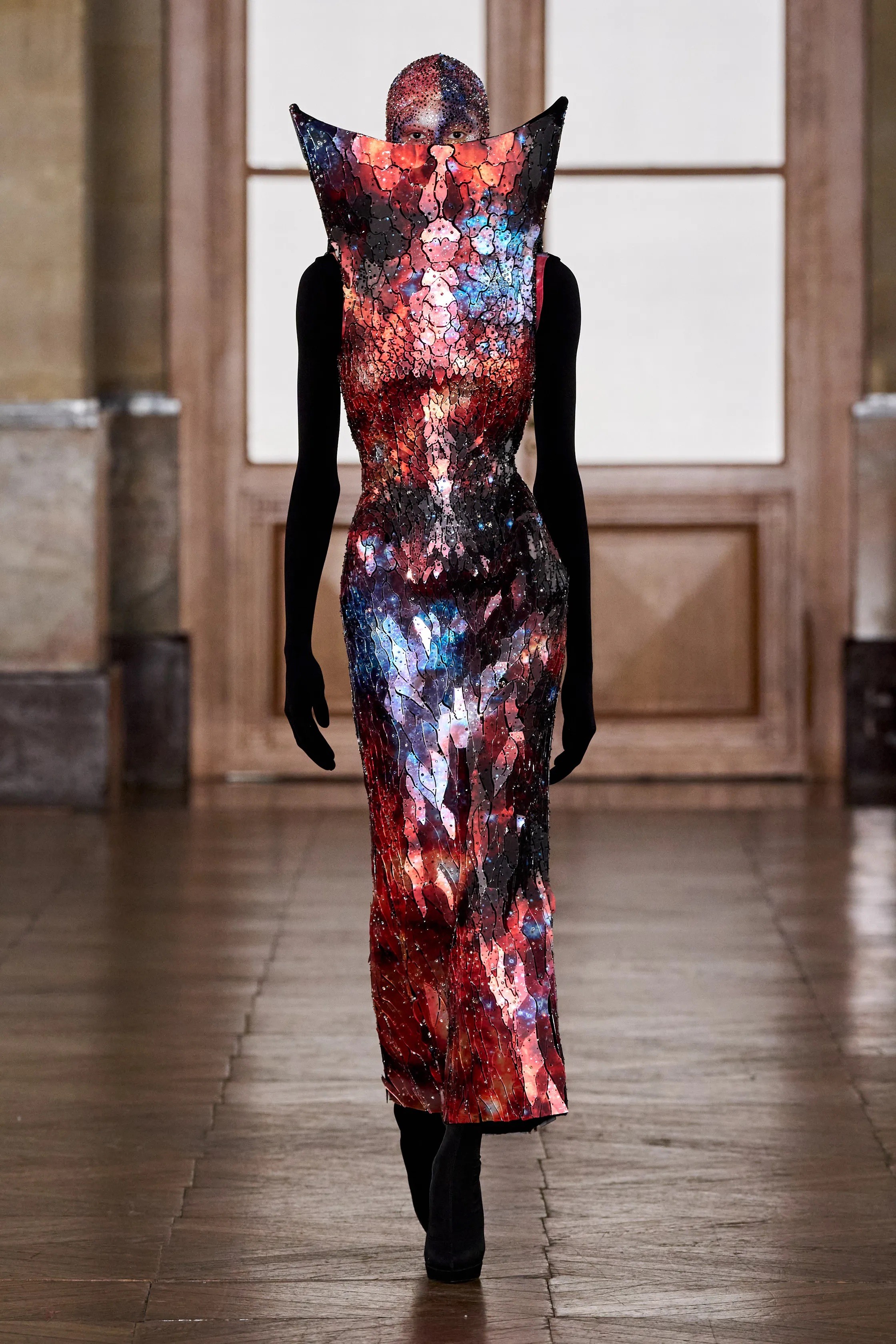
Elsewhere, couture techniques pushed into unexpected territory. Embroidery took on industrial weight, incorporating metallic elements that suggested planetary systems, timepieces, and orbital movement, particularly striking on sculptural bodices and velvet gowns.
There was a constant push and pull between organic references and futuristic finishes. Feathered whites and petal-like textures suggested growth and fragility, while hard, glossy surfaces and robotic treatments introduced a colder edge. Traditional Indian elements - brocade corsetry, sari-inspired gold structures, floral temple motifs - were woven seamlessly into the collection without feeling referential.
One of the show’s most powerful moments came quietly, as Gupta’s muse and partner, Navkirat Sodhi returned to the runway, her presence underscoring the collection’s themes of endurance and transformation without theatrics. The final look brought everything together: dense, molten surfaces, heavy with embellishment, shaped into a commanding sculptural form that felt less like a gown and more like a force.
This was couture as construction - precise, symbolic, and unapologetically bold - using the body as a site where past, future, and belief systems collide.
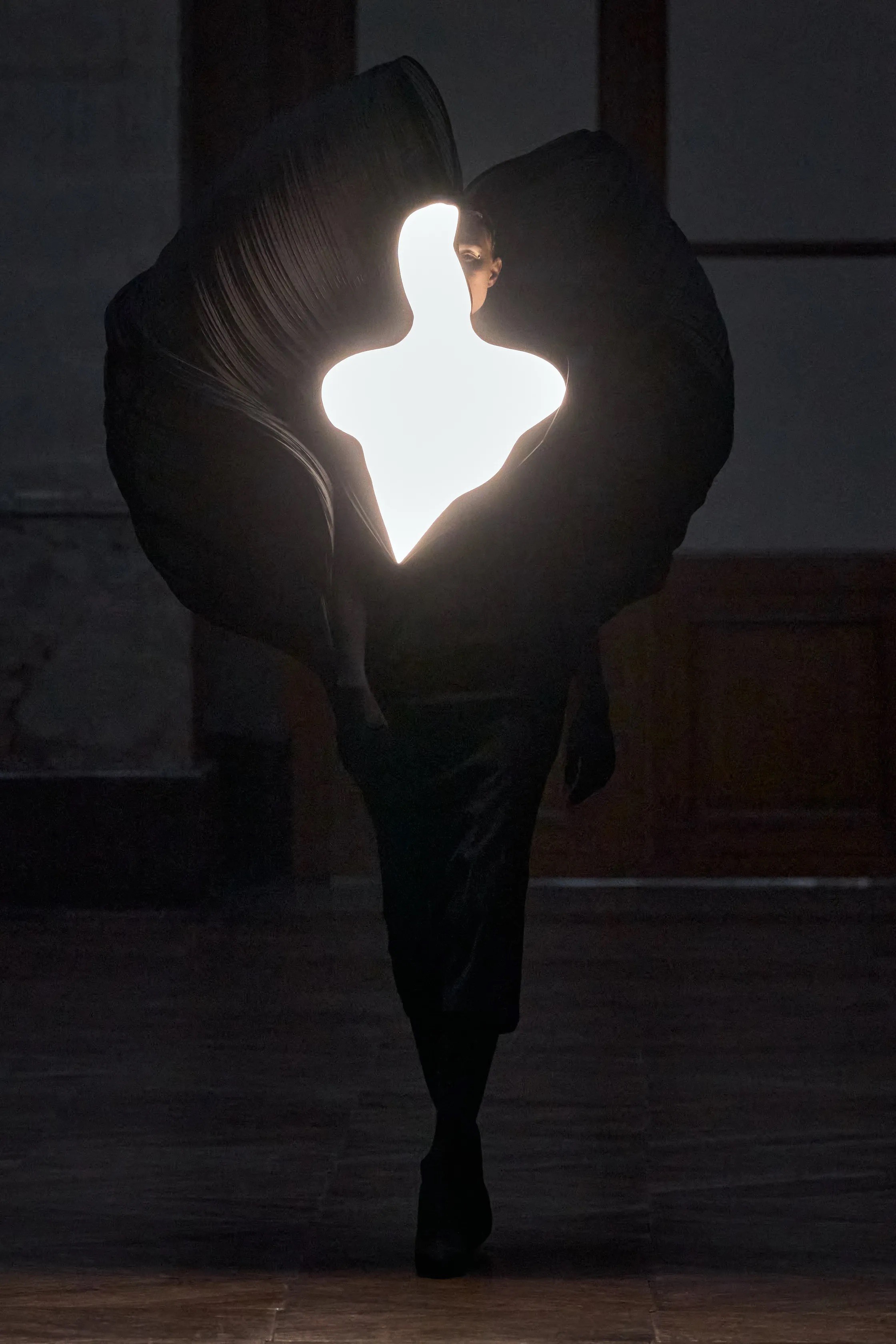
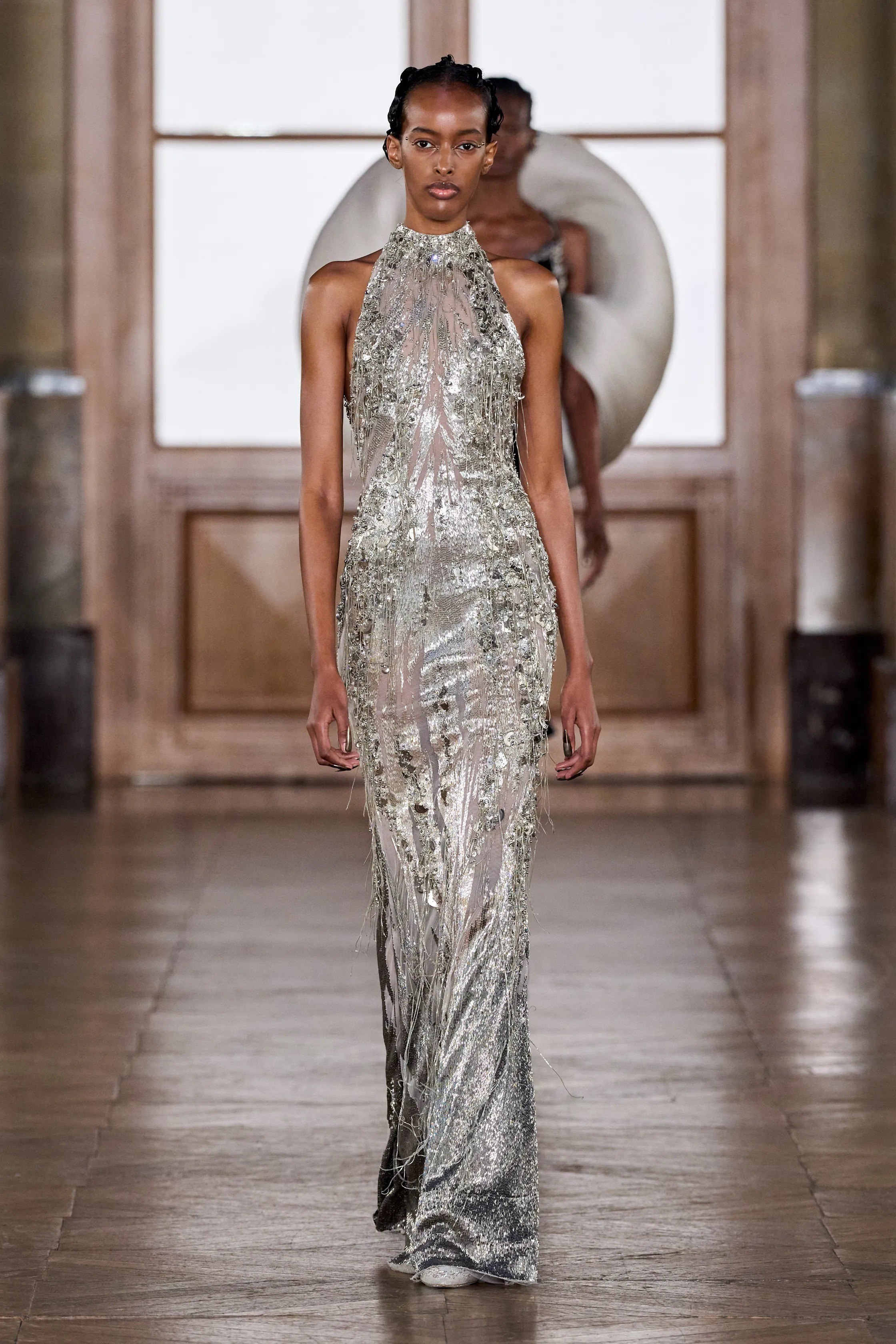
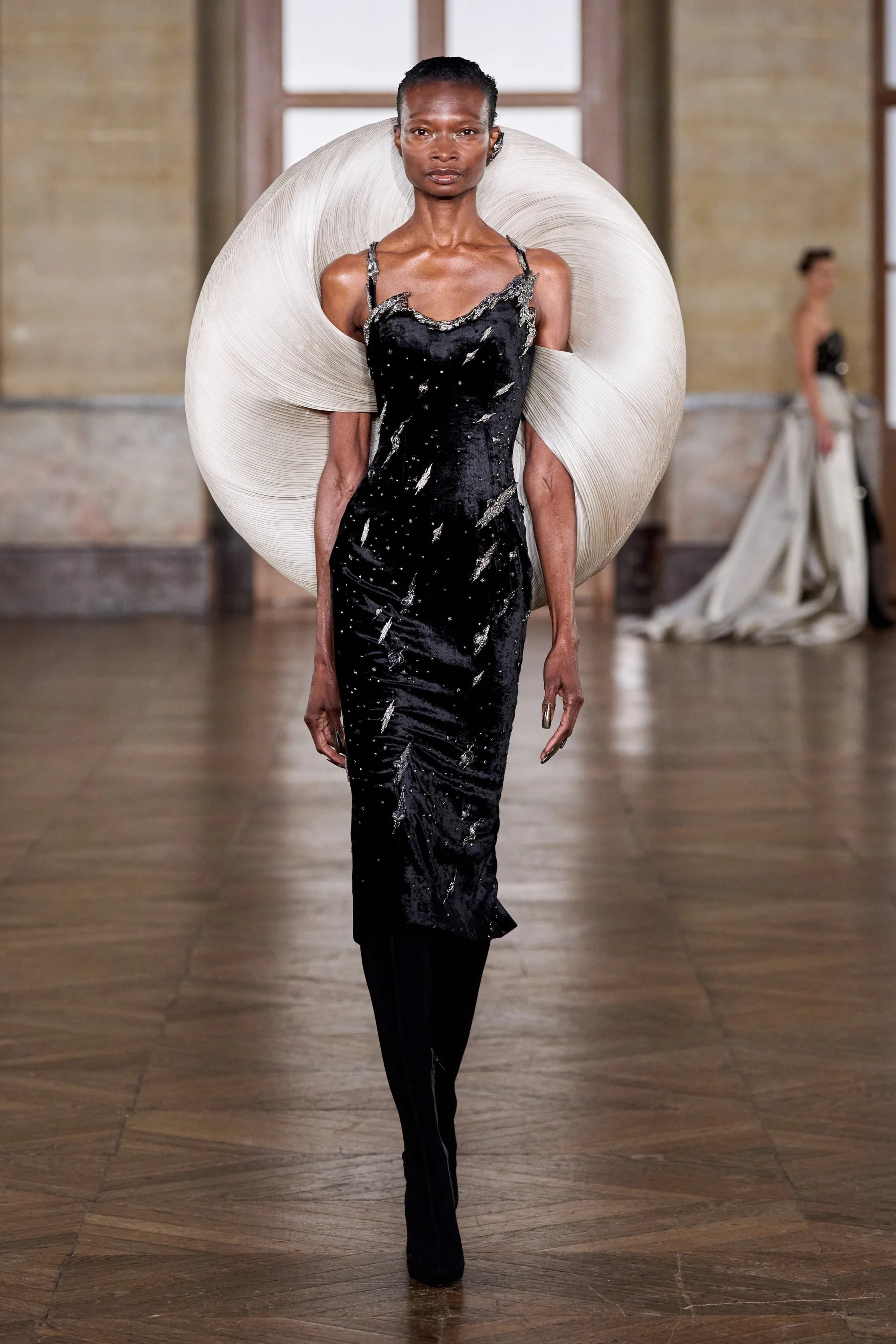
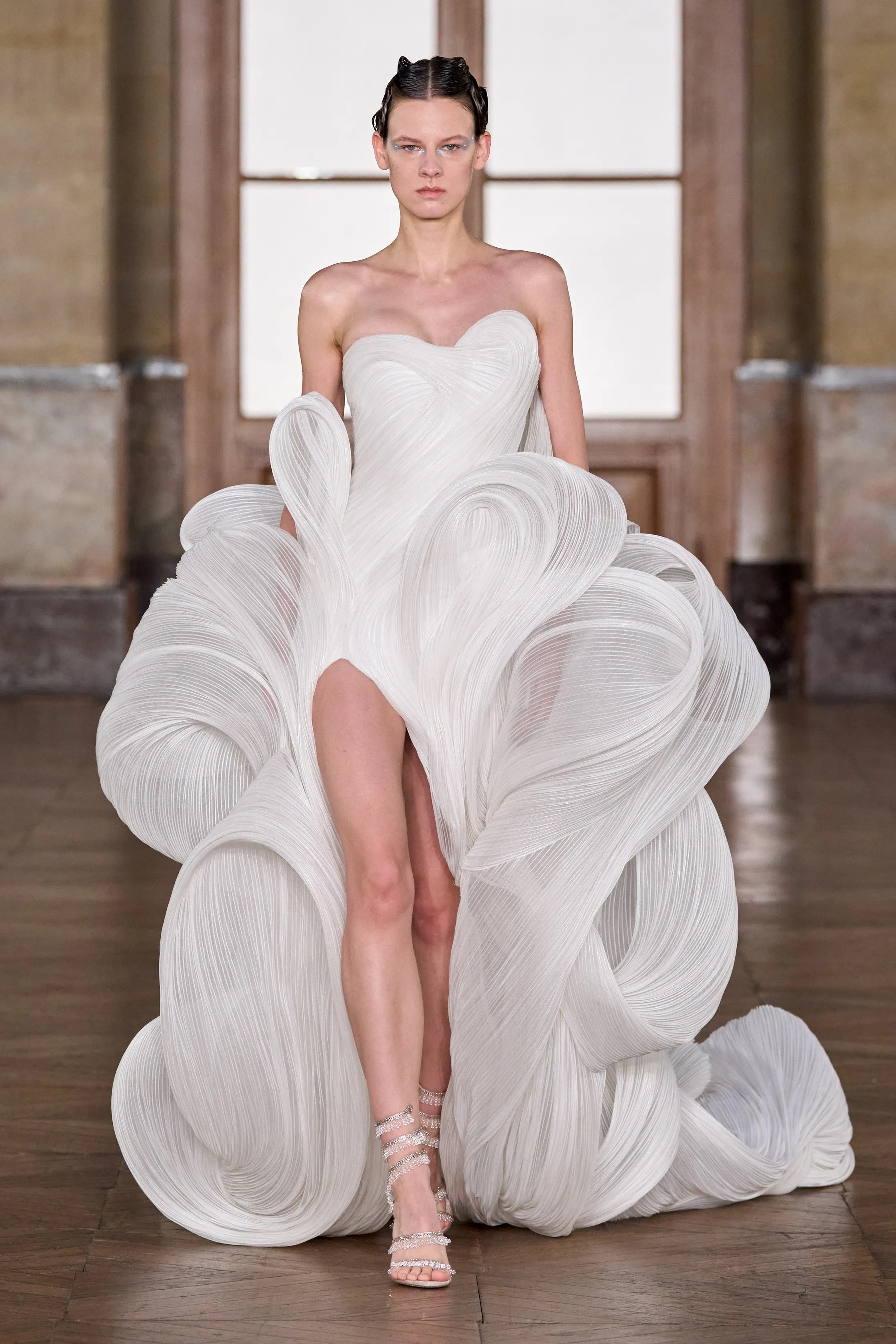
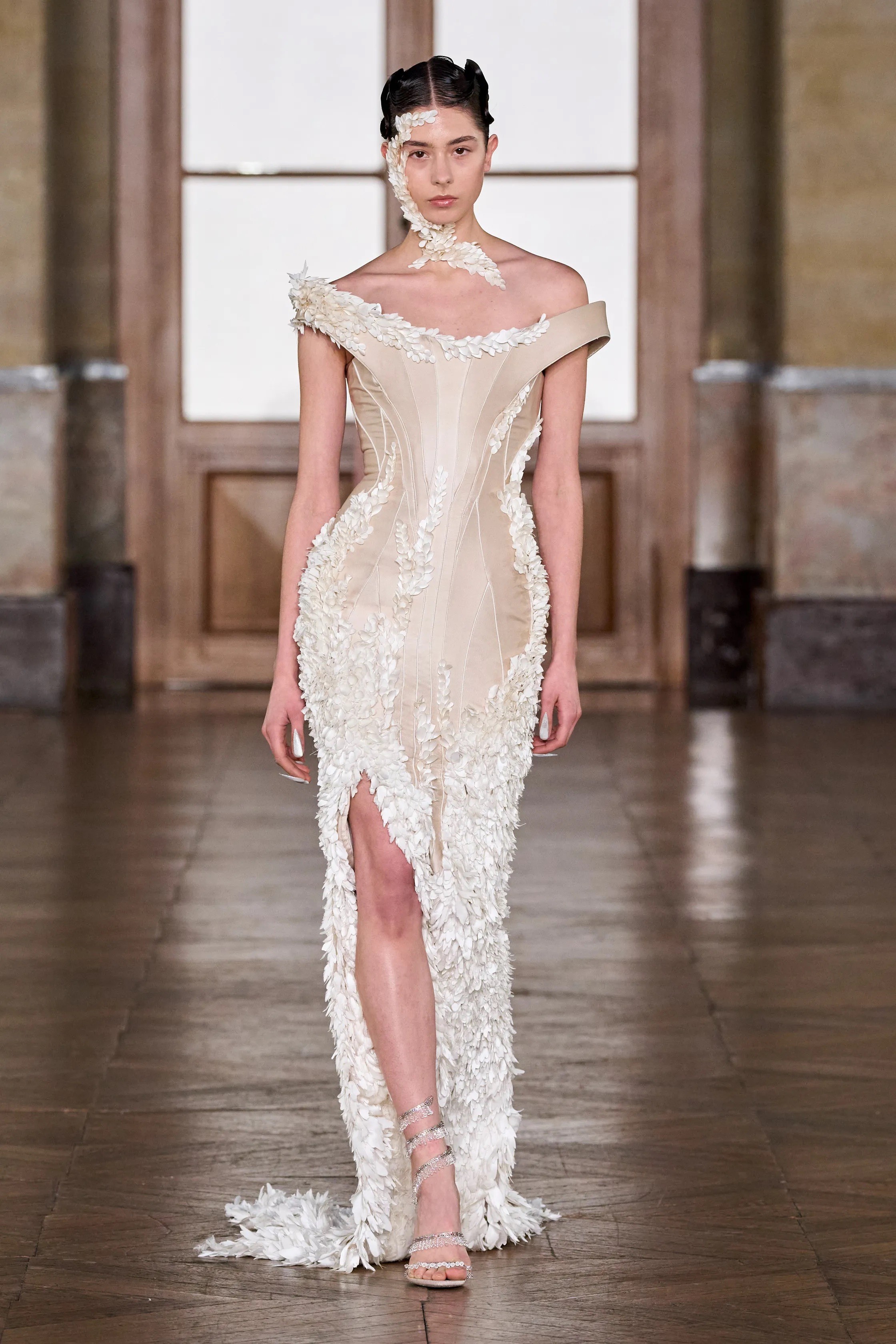
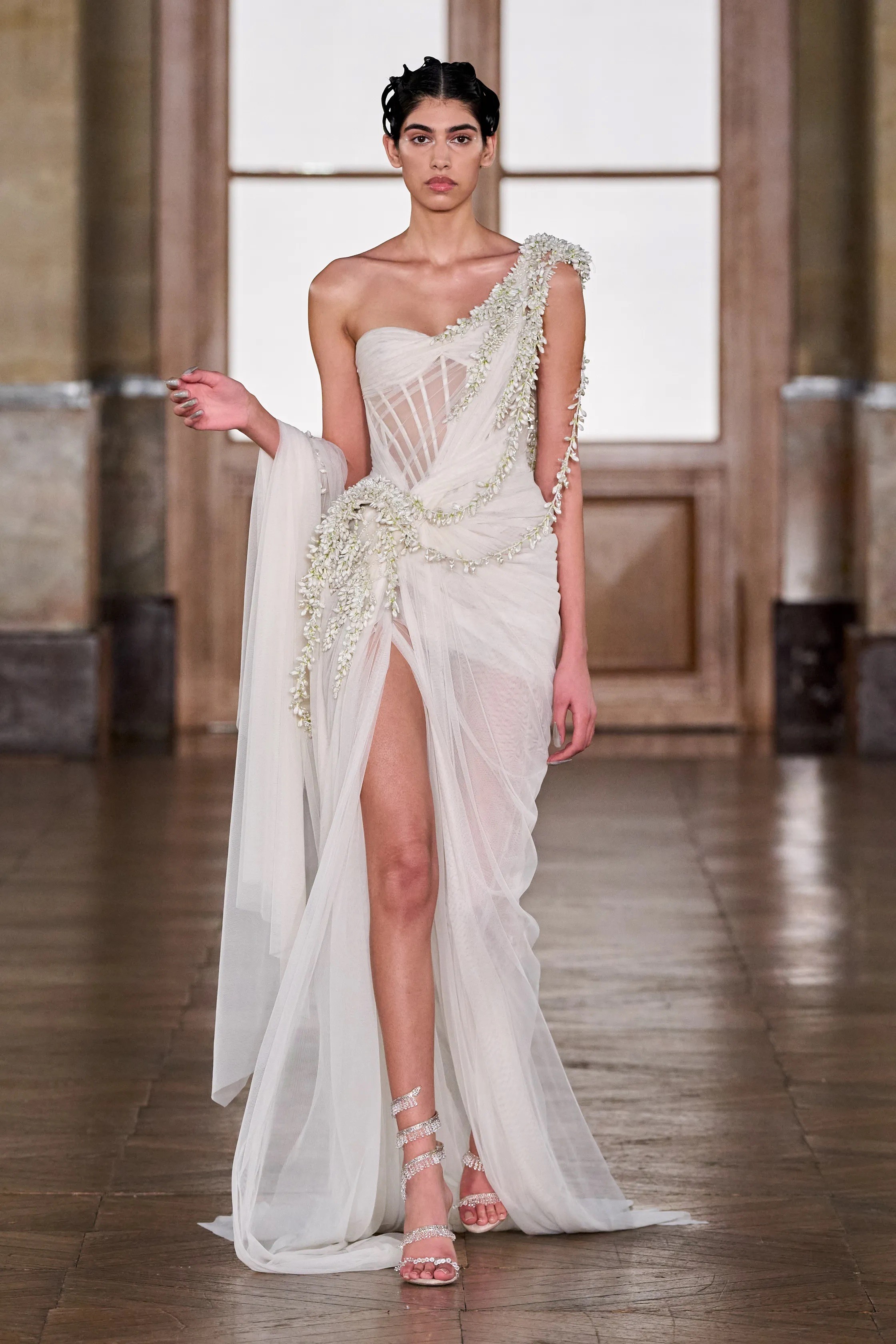
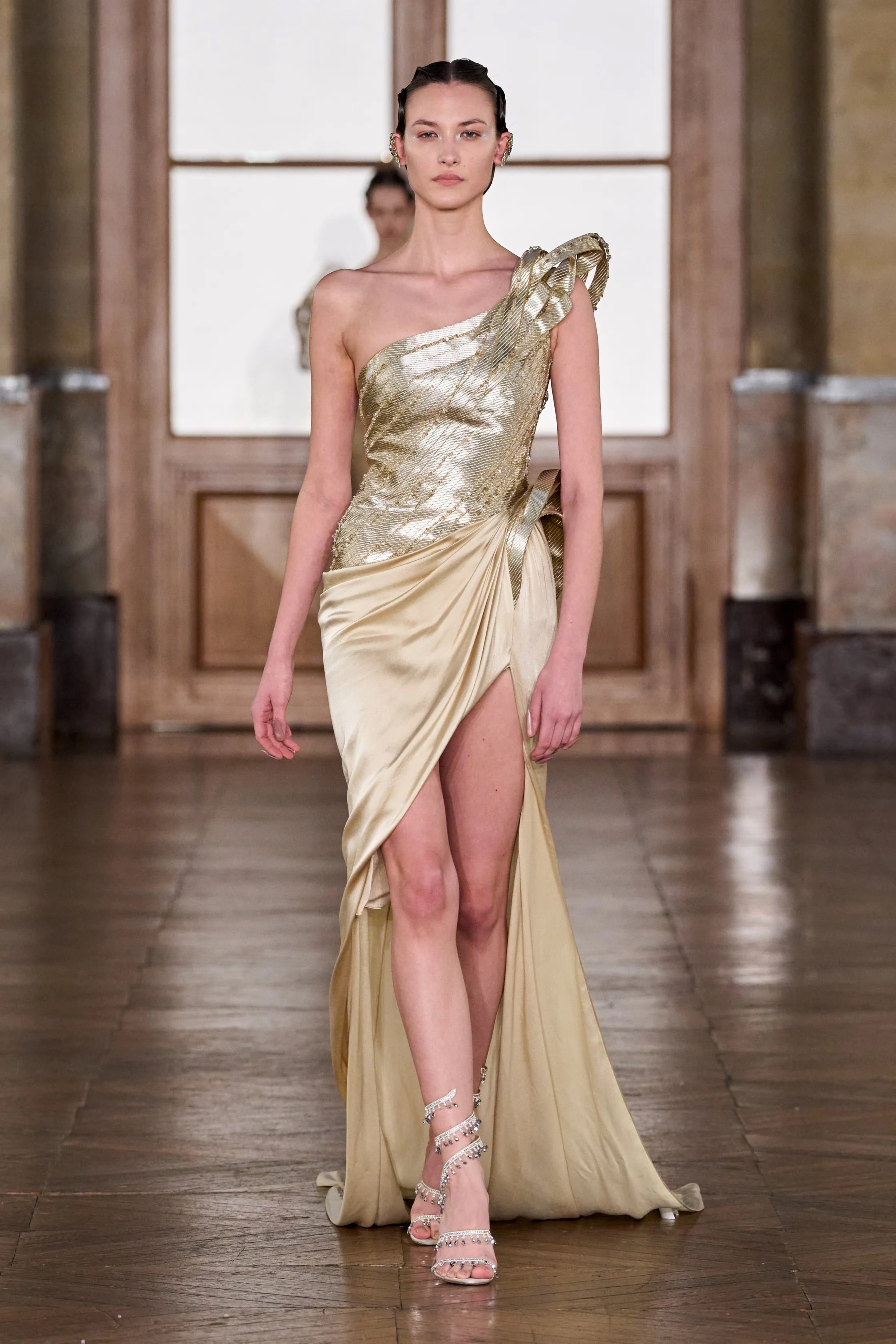
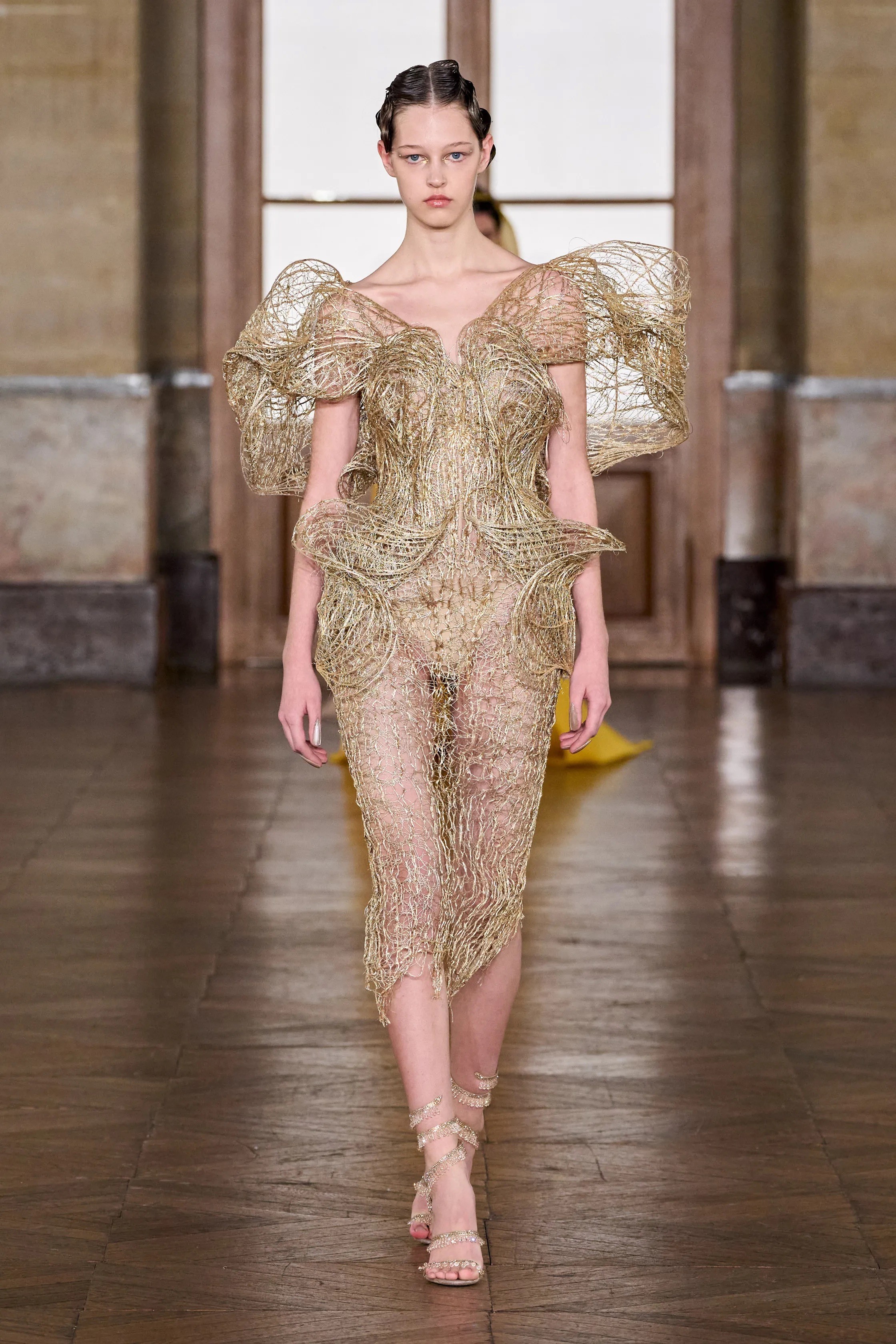
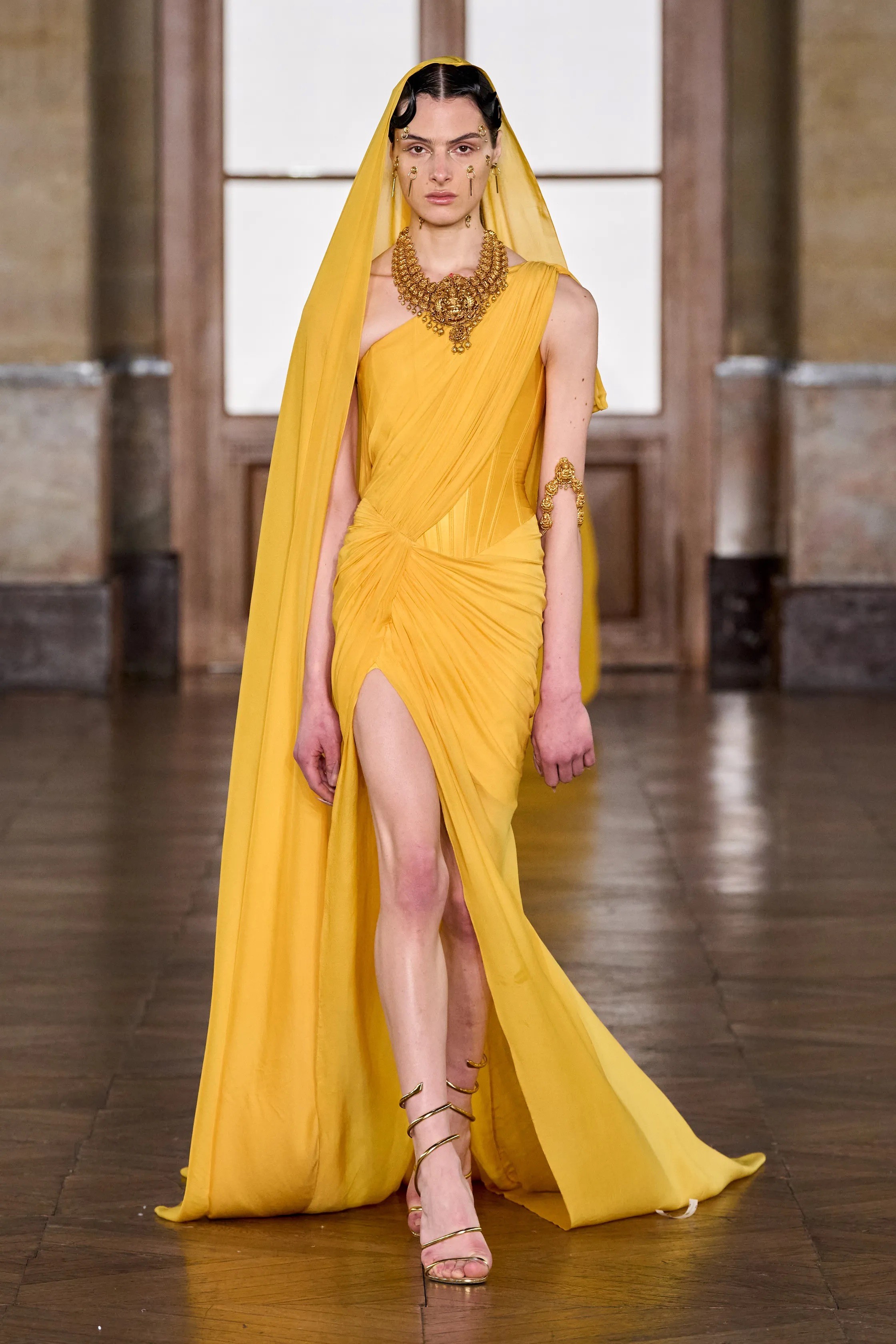
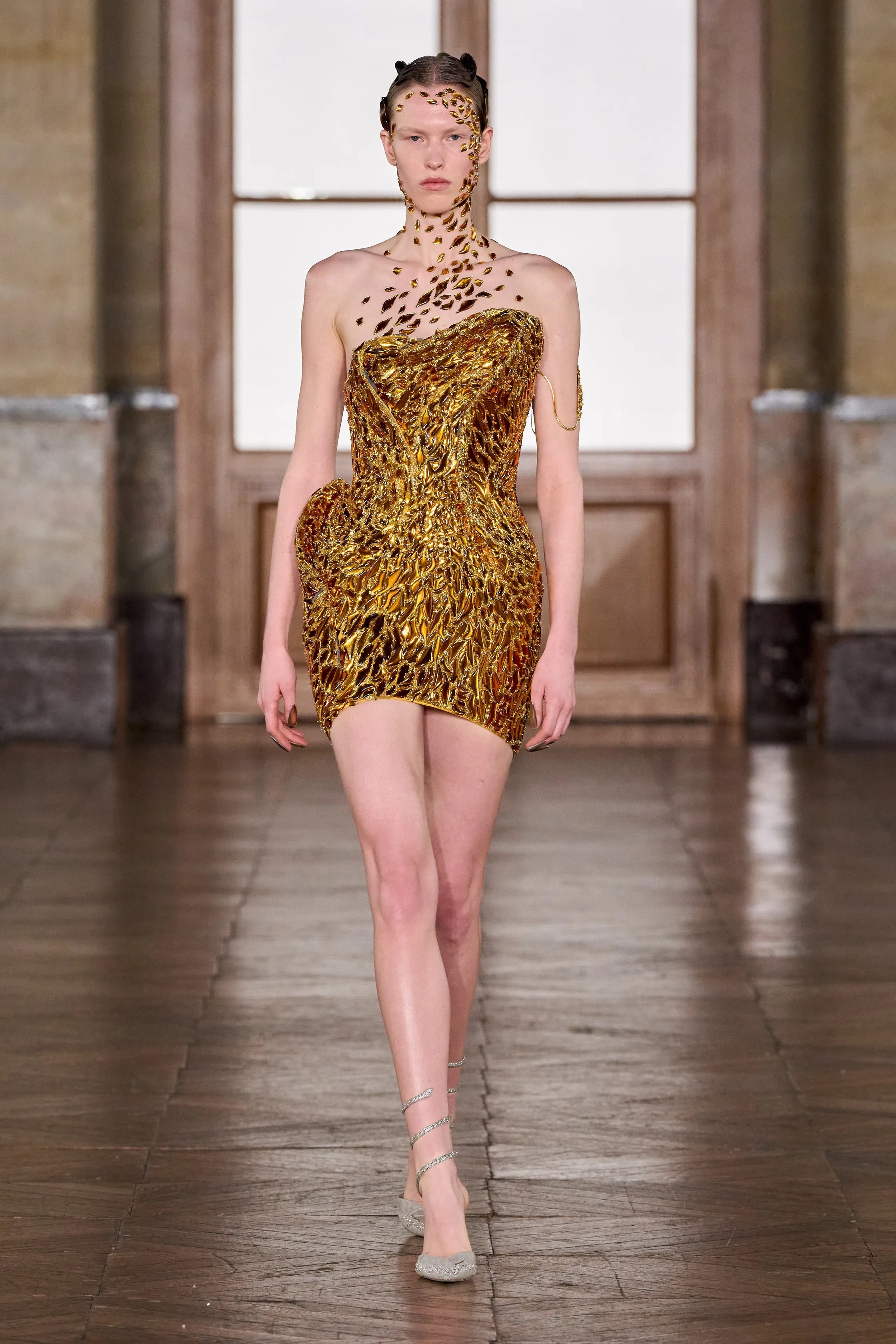
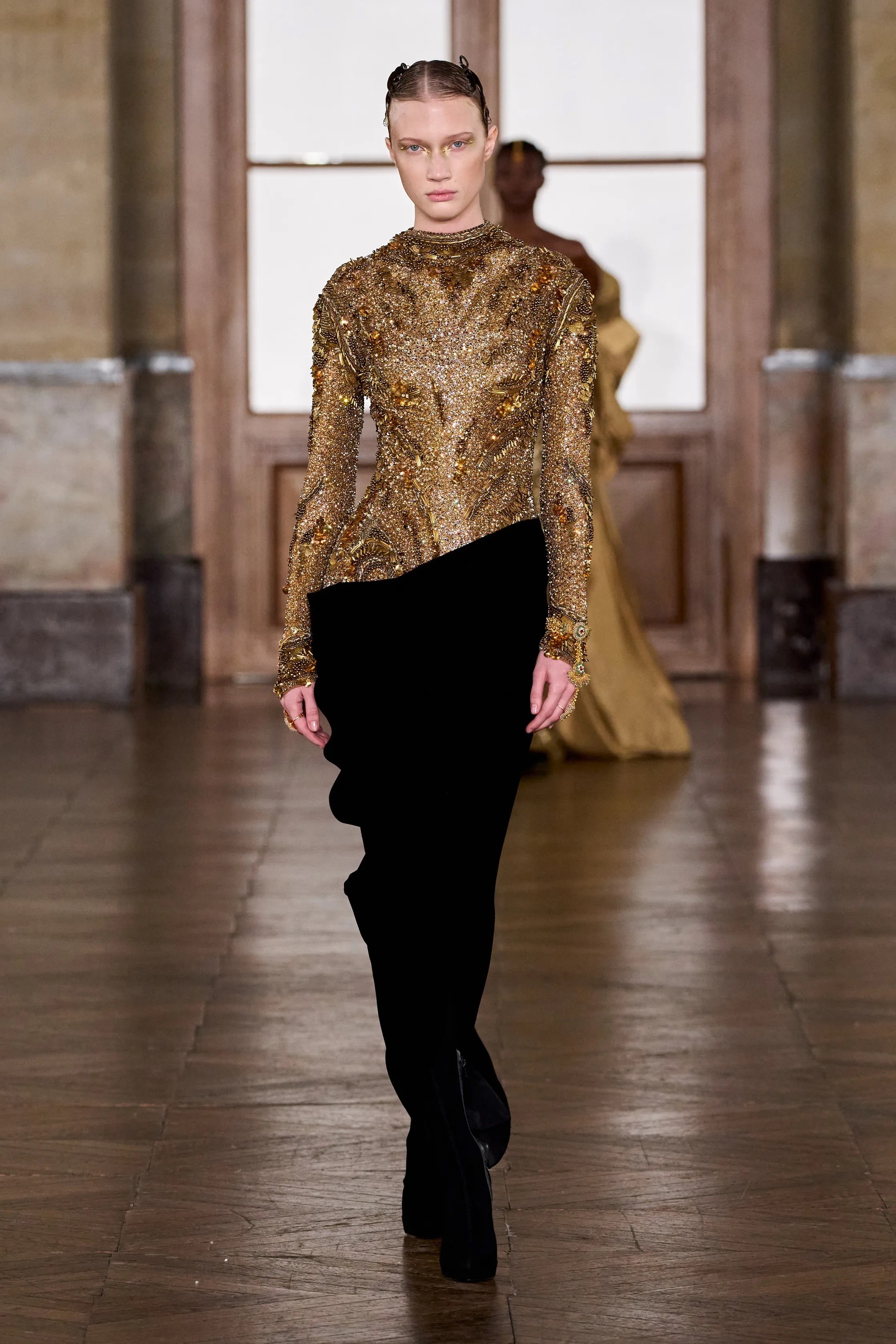
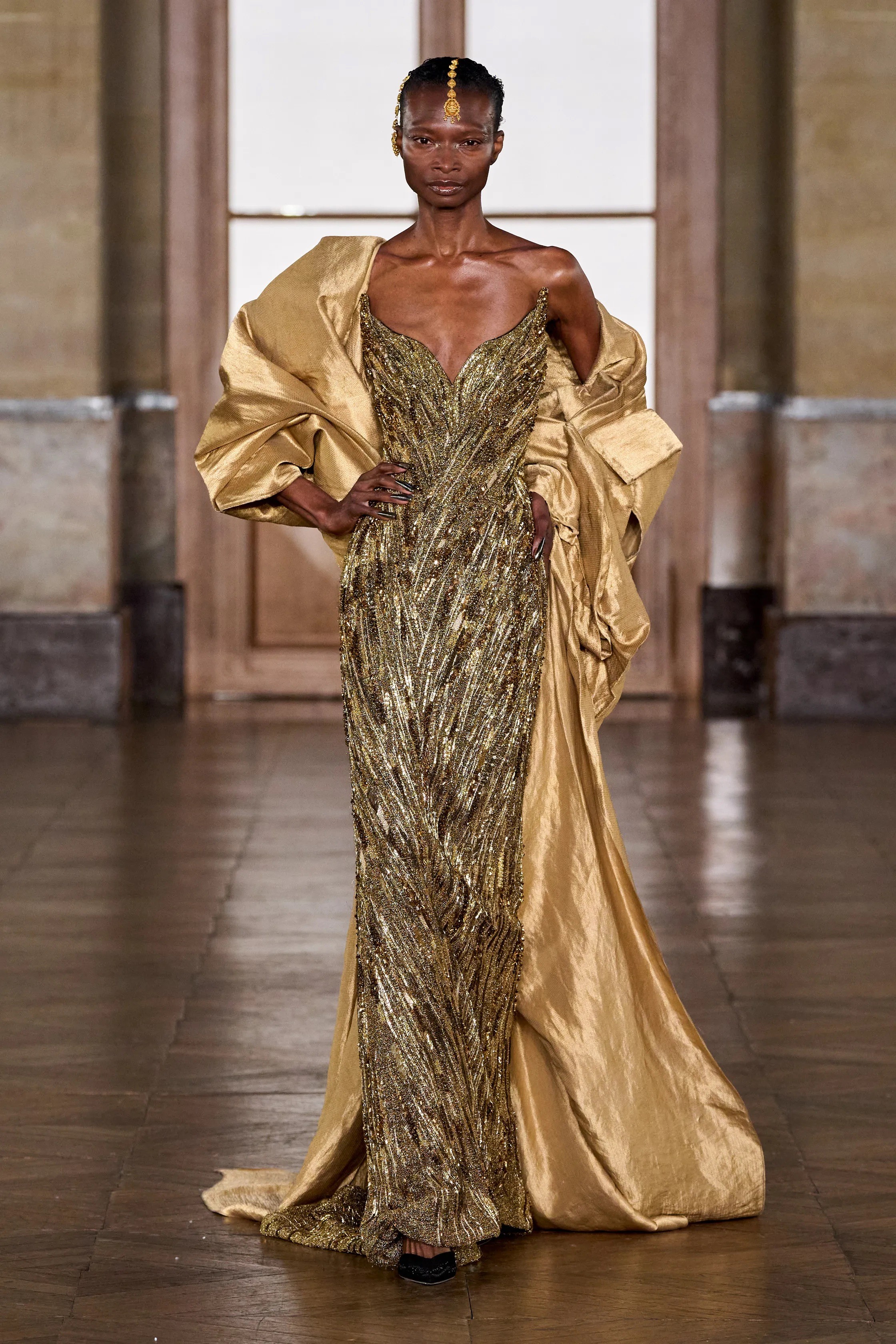
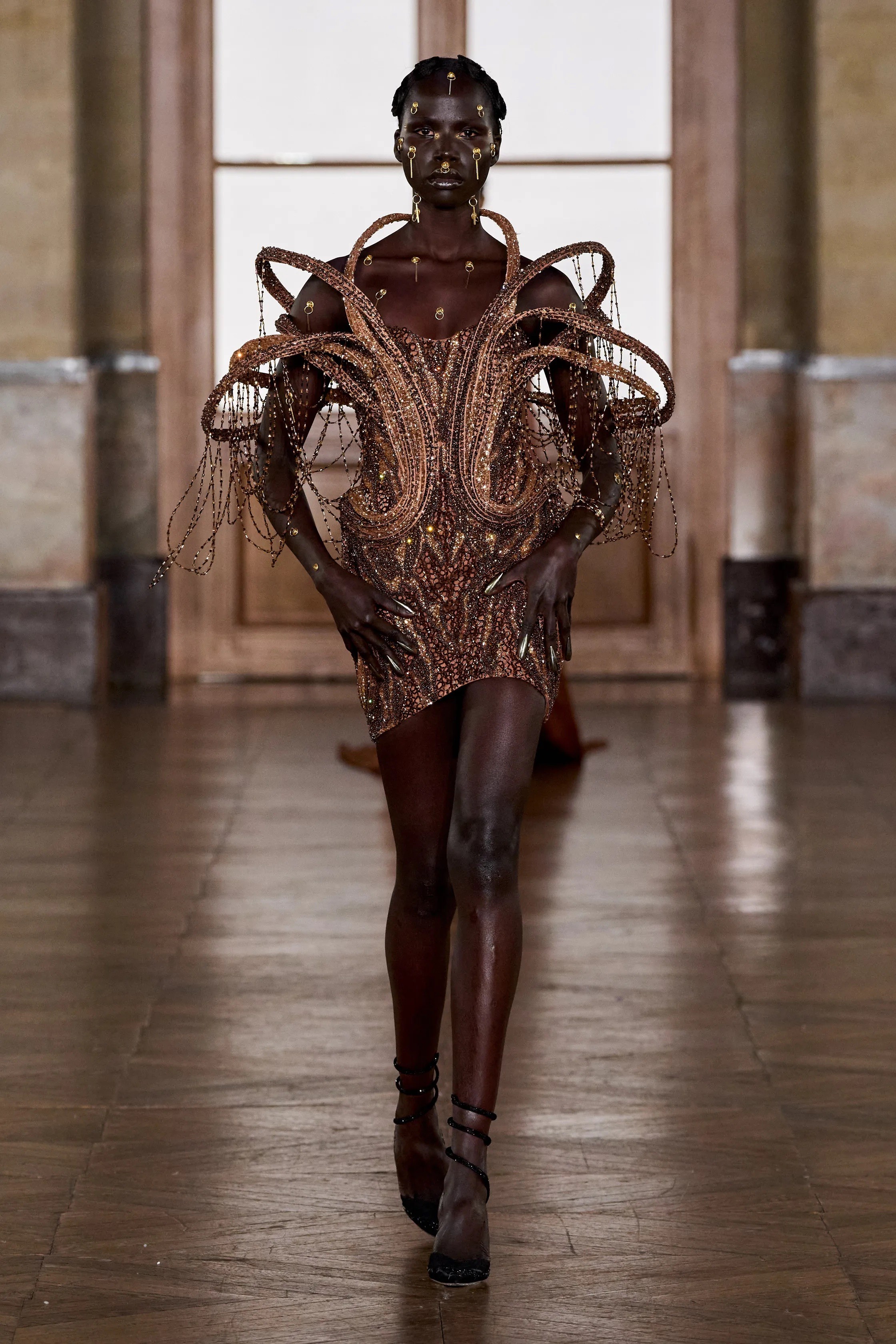
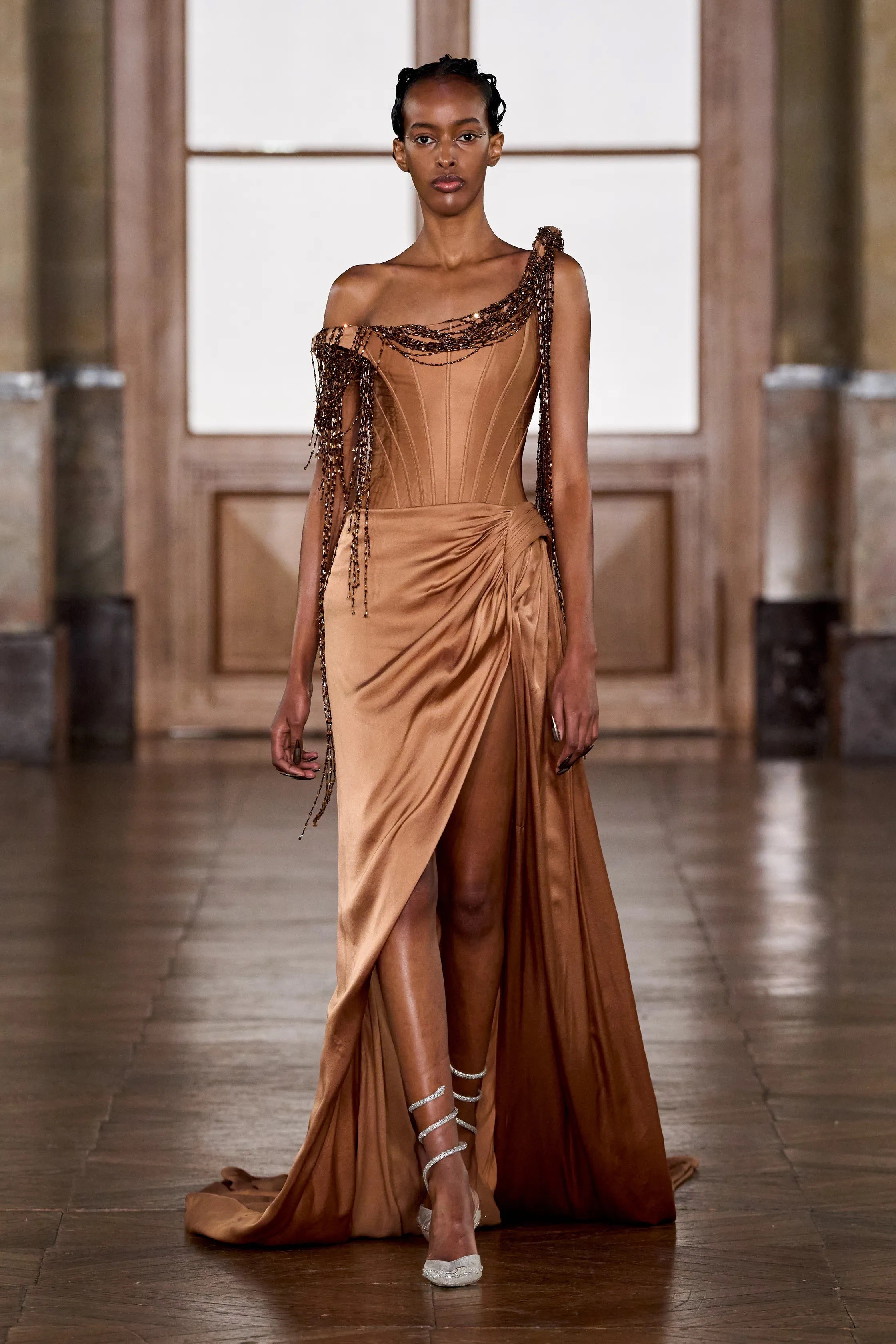
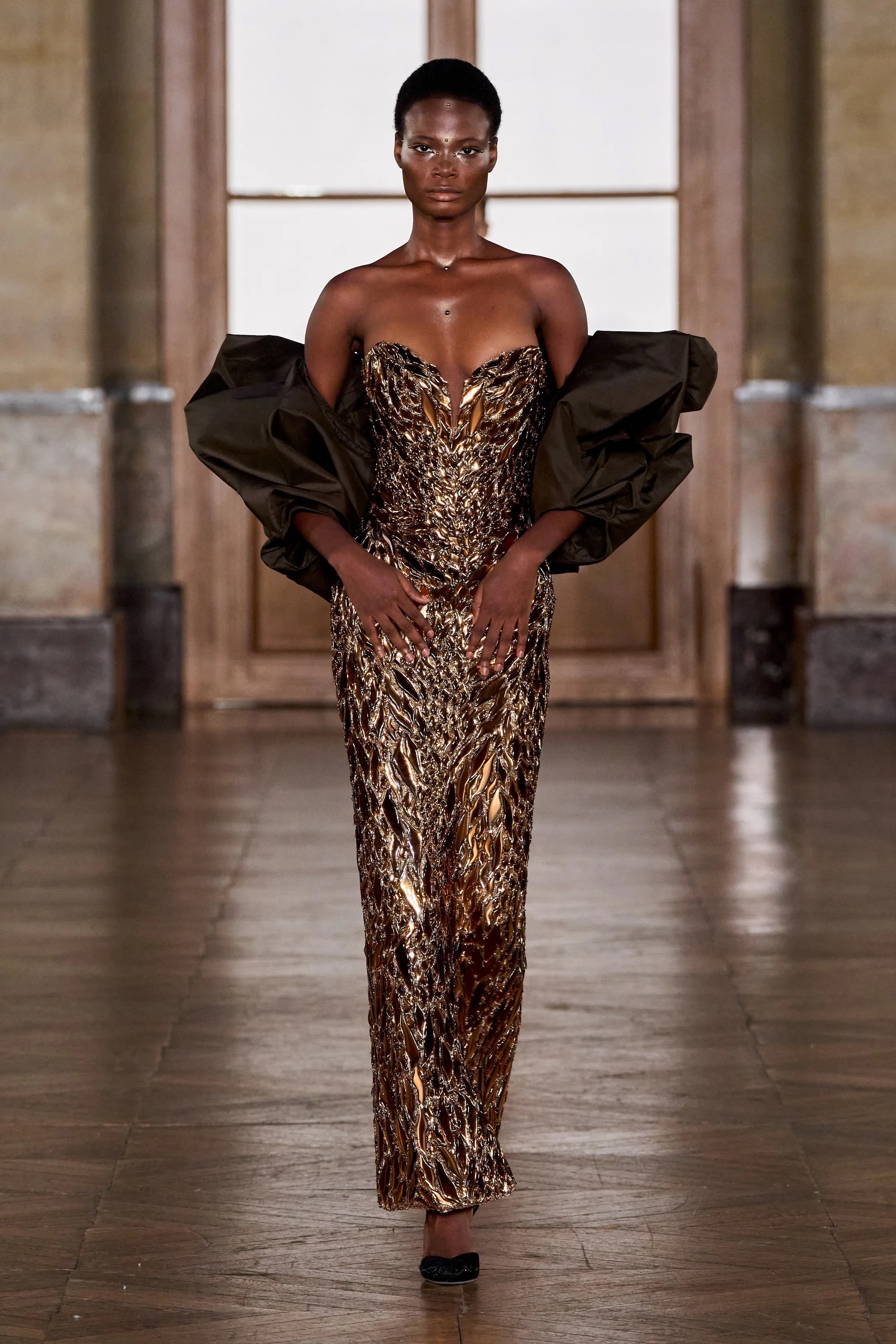
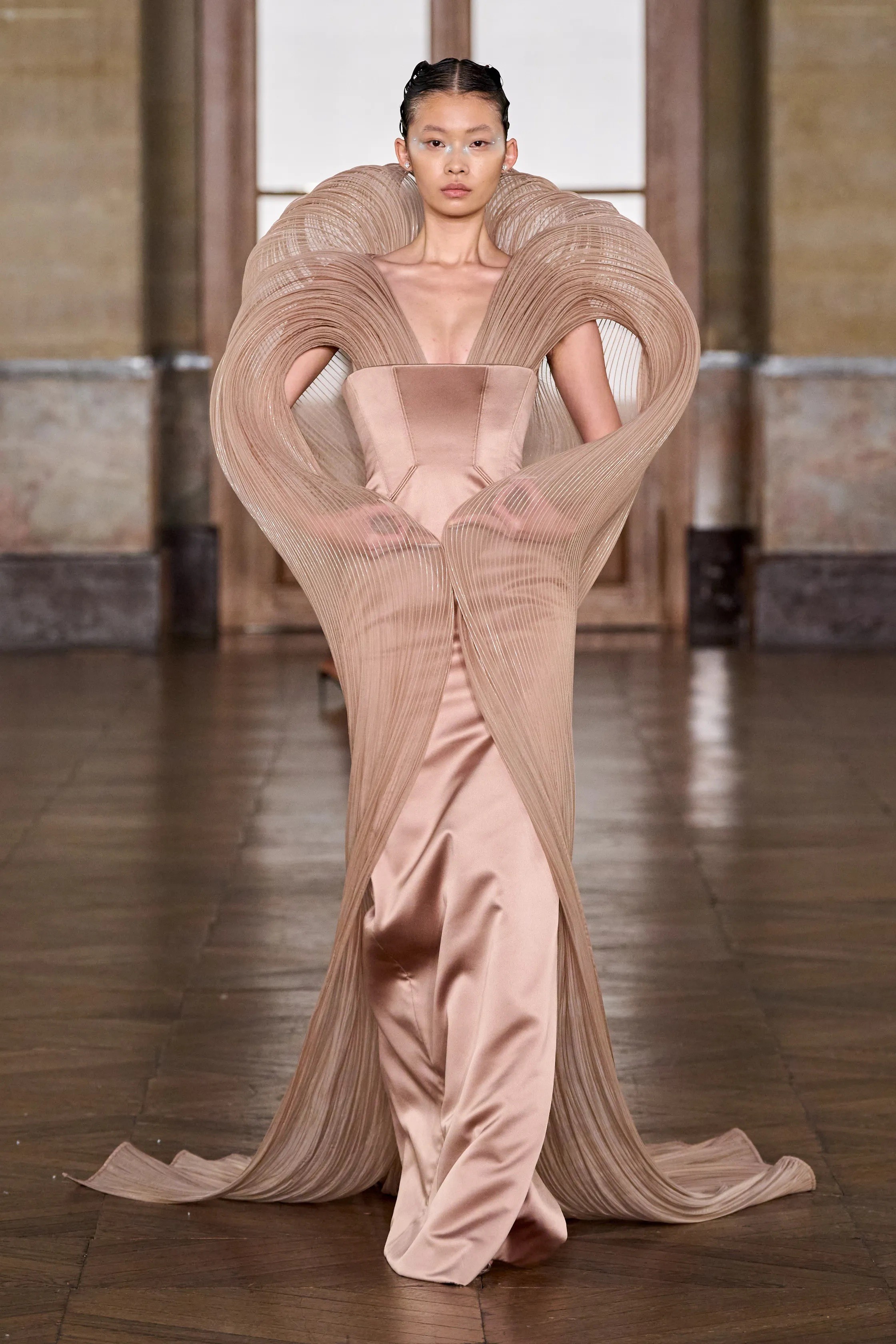
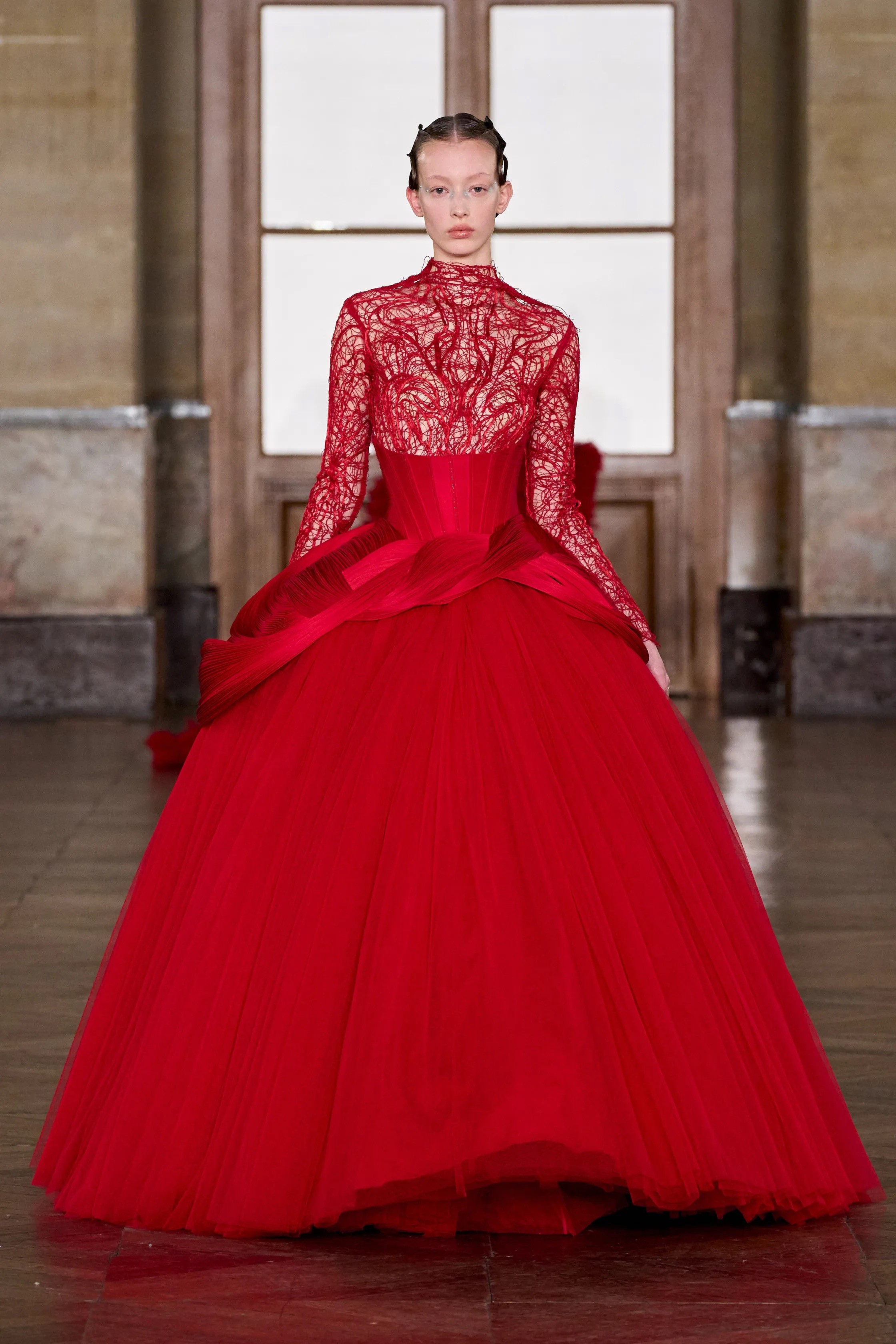
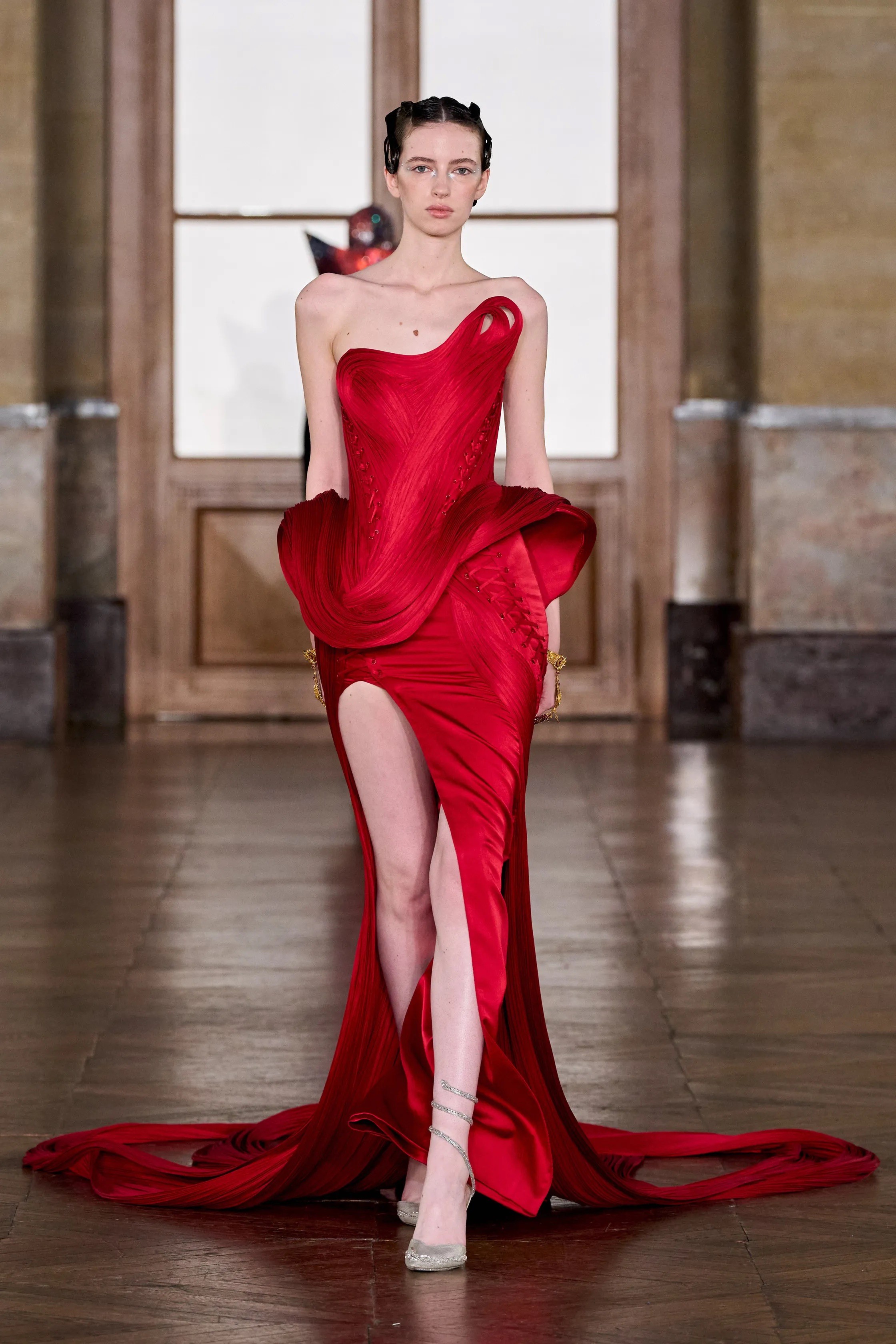
Gupta’s latest couture collection unfolded as a series of highly engineered silhouettes that treated the body as both structure and symbol. Forms were tightly contoured, often hourglass-shaped, with surfaces mapped by lace, filaments, and embroidery that appeared to chart invisible forces across the torso. These weren’t decorative gestures - they gave the clothes a sense of internal logic, as if each piece was built around an unseen framework.
Pairs of looks appeared in dialogue, connected by ribbons and strands that bound garments - and concepts - together. Colour played a deliberate role too. Deep blacks and metallics were interrupted by flashes of red, pale pinks, mogra (jasmine buds) adorned on ethereal white, creating tension between softness and severity.
Elsewhere, couture techniques pushed into unexpected territory. Embroidery took on industrial weight, incorporating metallic elements that suggested planetary systems, timepieces, and orbital movement, particularly striking on sculptural bodices and velvet gowns.
There was a constant push and pull between organic references and futuristic finishes. Feathered whites and petal-like textures suggested growth and fragility, while hard, glossy surfaces and robotic treatments introduced a colder edge. Traditional Indian elements - brocade corsetry, sari-inspired gold structures, floral temple motifs - were woven seamlessly into the collection without feeling referential.
One of the show’s most powerful moments came quietly, as Gupta’s muse and partner, Navkirat Sodhi returned to the runway, her presence underscoring the collection’s themes of endurance and transformation without theatrics. The final look brought everything together: dense, molten surfaces, heavy with embellishment, shaped into a commanding sculptural form that felt less like a gown and more like a force.
This was couture as construction - precise, symbolic, and unapologetically bold - using the body as a site where past, future, and belief systems collide.


Must Reads
Must Reads


we are MOLTN
●
we are MOLTN
●
we are MOLTN
●
we are MOLTN
●
we are MOLTN
●
we are MOLTN
●
we are MOLTN
●
we are MOLTN
●
we are MOLTN
●
we are MOLTN
●
we are MOLTN
●
Subscribe to MOLTN

© We Are MOLTN
2026
we are MOLTN
●
we are MOLTN
●
we are MOLTN
●
we are MOLTN
●
we are MOLTN
●
we are MOLTN
●
we are MOLTN
●
we are MOLTN
●
we are MOLTN
●
we are MOLTN
●
we are MOLTN
●
Subscribe to MOLTN
© We Are MOLTN
2026
we are MOLTN
●
we are MOLTN
●
we are MOLTN
●
we are MOLTN
●
we are MOLTN
●
we are MOLTN
●
we are MOLTN
●
we are MOLTN
●
we are MOLTN
●
we are MOLTN
●
we are MOLTN
●
Subscribe to MOLTN
© We Are MOLTN
2026