

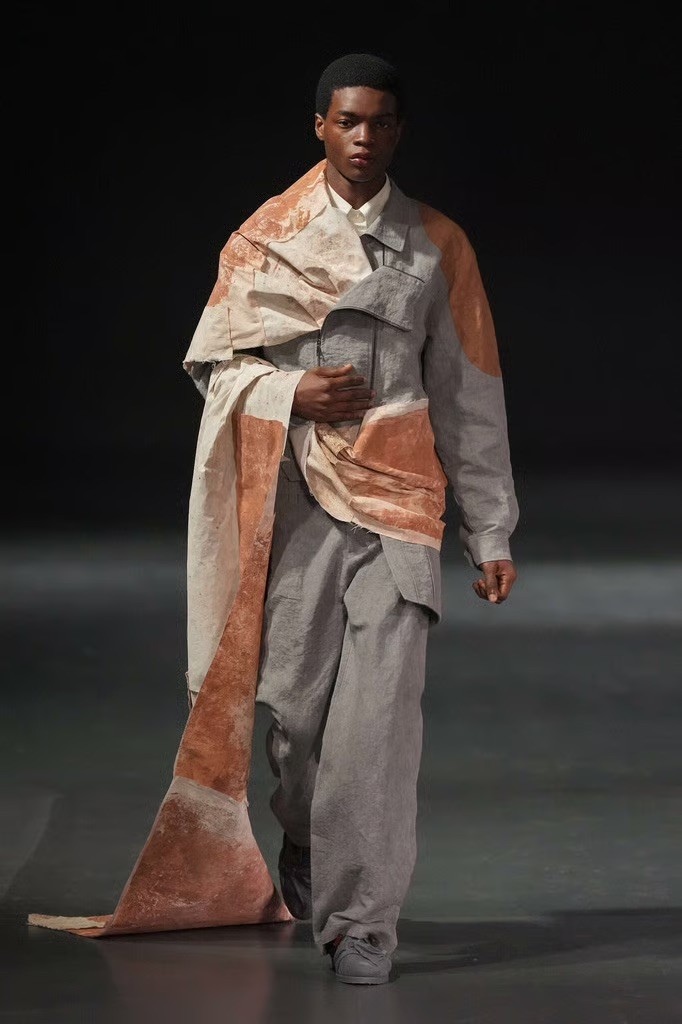
For fall 2026, Hoor Al-Qasimi treated clothing as a vessel for memory - shaped by movement, history, and what we carry with us.
Emirati fashion house, Qasimi’s fall collection unfolded as a meditation on movement, inheritance, and the quiet weight of personal history. Framed as what she described as “emotional archaeology,” the show explored how clothing can absorb memory - as lived experience. The question wasn’t where you are from, but what you carry with you when you leave.
Set within a dimly lit industrial space, the runway was staged alongside an installation by Lebanese artist Dala Nasser. Crinkled sheets of fabric hung from the ceiling like drying linens, transforming the venue into a space that felt domestic, transient, and unresolved.
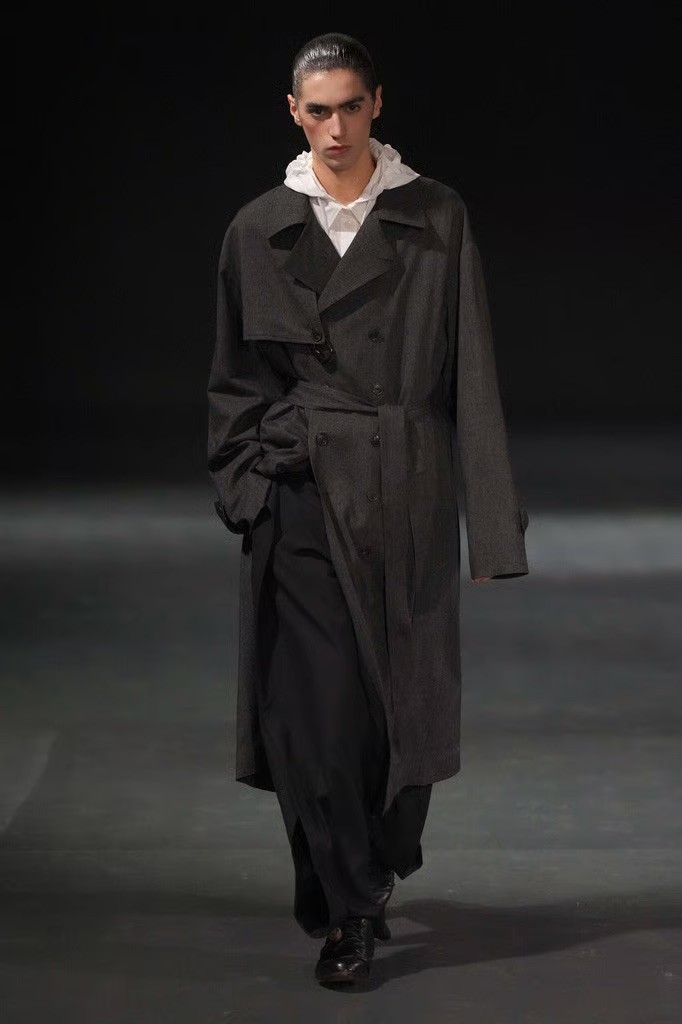
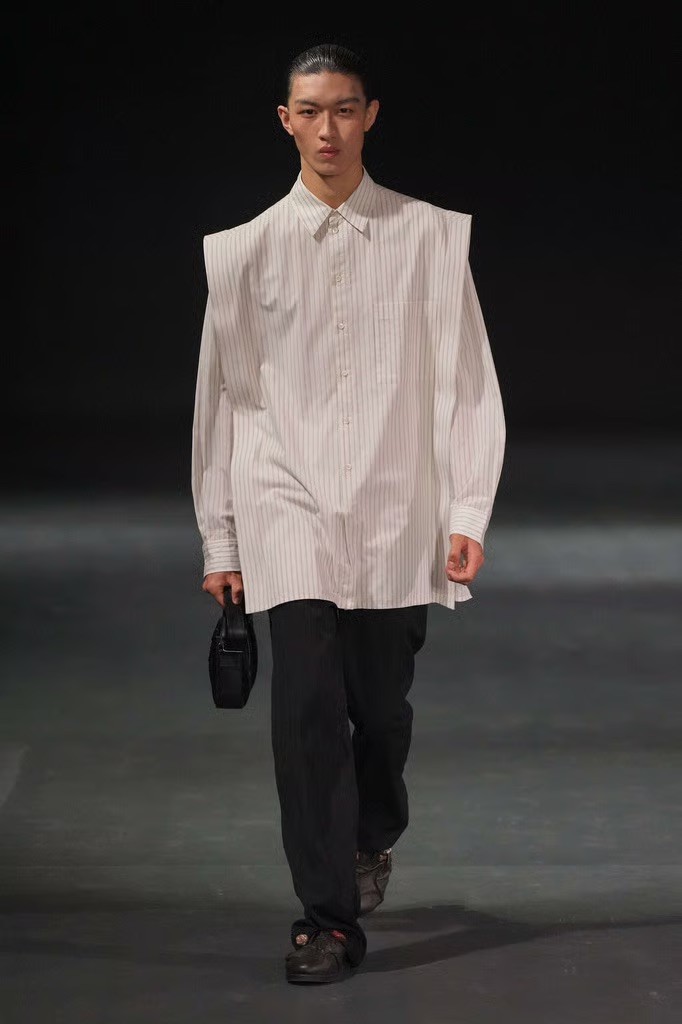
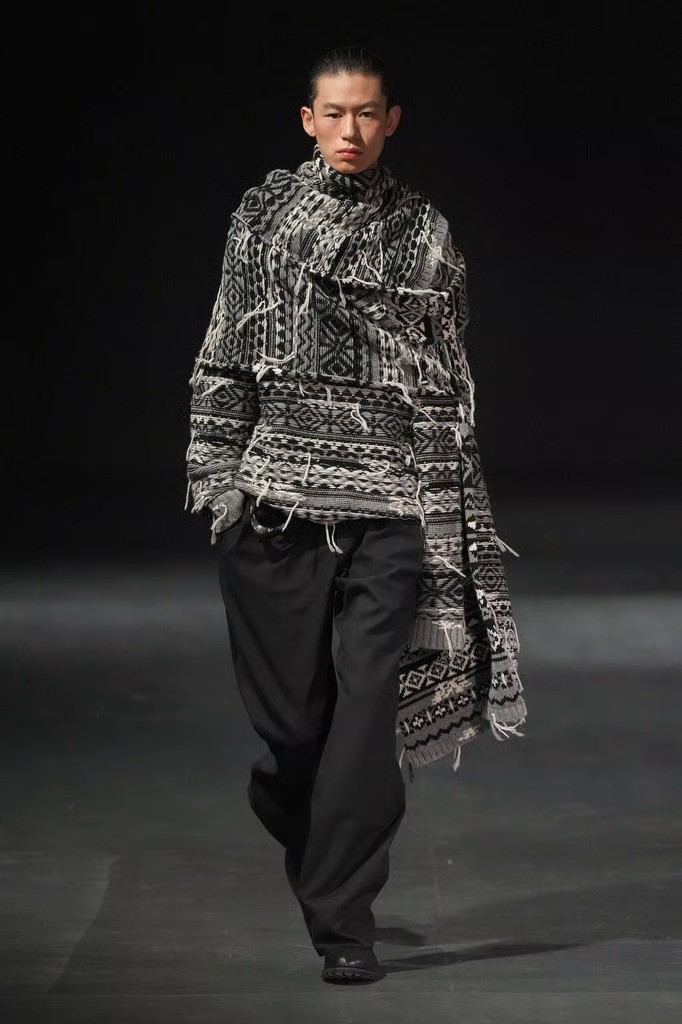
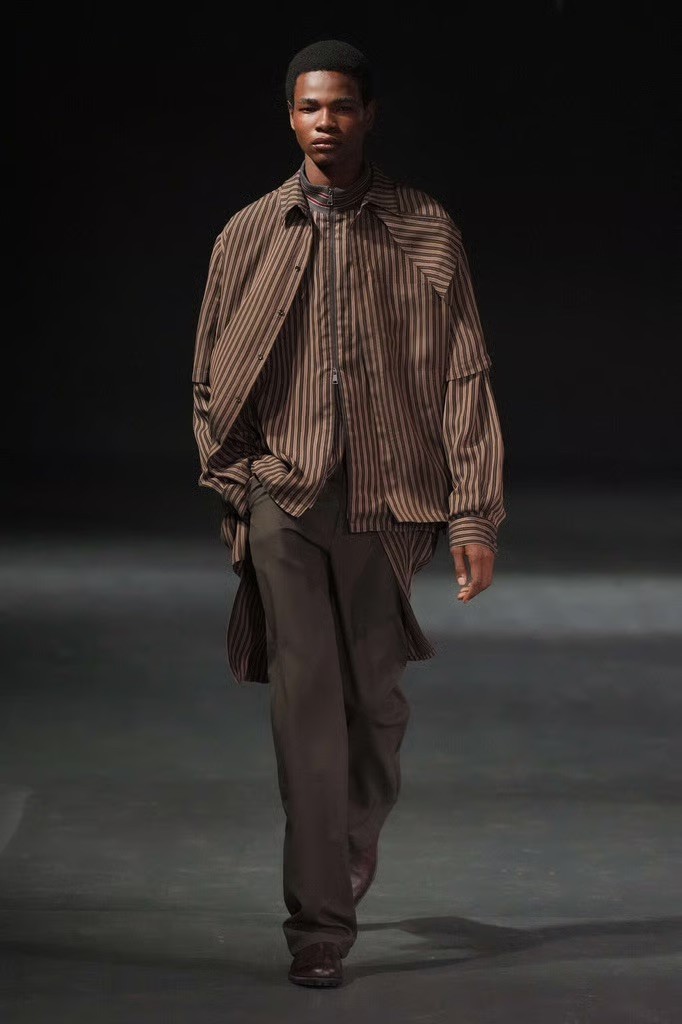
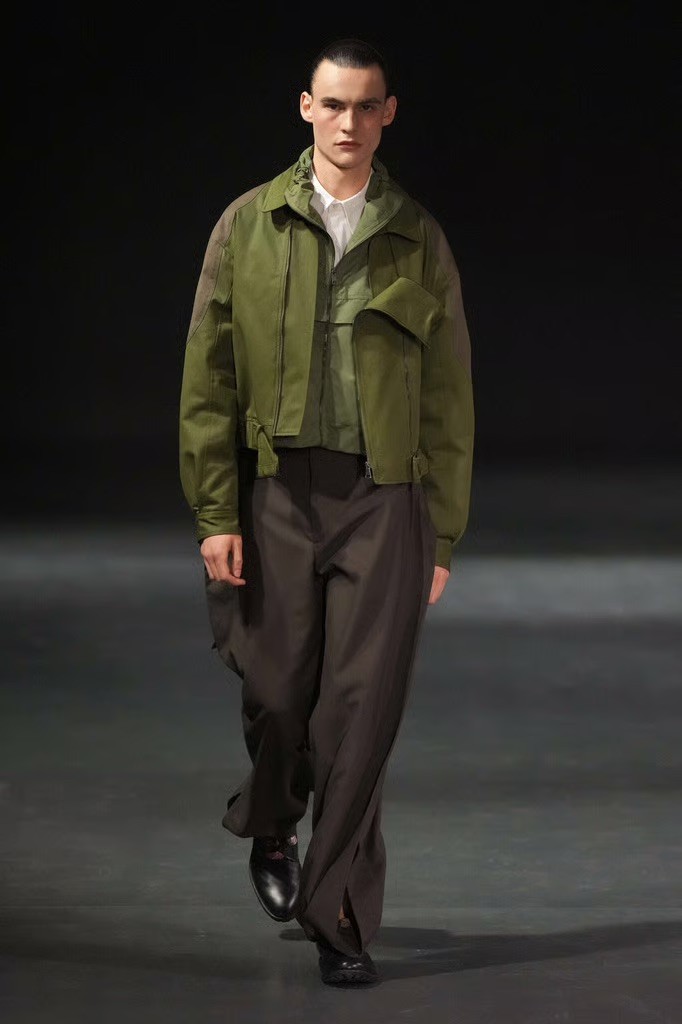
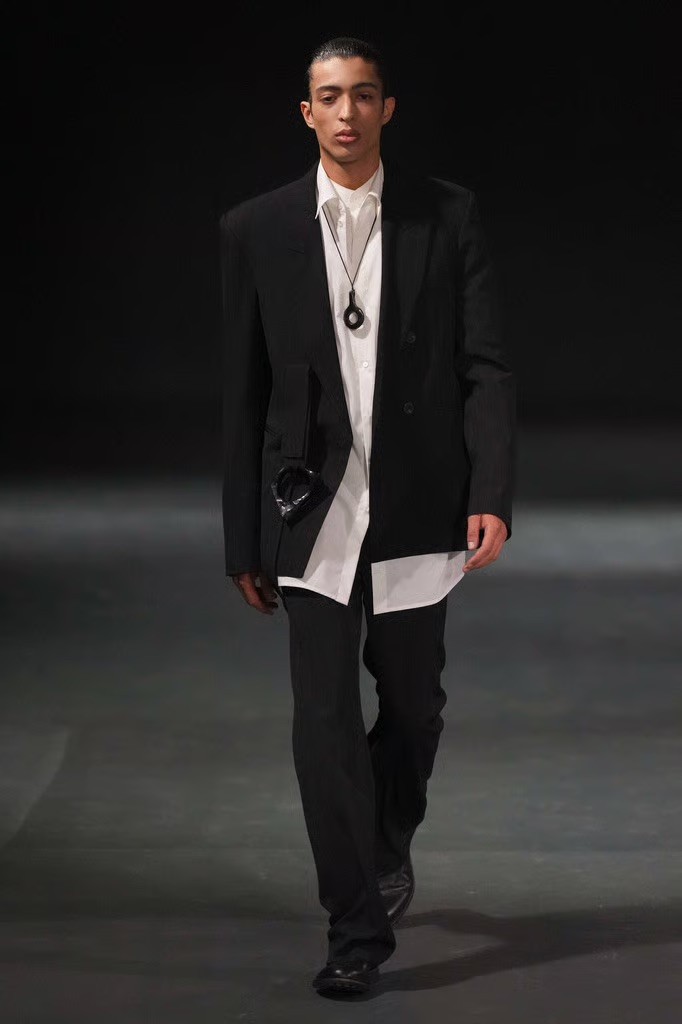
Hoor Al-Qasimi opened with softly tailored pieces that set a quieter tone. A pinstriped suit worn simply, without excess styling, gave way to garments built through layering, draping, and distortion. Familiar wardrobe archetypes - coats, blazers, knits - were reworked.
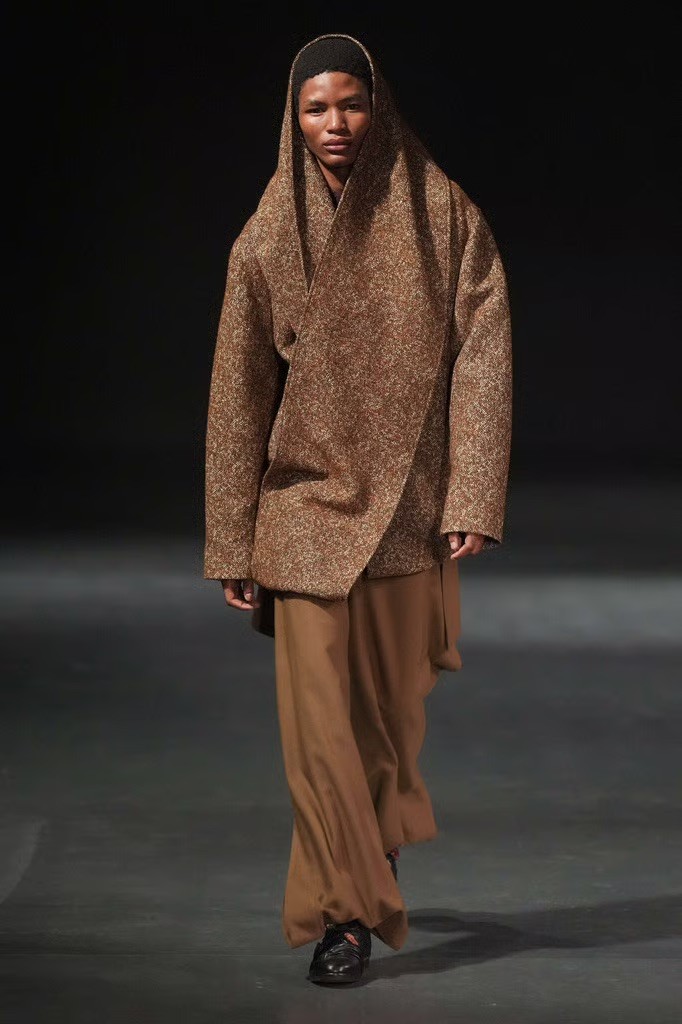
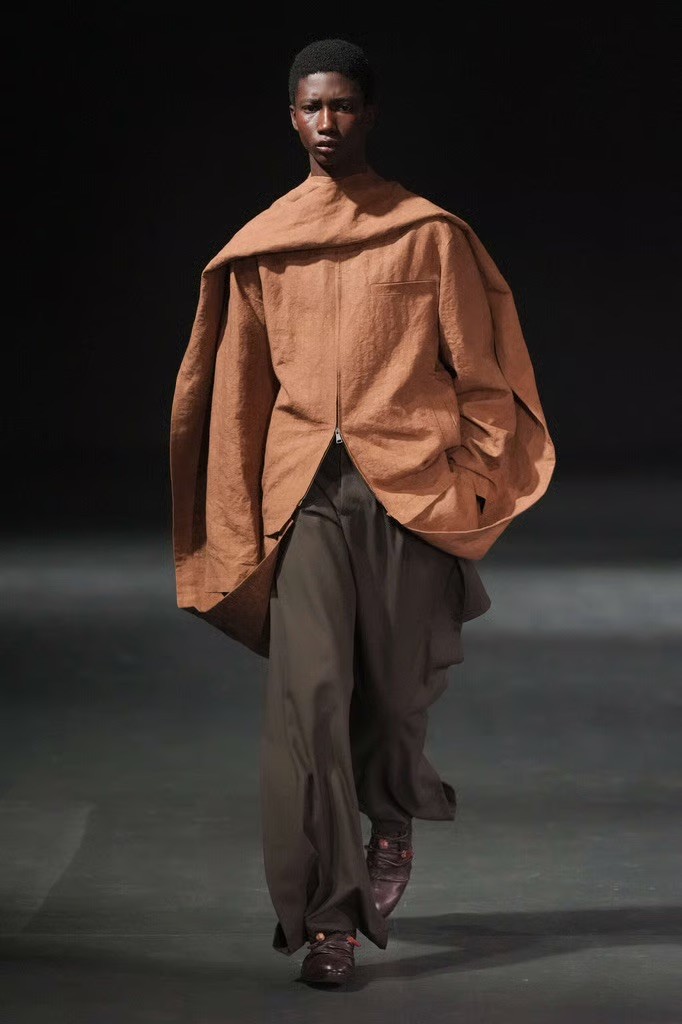
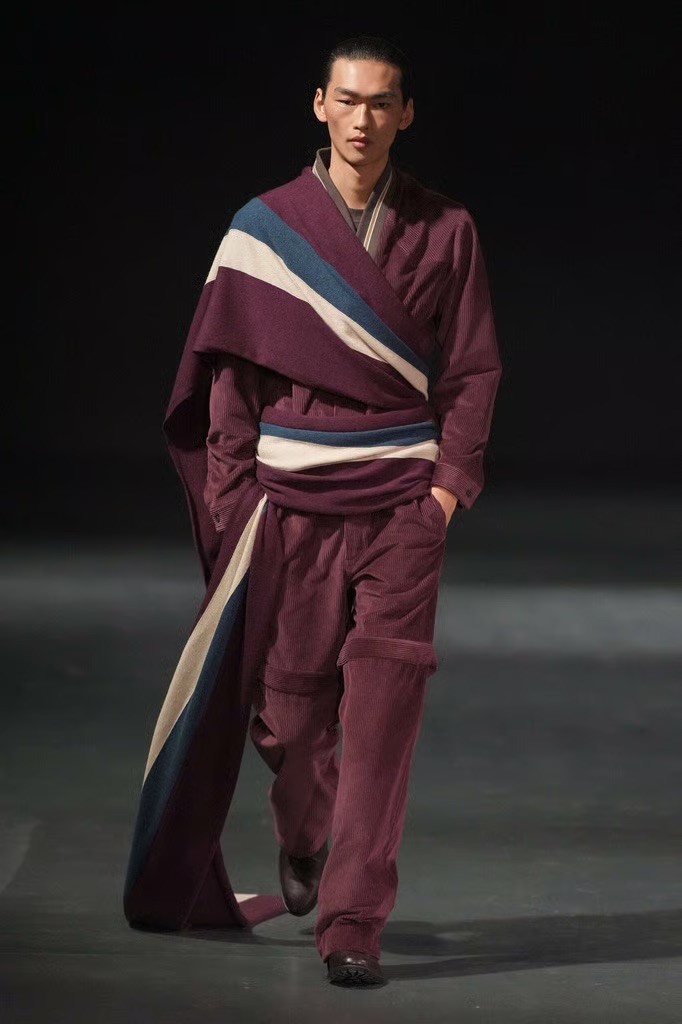
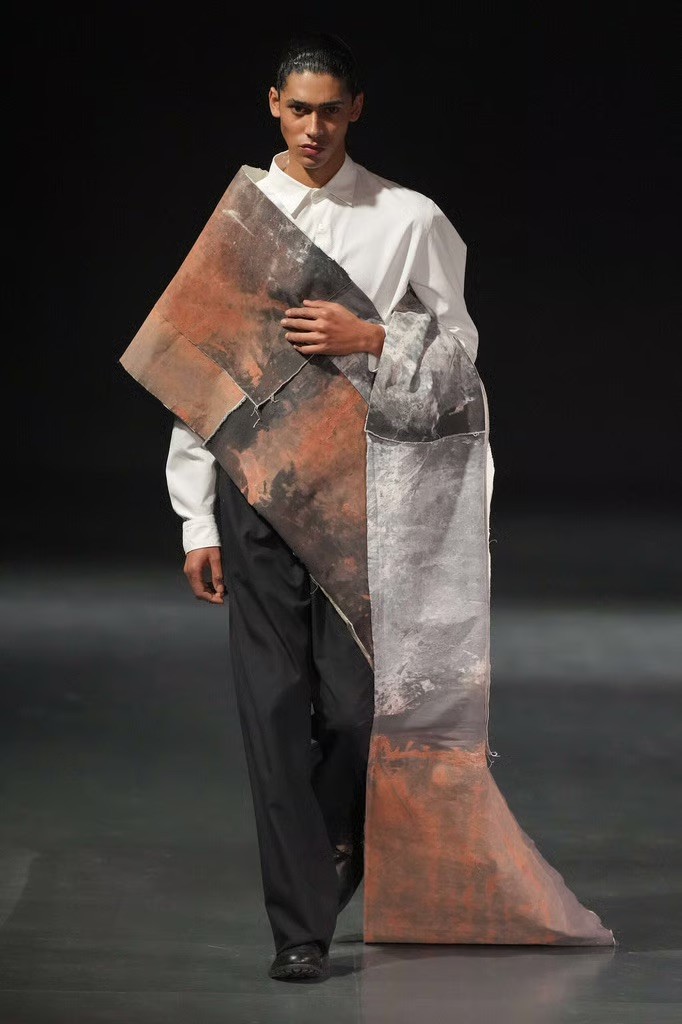
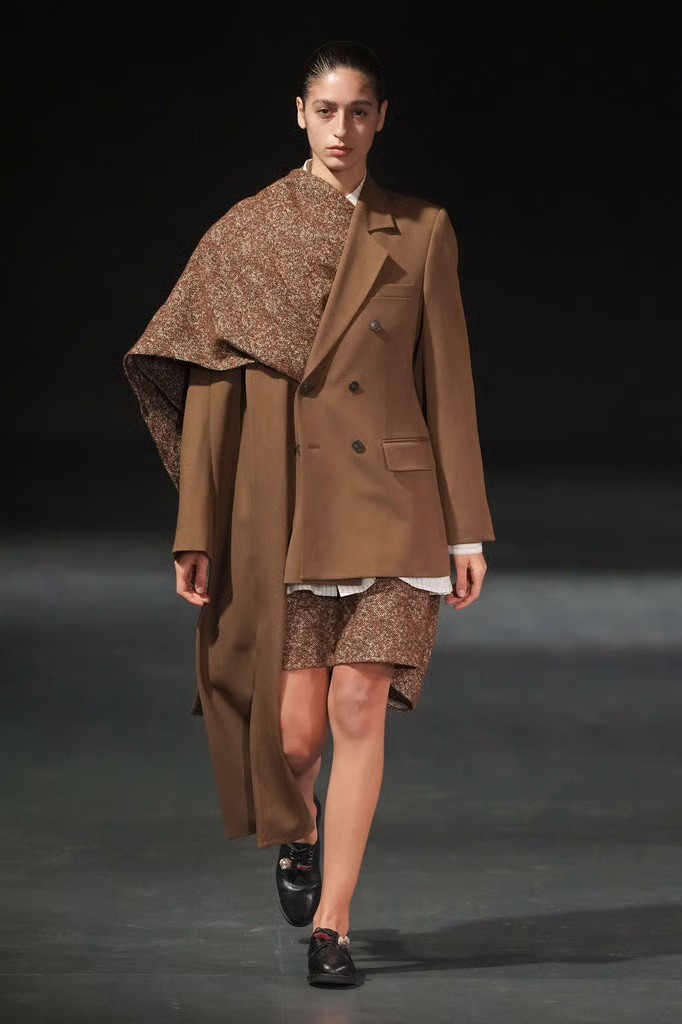
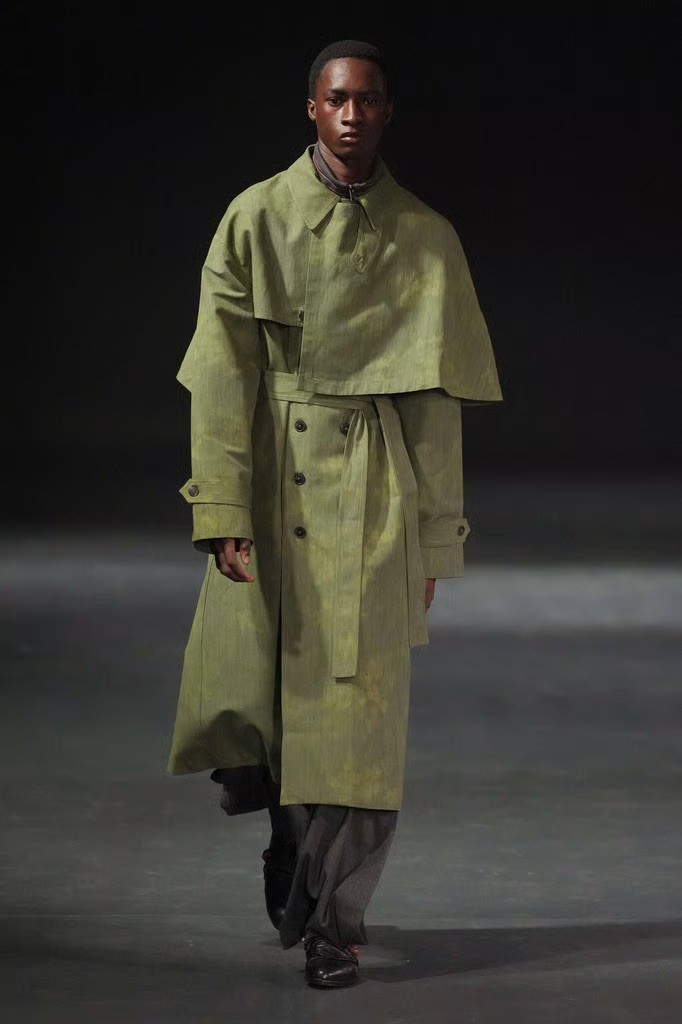
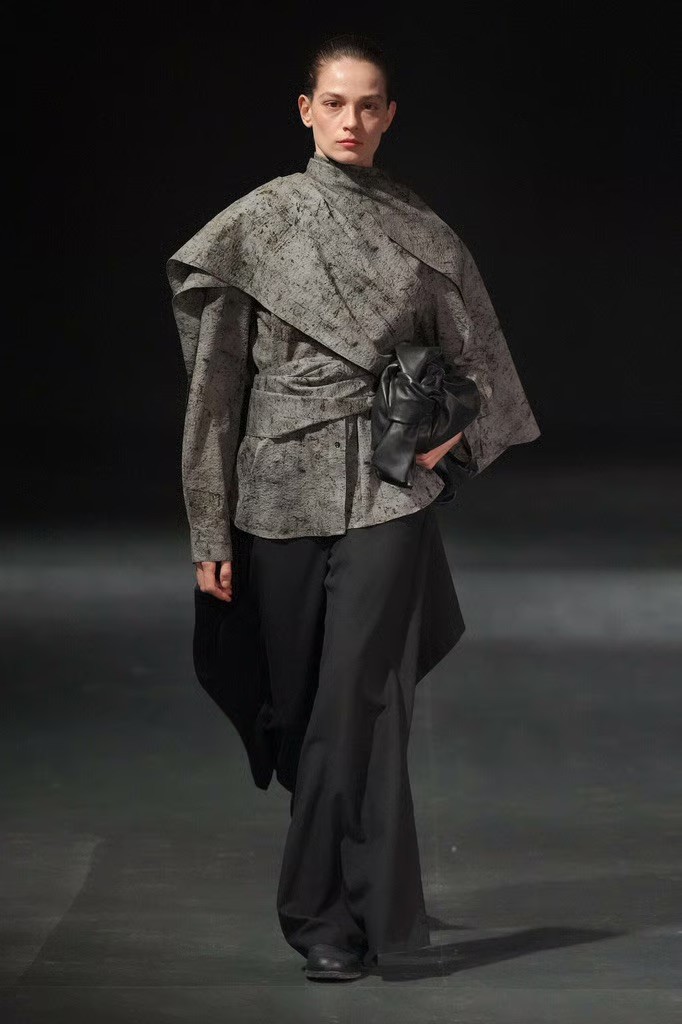
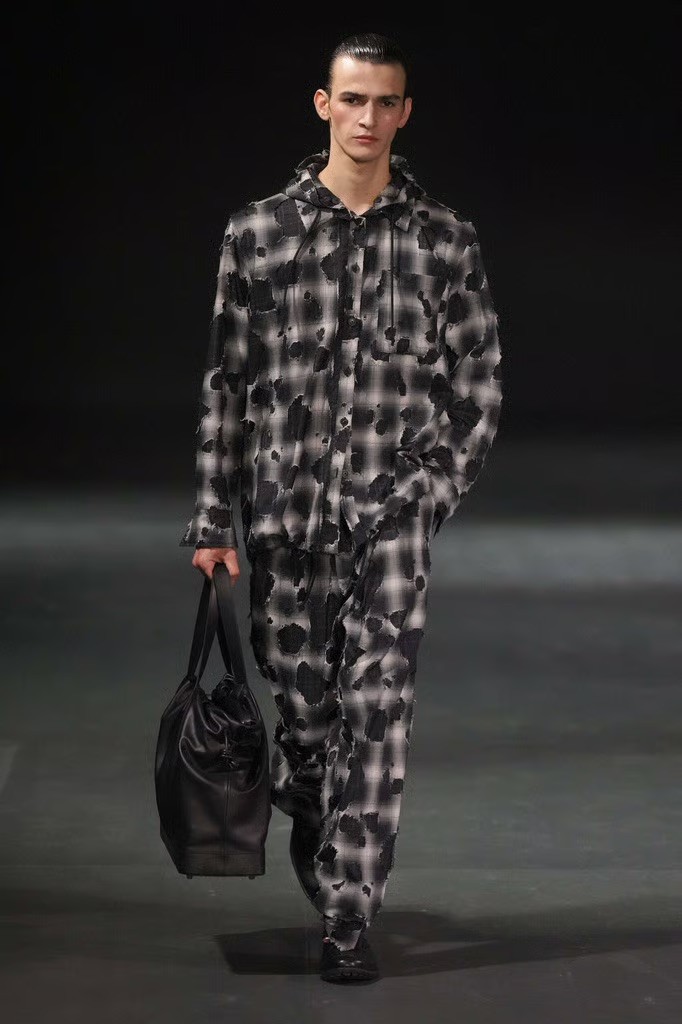
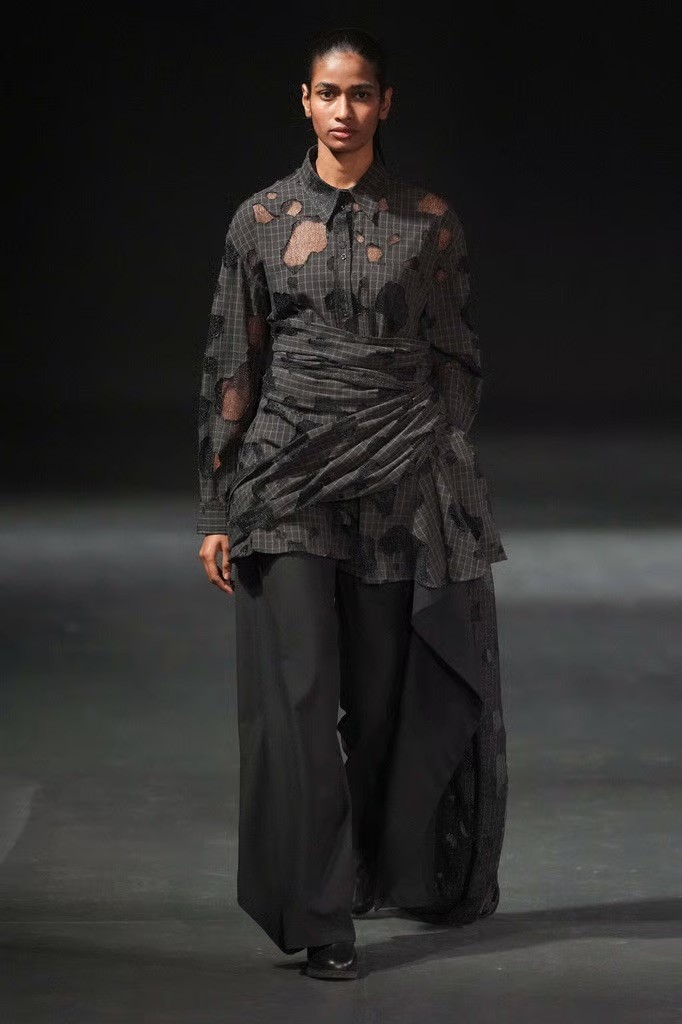
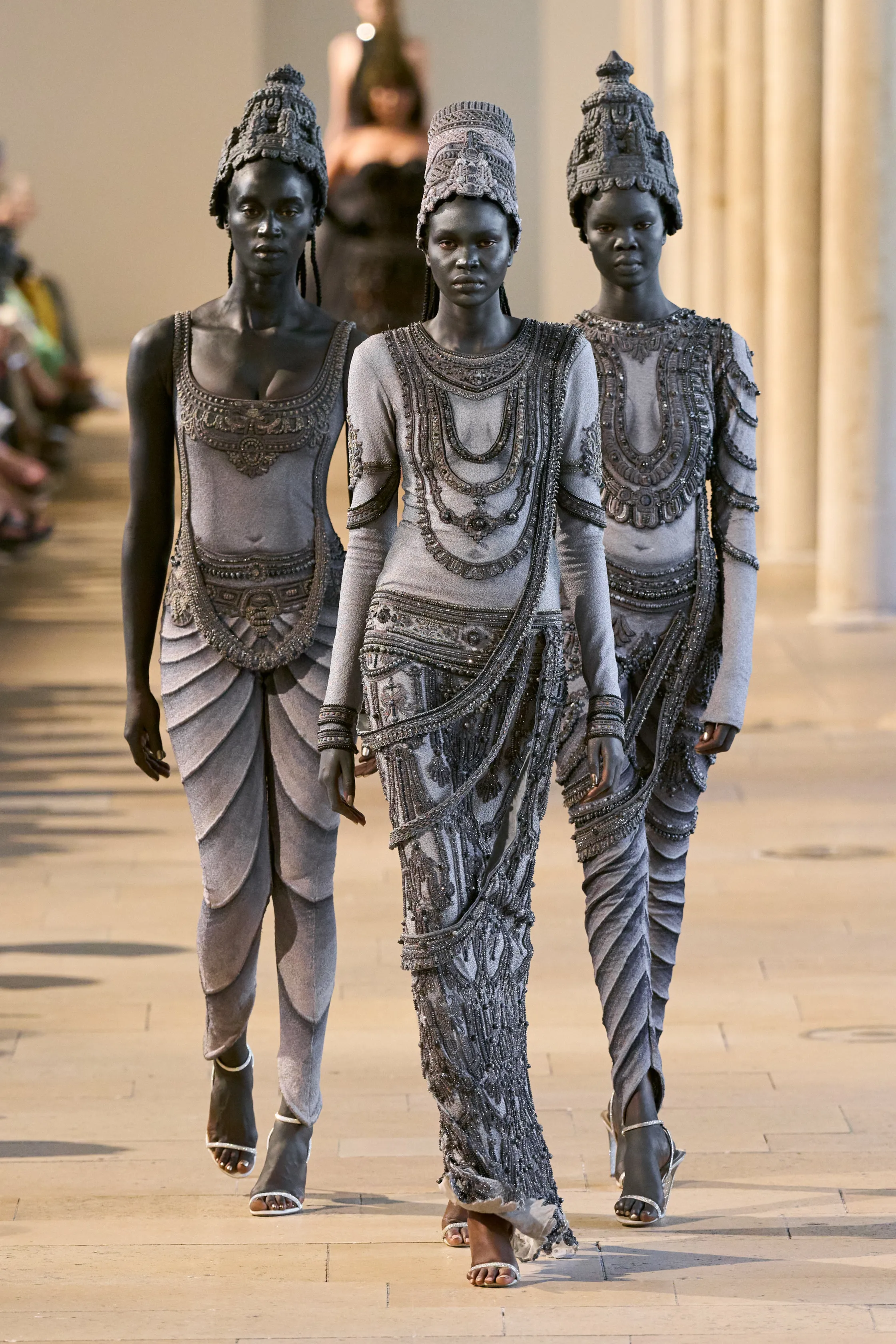
Fabric played a central role. Oversized panels wrapped and folded around the body, capes emerged from blazers, scarves were built directly into coats, and blanket-like textiles hung with deliberate weight. Bias-cut half-capes traced blouses and tops, worn across genders, reinforcing a sense of continuity rather than division.
Textures felt worn and handled. Sanded denim, frayed knits, scorched checks, and washed wools appeared in earthy tones that spoke to time rather than trend. The clothes looked rubbed by life, softened by movement, marked but intact.
This was a collection about layers - of fabric, of history, of identity - and the quiet complexity of carrying them forward.
Emirati fashion house, Qasimi’s fall collection unfolded as a meditation on movement, inheritance, and the quiet weight of personal history. Framed as what she described as “emotional archaeology,” the show explored how clothing can absorb memory - as lived experience. The question wasn’t where you are from, but what you carry with you when you leave.
Set within a dimly lit industrial space, the runway was staged alongside an installation by Lebanese artist Dala Nasser. Crinkled sheets of fabric hung from the ceiling like drying linens, transforming the venue into a space that felt domestic, transient, and unresolved.
Hoor Al-Qasimi opened with softly tailored pieces that set a quieter tone. A pinstriped suit worn simply, without excess styling, gave way to garments built through layering, draping, and distortion. Familiar wardrobe archetypes - coats, blazers, knits - were reworked.
Fabric played a central role. Oversized panels wrapped and folded around the body, capes emerged from blazers, scarves were built directly into coats, and blanket-like textiles hung with deliberate weight. Bias-cut half-capes traced blouses and tops, worn across genders, reinforcing a sense of continuity rather than division.
Textures felt worn and handled. Sanded denim, frayed knits, scorched checks, and washed wools appeared in earthy tones that spoke to time rather than trend. The clothes looked rubbed by life, softened by movement, marked but intact.
This was a collection about layers - of fabric, of history, of identity - and the quiet complexity of carrying them forward.

Must Reads
Must Reads


we are MOLTN
●
we are MOLTN
●
we are MOLTN
●
we are MOLTN
●
we are MOLTN
●
we are MOLTN
●
we are MOLTN
●
we are MOLTN
●
we are MOLTN
●
we are MOLTN
●
we are MOLTN
●
Subscribe to MOLTN

© We Are MOLTN
2026
we are MOLTN
●
we are MOLTN
●
we are MOLTN
●
we are MOLTN
●
we are MOLTN
●
we are MOLTN
●
we are MOLTN
●
we are MOLTN
●
we are MOLTN
●
we are MOLTN
●
we are MOLTN
●
Subscribe to MOLTN
© We Are MOLTN
2026
we are MOLTN
●
we are MOLTN
●
we are MOLTN
●
we are MOLTN
●
we are MOLTN
●
we are MOLTN
●
we are MOLTN
●
we are MOLTN
●
we are MOLTN
●
we are MOLTN
●
we are MOLTN
●
Subscribe to MOLTN
© We Are MOLTN
2026