

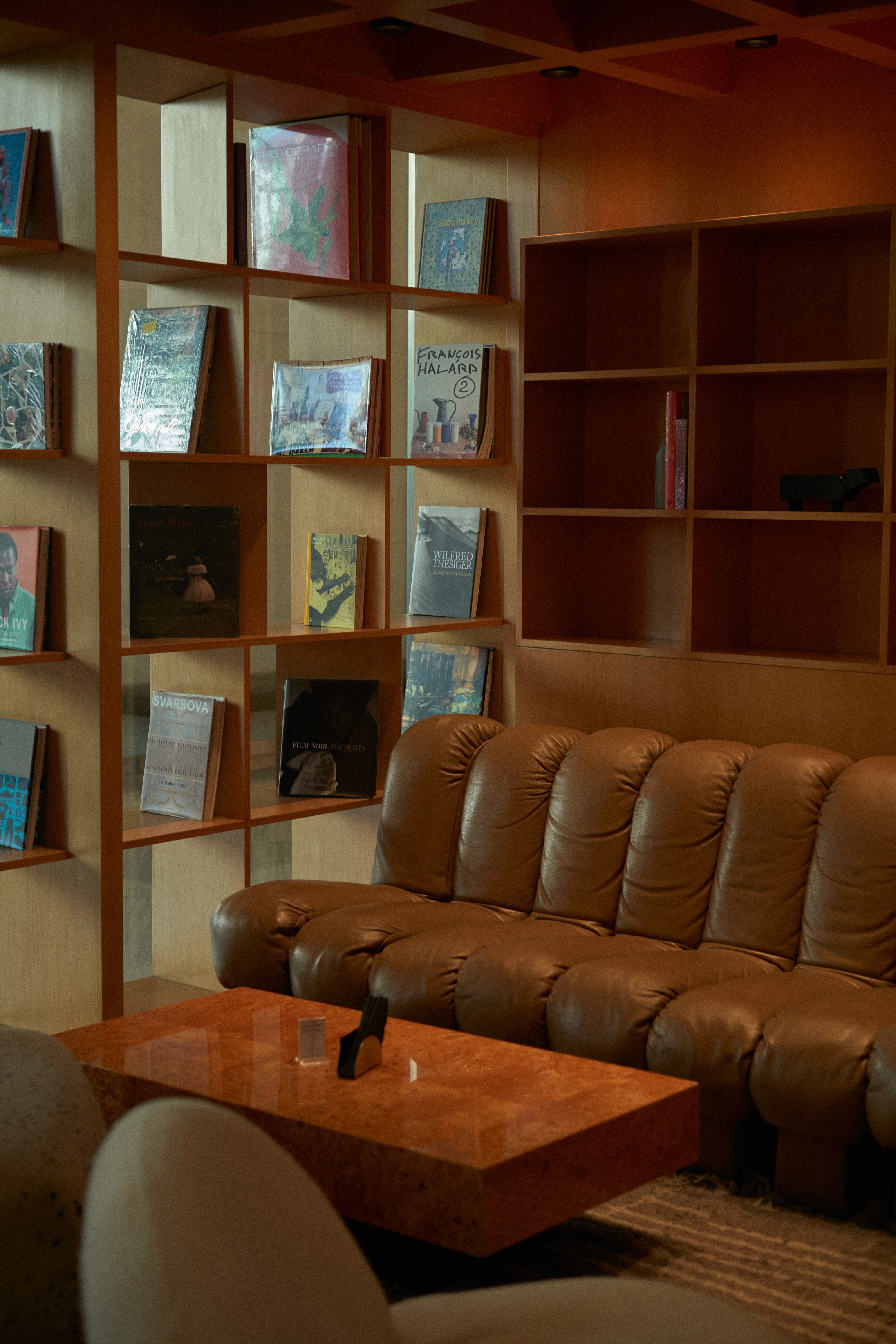
When is an eatery not just an eatery? Lulu and the Beanstalk breaks the mold of how restaurants should operate in Dubai by setting their own pace, creating intimacy, leaning into their authentic design identity
If there’s any space that has earned its place in the F&B market in Dubai, it is Lulu and the Beanstalk. Since their launch in late 2022, the venue for coffee, cocktails, literature, and music, has become a mainstay. There is a recipe – a secret sauce, if you will, that goes into making a space so conceptual have staying power, especially in a market as fickle and transient as Dubai. Sisters Wafa and Amirah Tajdin opened their doors for us, as we have conversations about design, strategy in hospitality, cinema, and the person at the heart of it all: their grandmother, Lulu.
You built Lulu & The Beanstalk on personal narrative - what was the process like to convert that narrative from story to strategy?
Amirah: It was about translating memory into mechanics.
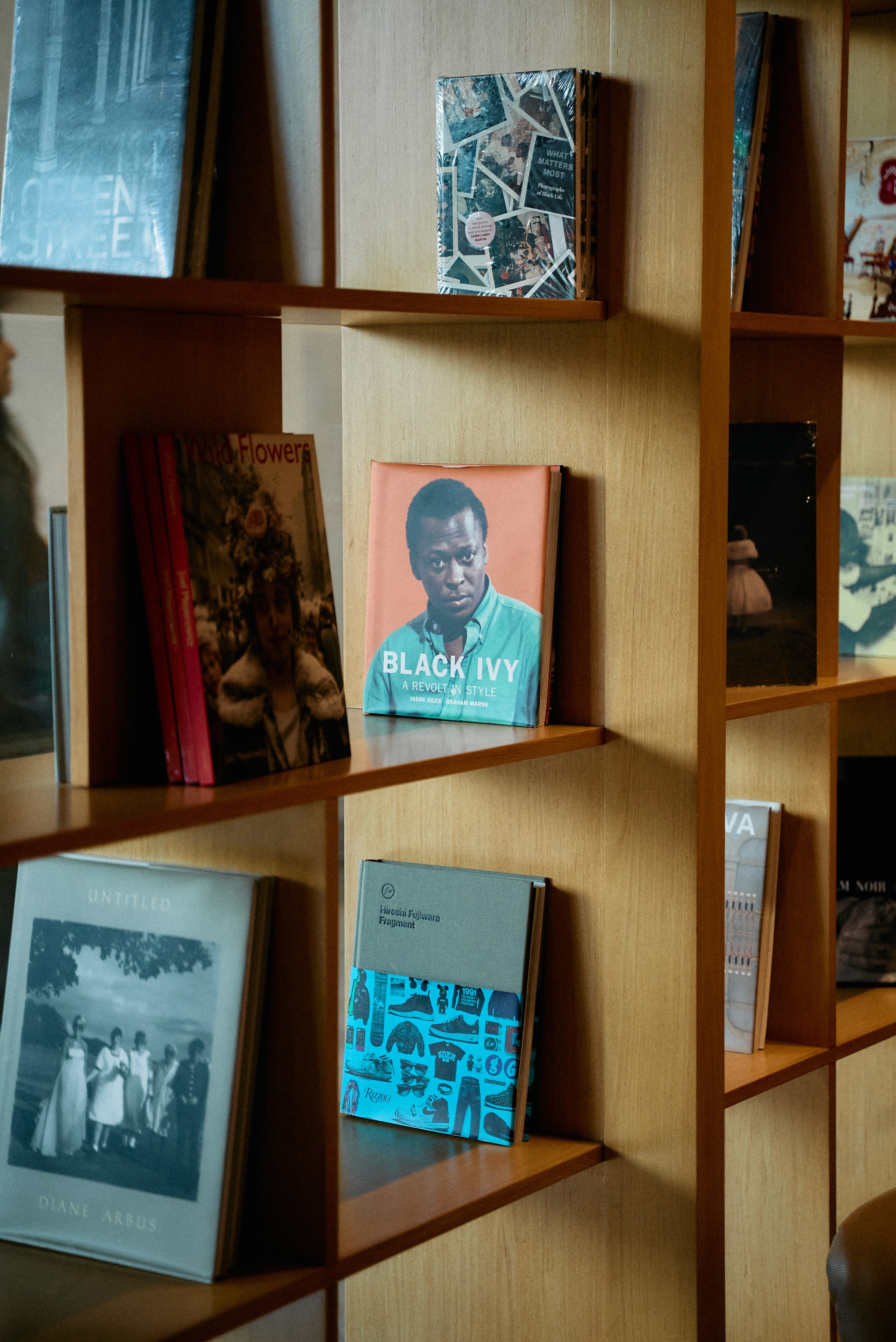
Lulu & The Beanstalk comes from our grandmother Lulu’s open-door policy. Her house was always full. Food on the table. Laughter in the air. No hierarchy. Just fellowship. That, to us, is what a restaurant, café, or bar is meant to be. A true local spot. An “arty pub” for the community.
We translated Lulu’s open-door spirit into intentional design. Spaces that invite you to linger, menus that feel abundant and generous rather than precious, and an atmosphere built on warmth. Soft lighting, no intimidating energy, and staff who host with heart instead of simply serving.
"Every decision goes through one filter: does this feel like Lulu’s house, and does it feel warm?"
That is how the story became strategy.
Dubai’s hospitality scene is saturated. What was the commercial white space you identified before committing to this concept?
Wafa: Coming from filmmaking, my sister Amirah and I were trained to look at experience as a whole, i.e., the mood, the story, the sensory arc. When we looked at Dubai's hospitality landscape, we saw incredible investment in scale, luxury, and spectacle, but very little in intimacy and identity. Most venues felt designed by committee - trend-driven rather than soul-driven.
The white space we identified was a venue with a genuine point of view: somewhere rooted in a real story, our grandmother Lulu's legacy, that could offer guests an emotional escape rather than just a dining occasion. Pairing a bookshop with craft cocktails, elevated comfort food, and a curated atmosphere wasn't just a concept; it was a deliberate answer to the sameness we kept seeing. In a market saturated with venues chasing the next trend, we bet on something personal and lasting.
The interiors are maximal and design-led. How did you ensure the aesthetic didn’t overpower the operational realities of running a café-bar?
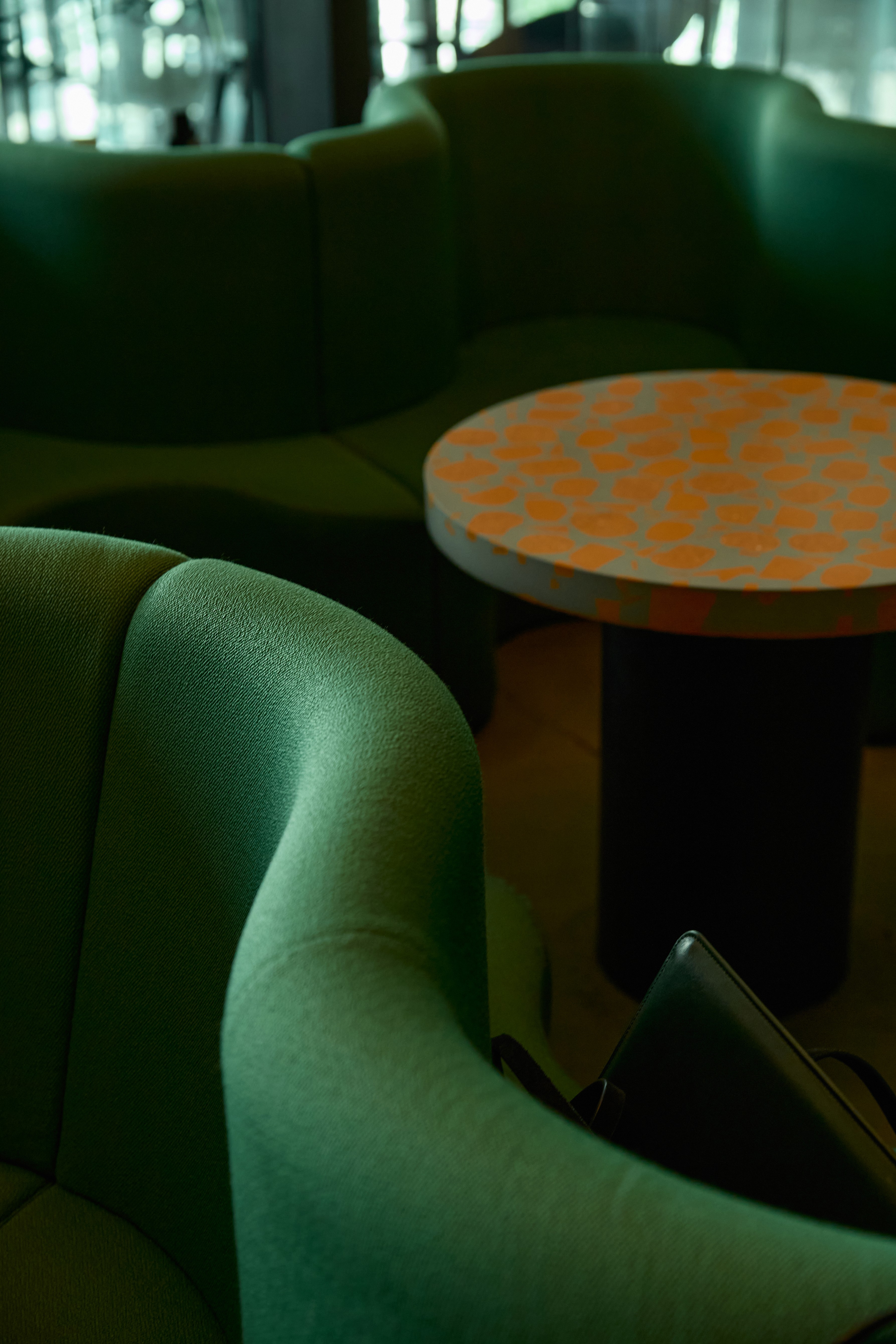
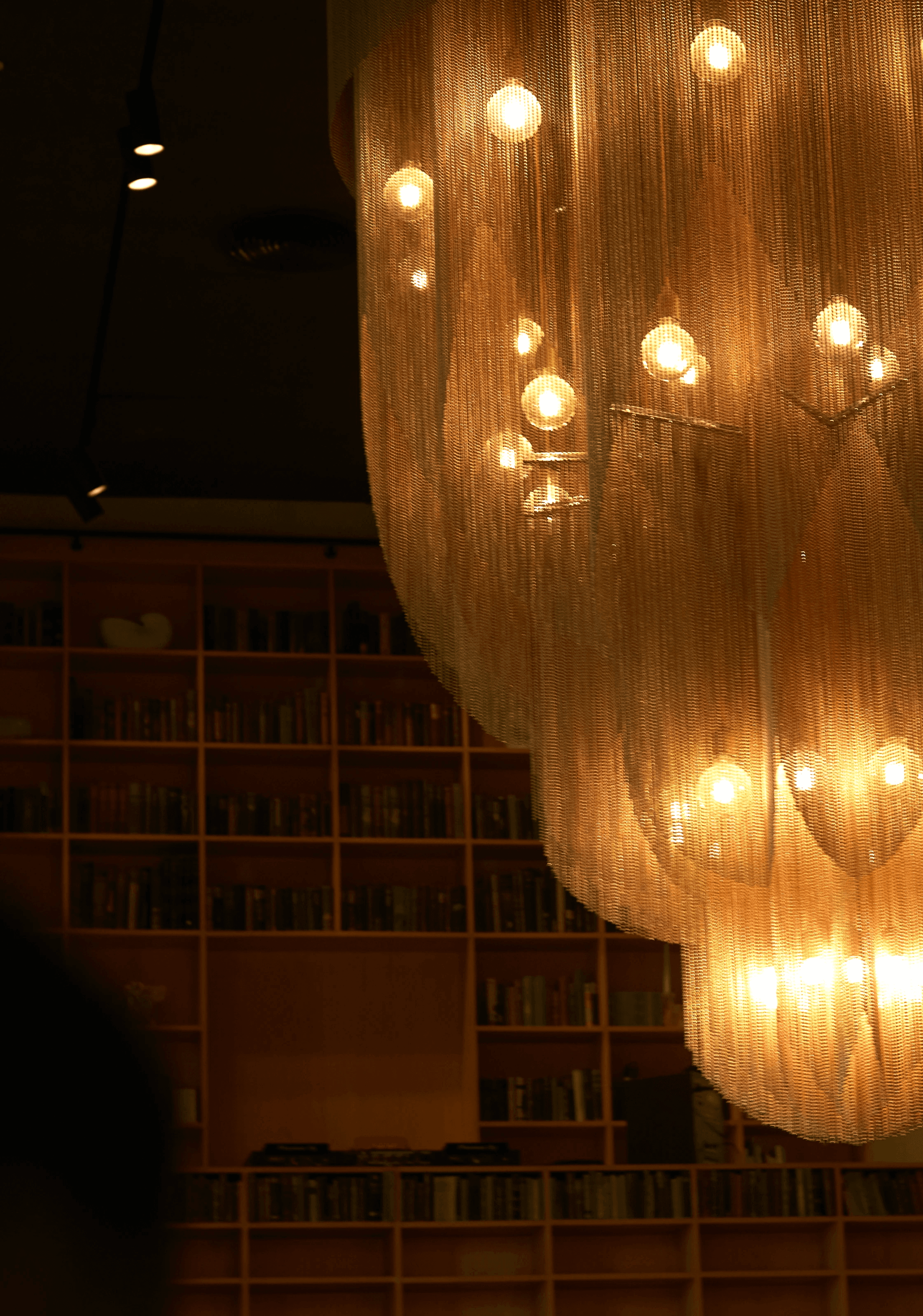
Wafa: Amirah and I think in terms of sets. And a good set has to function before it can feel magical. Every design decision we made was interrogated through two lenses: does it tell the story, and does it work for the people running the room? The space is small and deliberately so - that intimacy is part of the concept; which means flow, sightlines, and staff movement were built into the design from the start, not retrofitted after. We also leaned on collaborators who understood both the aesthetic ambition and the operational realities of a licensed café-bar. The whimsy you see in the interiors isn't decoration layered on top of a functional space; it's woven into it. A bookshelf that's also a wall, lighting that sets mood without compromising service, seating arrangements that allow the space to shift from a daytime café to an evening bar with a DJ. The discipline of filmmaking where every frame has to serve the story and the shoot schedule translated directly into how we approached the build.
Design-led hospitality can age quickly. What decisions did you make to future-proof the space?
Amirah: I do not think you can ever fully future proof a hospitality space. It is always a dance. You are responding to industry shifts, to culture, to what people are eating, to what ingredients are available, to how society gathers. Trends move. Tastes evolve. Energy shifts.
"We are not design led in a trend driven sense. We are design centred. That means we care deeply about aesthetics, but only in service of experience. The priority is always the balance between style and substance."
We avoided hyper specific trend moments that date quickly. Instead, we focused on flexibility. Programming that can evolve. Menus that can shift with season and supply. A layout that allows for a quiet coffee in the afternoon and a vinyl night in the evening. Warm materials over gimmicks. Human scale over spectacle.
As filmmakers entering the F&B market, what did you approach differently from traditional hospitality founders?
Amirah: As filmmakers entering F&B, we naturally coloured outside the traditional rule book of what a restaurant is supposed to be. I’m a director and Wafa’s a producer, so that lent itself well to our entire brand approach.
We were not overly concerned with what the “correct” dinner plate should look like, how a space is conventionally zoned, or how hierarchy is typically structured in hospitality. Film trains you to build worlds. To think in tone, atmosphere, character, pacing. So we approached the space like a living set, not just a venue. Every detail had to feel coherent and emotionally true.
You are responsible for the experience of everyone on a film set. Not just the audience, but the crew. That philosophy carried over. For us, authenticity extends beyond customers to our staff. Leadership is collaborative, high-energy, hands on. We care about morale, rhythm, storytelling, and clarity of vision in the same way we would on set. I guess in a way that’s the filmmaker instinct. Build the universe first. Then make sure every plate, playlist, and person inside it belongs.
Wafa: The biggest difference is that we didn't start with a menu or a business model; we started with a feeling. In film, you ask: what do we want the audience to experience, and how do we engineer every element to deliver that? We brought that exact methodology to Lulu & The Beanstalk. The name, our grandmother's story, the books, the music, the lighting, the playlist, the way a cocktail of food item is named. All of it serves the single emotional world we wanted guests to step into. Traditional hospitality founders often start with concept, then execution. We started with narrative, then everything else. The other thing filmmaking gave us is comfort with collaboration and respect for craft specialists.
On a film set, you trust your DoP, your production designer, your sound mixer; you don't try to do everything yourself. We approached our chef, our manager, and our interior collaborators the same way: bring in people exceptional at their craft, give them the creative brief, and trust them within the world we've defined. What we probably underestimated and what traditional hospitality founders know intuitively is the relentlessness of daily operations. Film has a wrap date. A restaurant does not.
Lulu and the Beanstalk, ICD Brookfield Place, DIFC - Dubai.
Photography by Dymension A
If there’s any space that has earned its place in the F&B market in Dubai, it is Lulu and the Beanstalk. Since their launch in late 2022, the venue for coffee, cocktails, literature, and music, has become a mainstay. There is a recipe – a secret sauce, if you will, that goes into making a space so conceptual have staying power, especially in a market as fickle and transient as Dubai. Sisters Wafa and Amirah Tajdin opened their doors for us, as we have conversations about design, strategy in hospitality, cinema, and the person at the heart of it all: their grandmother, Lulu.
You built Lulu & The Beanstalk on personal narrative - what was the process like to convert that narrative from story to strategy?
Amirah: It was about translating memory into mechanics.
Lulu & The Beanstalk comes from our grandmother Lulu’s open-door policy. Her house was always full. Food on the table. Laughter in the air. No hierarchy. Just fellowship. That, to us, is what a restaurant, café, or bar is meant to be. A true local spot. An “arty pub” for the community.
We translated Lulu’s open-door spirit into intentional design. Spaces that invite you to linger, menus that feel abundant and generous rather than precious, and an atmosphere built on warmth. Soft lighting, no intimidating energy, and staff who host with heart instead of simply serving.
"Every decision goes through one filter: does this feel like Lulu’s house, and does it feel warm?"
That is how the story became strategy.
Dubai’s hospitality scene is saturated. What was the commercial white space you identified before committing to this concept?
Wafa: Coming from filmmaking, my sister Amirah and I were trained to look at experience as a whole, i.e., the mood, the story, the sensory arc. When we looked at Dubai's hospitality landscape, we saw incredible investment in scale, luxury, and spectacle, but very little in intimacy and identity. Most venues felt designed by committee - trend-driven rather than soul-driven.
The white space we identified was a venue with a genuine point of view: somewhere rooted in a real story, our grandmother Lulu's legacy, that could offer guests an emotional escape rather than just a dining occasion. Pairing a bookshop with craft cocktails, elevated comfort food, and a curated atmosphere wasn't just a concept; it was a deliberate answer to the sameness we kept seeing. In a market saturated with venues chasing the next trend, we bet on something personal and lasting.
The interiors are maximal and design-led. How did you ensure the aesthetic didn’t overpower the operational realities of running a café-bar?
Wafa: Amirah and I think in terms of sets. And a good set has to function before it can feel magical. Every design decision we made was interrogated through two lenses: does it tell the story, and does it work for the people running the room? The space is small and deliberately so - that intimacy is part of the concept; which means flow, sightlines, and staff movement were built into the design from the start, not retrofitted after. We also leaned on collaborators who understood both the aesthetic ambition and the operational realities of a licensed café-bar. The whimsy you see in the interiors isn't decoration layered on top of a functional space; it's woven into it. A bookshelf that's also a wall, lighting that sets mood without compromising service, seating arrangements that allow the space to shift from a daytime café to an evening bar with a DJ. The discipline of filmmaking where every frame has to serve the story and the shoot schedule translated directly into how we approached the build.
Design-led hospitality can age quickly. What decisions did you make to future-proof the space?
Amirah: I do not think you can ever fully future proof a hospitality space. It is always a dance. You are responding to industry shifts, to culture, to what people are eating, to what ingredients are available, to how society gathers. Trends move. Tastes evolve. Energy shifts.
"We are not design led in a trend driven sense. We are design centred. That means we care deeply about aesthetics, but only in service of experience. The priority is always the balance between style and substance."
We avoided hyper specific trend moments that date quickly. Instead, we focused on flexibility. Programming that can evolve. Menus that can shift with season and supply. A layout that allows for a quiet coffee in the afternoon and a vinyl night in the evening. Warm materials over gimmicks. Human scale over spectacle.
As filmmakers entering the F&B market, what did you approach differently from traditional hospitality founders?
Amirah: As filmmakers entering F&B, we naturally coloured outside the traditional rule book of what a restaurant is supposed to be. I’m a director and Wafa’s a producer, so that lent itself well to our entire brand approach.
We were not overly concerned with what the “correct” dinner plate should look like, how a space is conventionally zoned, or how hierarchy is typically structured in hospitality. Film trains you to build worlds. To think in tone, atmosphere, character, pacing. So we approached the space like a living set, not just a venue. Every detail had to feel coherent and emotionally true.
You are responsible for the experience of everyone on a film set. Not just the audience, but the crew. That philosophy carried over. For us, authenticity extends beyond customers to our staff. Leadership is collaborative, high-energy, hands on. We care about morale, rhythm, storytelling, and clarity of vision in the same way we would on set. I guess in a way that’s the filmmaker instinct. Build the universe first. Then make sure every plate, playlist, and person inside it belongs.
Wafa: The biggest difference is that we didn't start with a menu or a business model; we started with a feeling. In film, you ask: what do we want the audience to experience, and how do we engineer every element to deliver that? We brought that exact methodology to Lulu & The Beanstalk. The name, our grandmother's story, the books, the music, the lighting, the playlist, the way a cocktail of food item is named. All of it serves the single emotional world we wanted guests to step into. Traditional hospitality founders often start with concept, then execution. We started with narrative, then everything else. The other thing filmmaking gave us is comfort with collaboration and respect for craft specialists.
On a film set, you trust your DoP, your production designer, your sound mixer; you don't try to do everything yourself. We approached our chef, our manager, and our interior collaborators the same way: bring in people exceptional at their craft, give them the creative brief, and trust them within the world we've defined. What we probably underestimated and what traditional hospitality founders know intuitively is the relentlessness of daily operations. Film has a wrap date. A restaurant does not.
Lulu and the Beanstalk, ICD Brookfield Place, DIFC - Dubai.
Photography by Dymension A


Must Reads
Must Reads


we are MOLTN
●
we are MOLTN
●
we are MOLTN
●
we are MOLTN
●
we are MOLTN
●
we are MOLTN
●
we are MOLTN
●
we are MOLTN
●
we are MOLTN
●
we are MOLTN
●
we are MOLTN
●
Subscribe to MOLTN

© We Are MOLTN
2026
we are MOLTN
●
we are MOLTN
●
we are MOLTN
●
we are MOLTN
●
we are MOLTN
●
we are MOLTN
●
we are MOLTN
●
we are MOLTN
●
we are MOLTN
●
we are MOLTN
●
we are MOLTN
●
Subscribe to MOLTN
© We Are MOLTN
2026
we are MOLTN
●
we are MOLTN
●
we are MOLTN
●
we are MOLTN
●
we are MOLTN
●
we are MOLTN
●
we are MOLTN
●
we are MOLTN
●
we are MOLTN
●
we are MOLTN
●
we are MOLTN
●
Subscribe to MOLTN
© We Are MOLTN
2026