

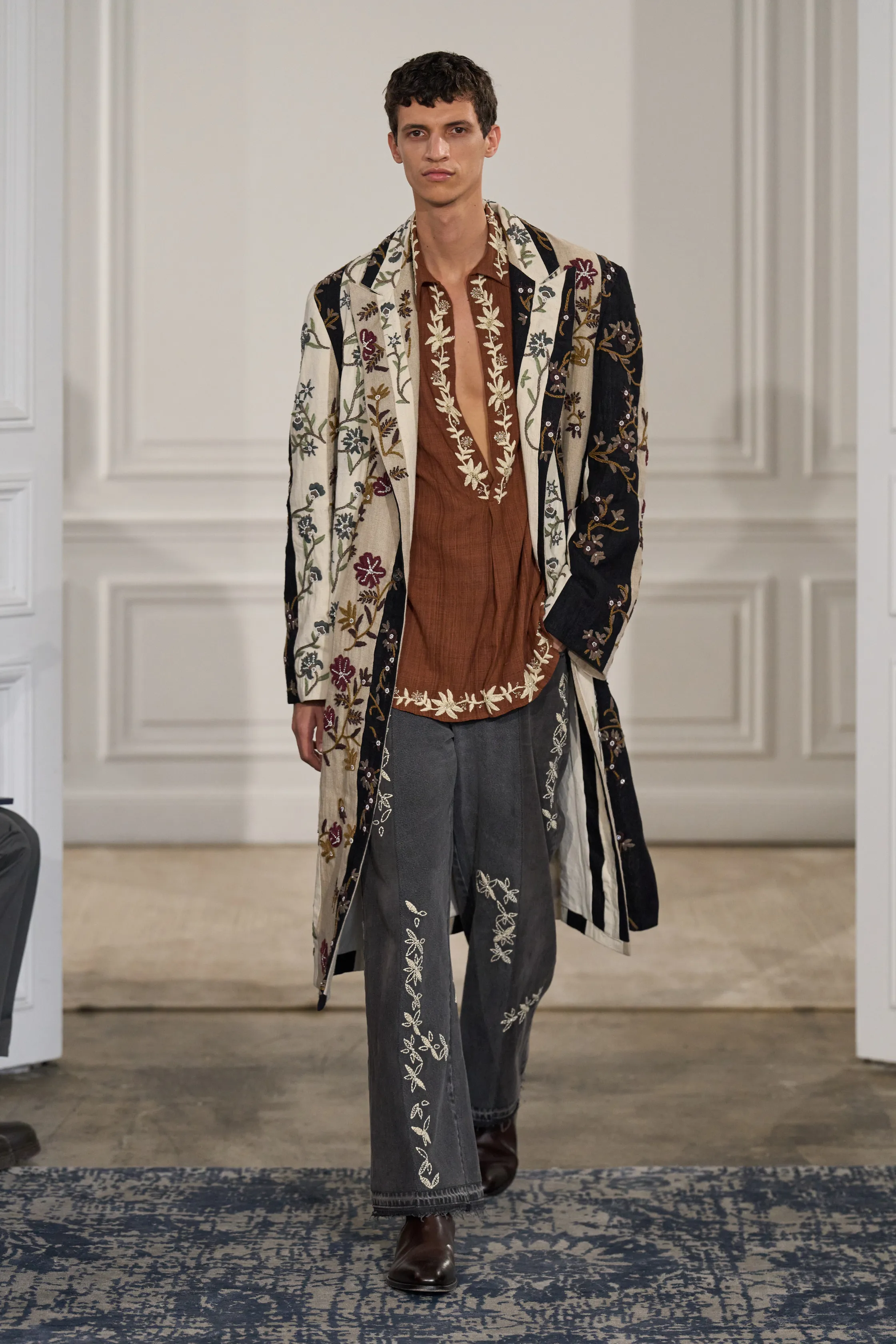
Kartik Kumra’s Fall ’26 show doesn’t chase attention - it arrives with purpose. In a rather concept-led season so far, Kartik Research cuts through by grounding fashion in something tangible: craft, politics, and the very real lives behind the clothes.
That connection between clothing and conviction had already surfaced earlier this month, when Zohran Mamdani took his oath as New York City’s mayor wearing a brown eri silk tie from Kartik Research. It was a quiet, but potent, moment - one that spoke to core values, cultural lineage, and intention rather than optics. For Kumra, it wasn’t a stunt but a natural alignment, reinforcing how his work resonates far beyond the runway.
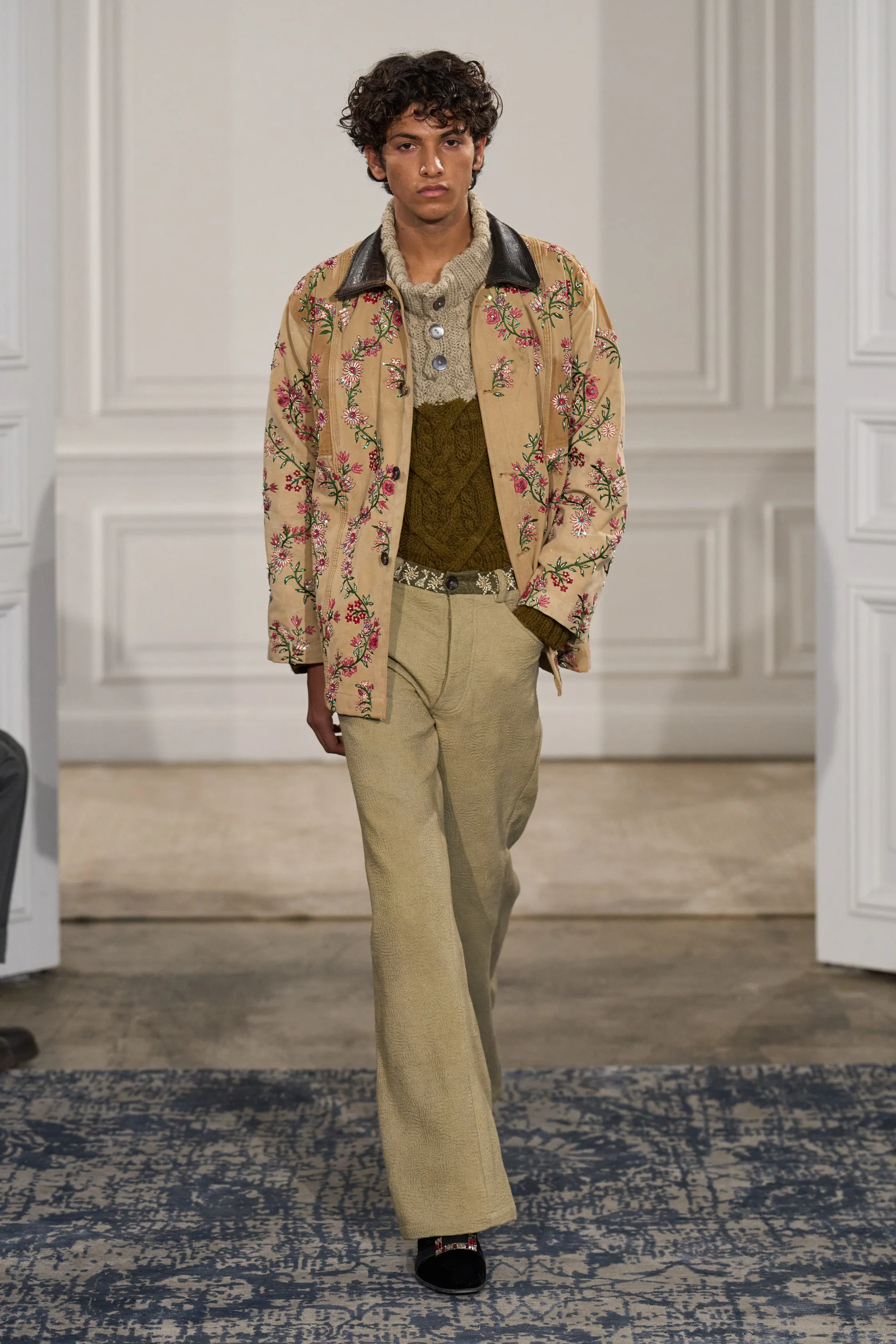
With global trade pressures threatening the livelihoods of the scores of Indian artisans he collaborates with, this season felt like a deliberate doubling down on why Kartik Research exists in the first place. The clothes are richer, denser, and more expressive than before.
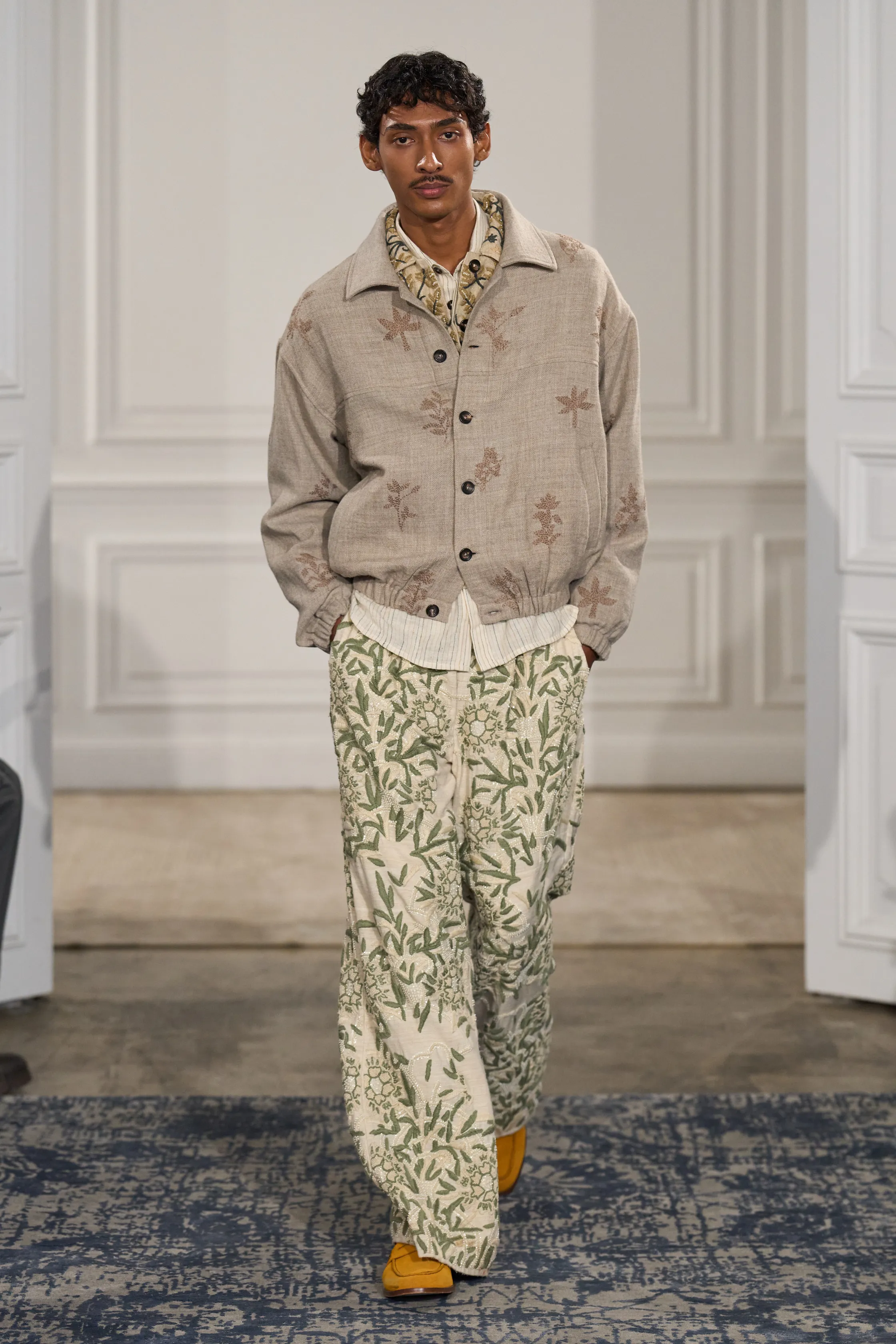
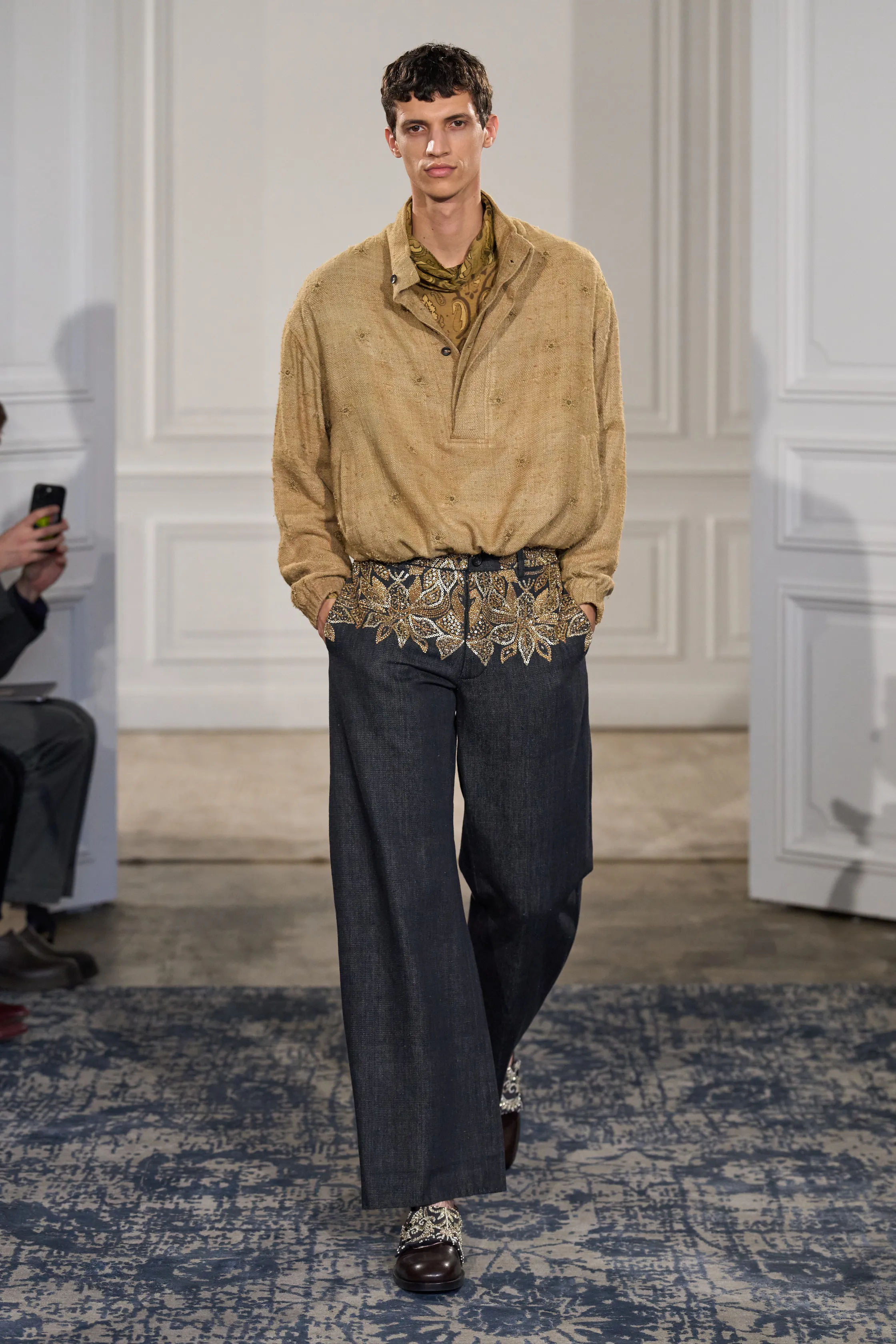
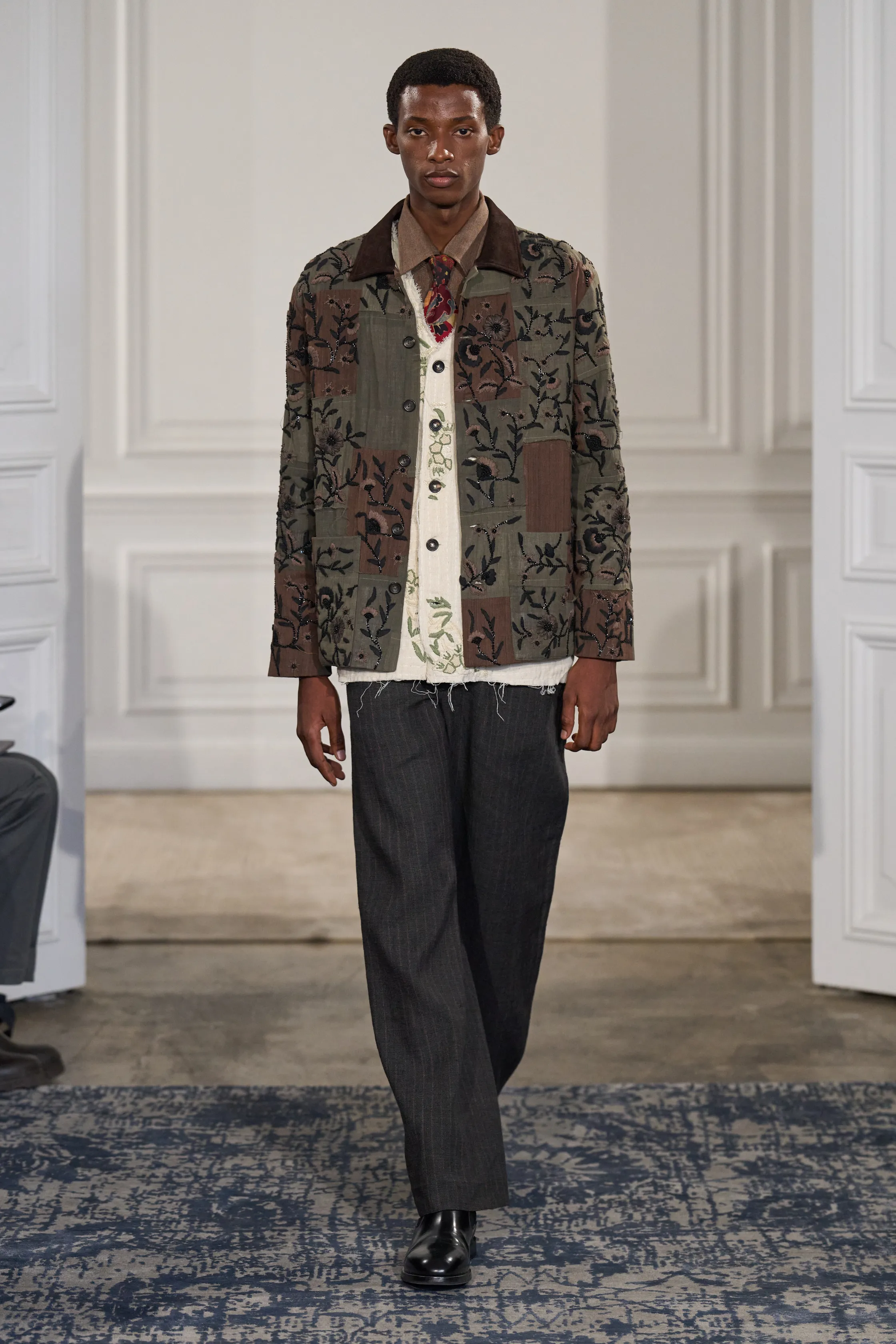
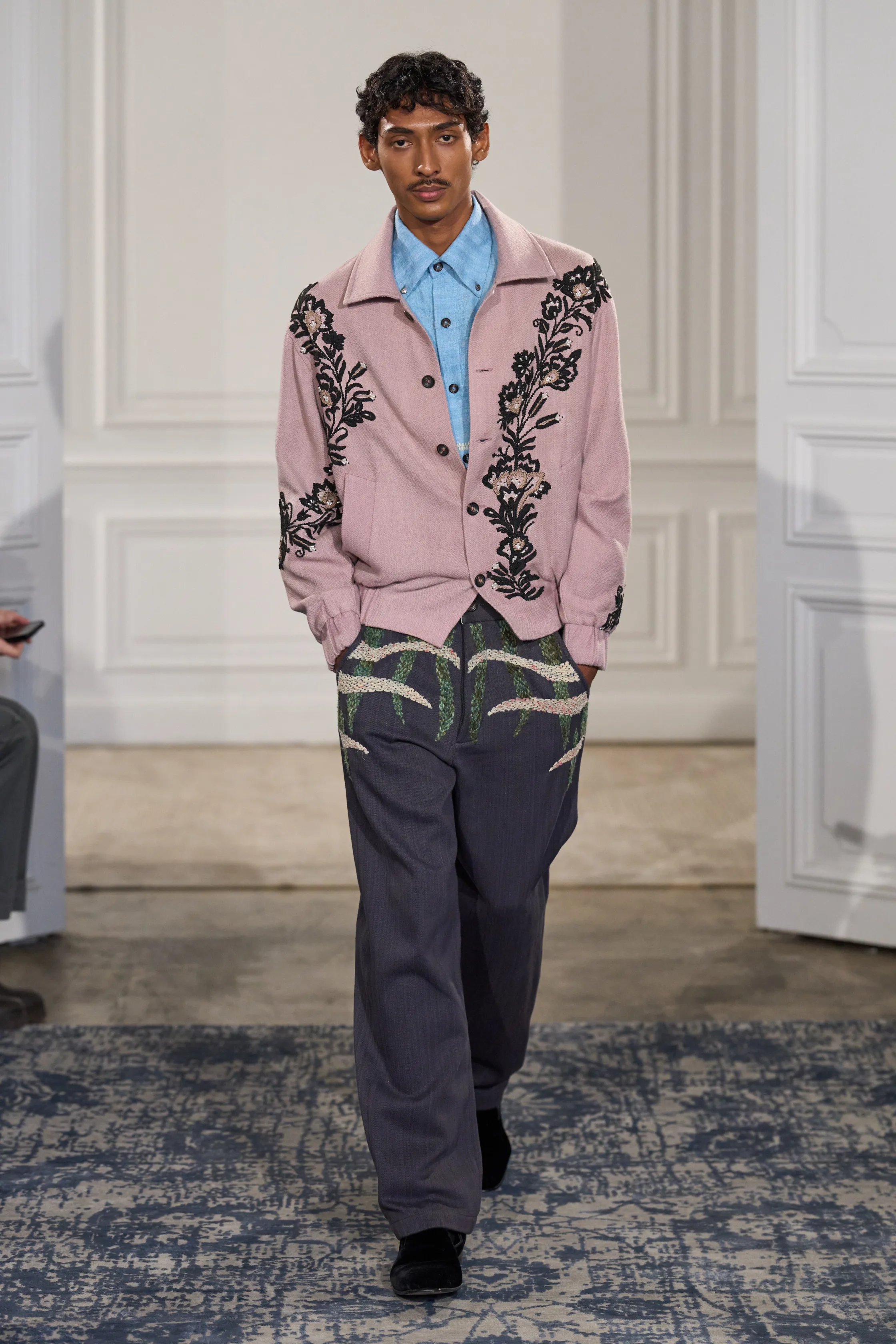
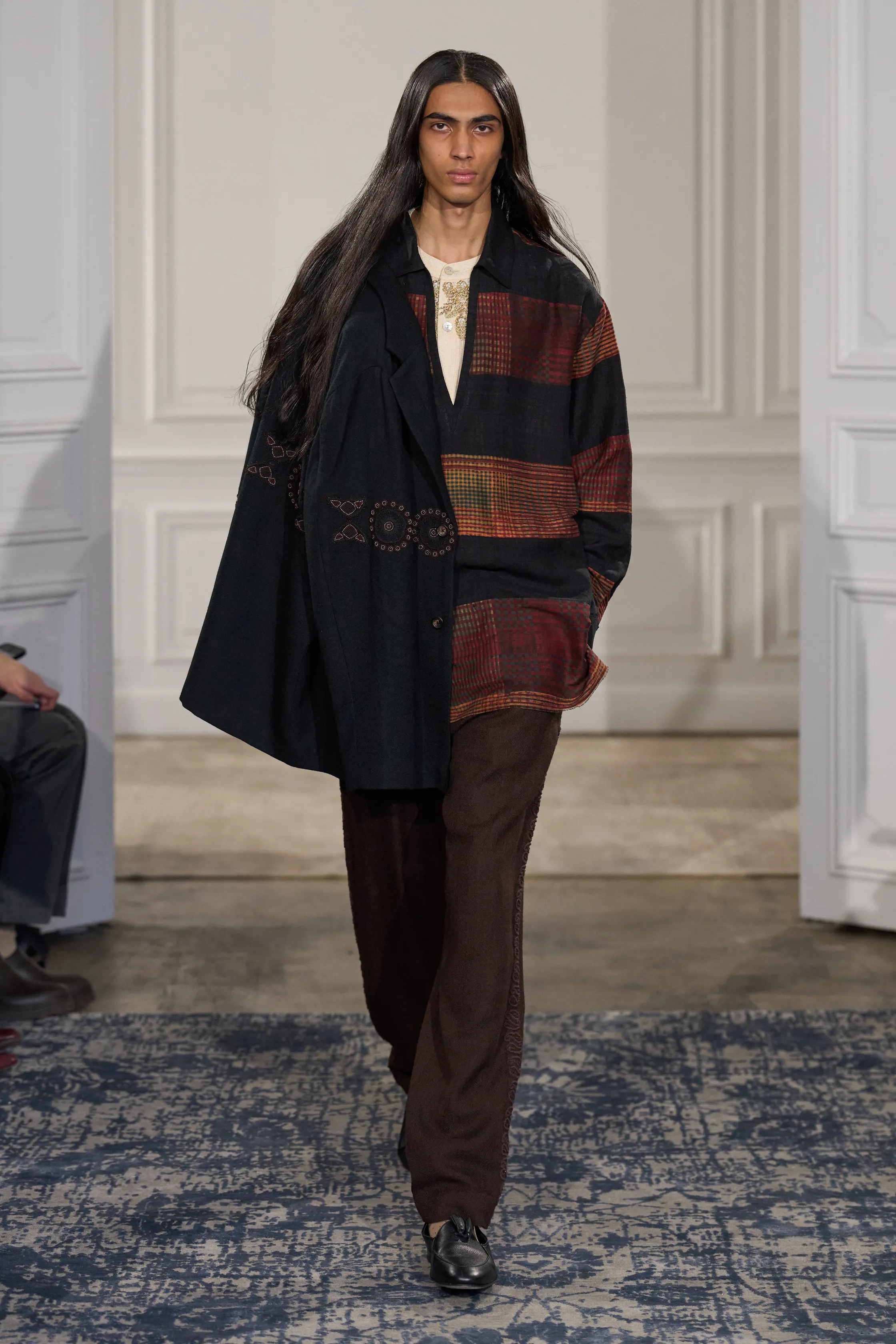
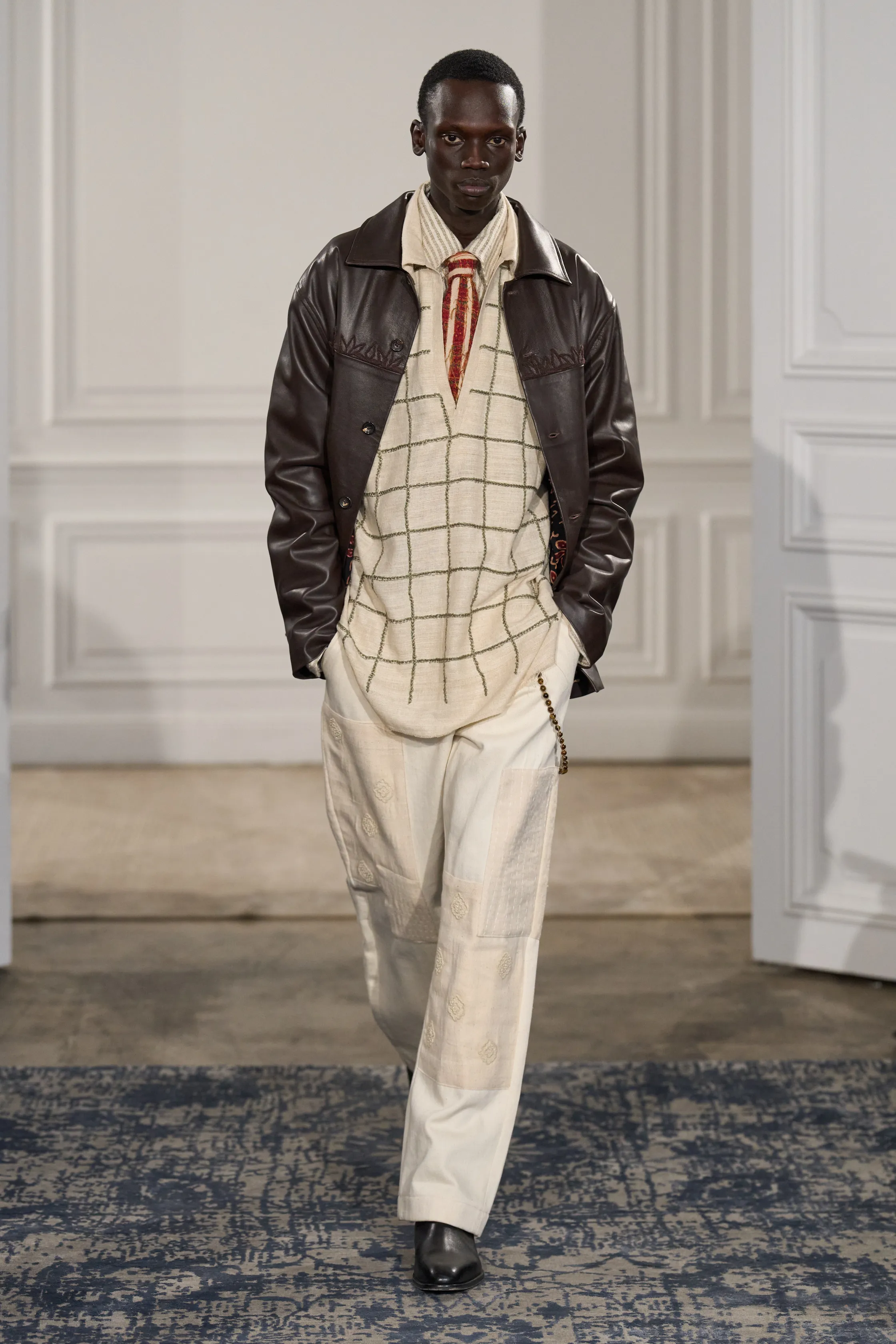
Tailored trousers embroidered with shimmering floral motifs and patchwork paisley are boldly placed across the body. Silk jackets and cotton shirting become canvases for intricate handwork, while still maintaining ease and wearability. Kumra continues to walk that tightrope well: decorative without drifting into ceremony, expressive without becoming costume.
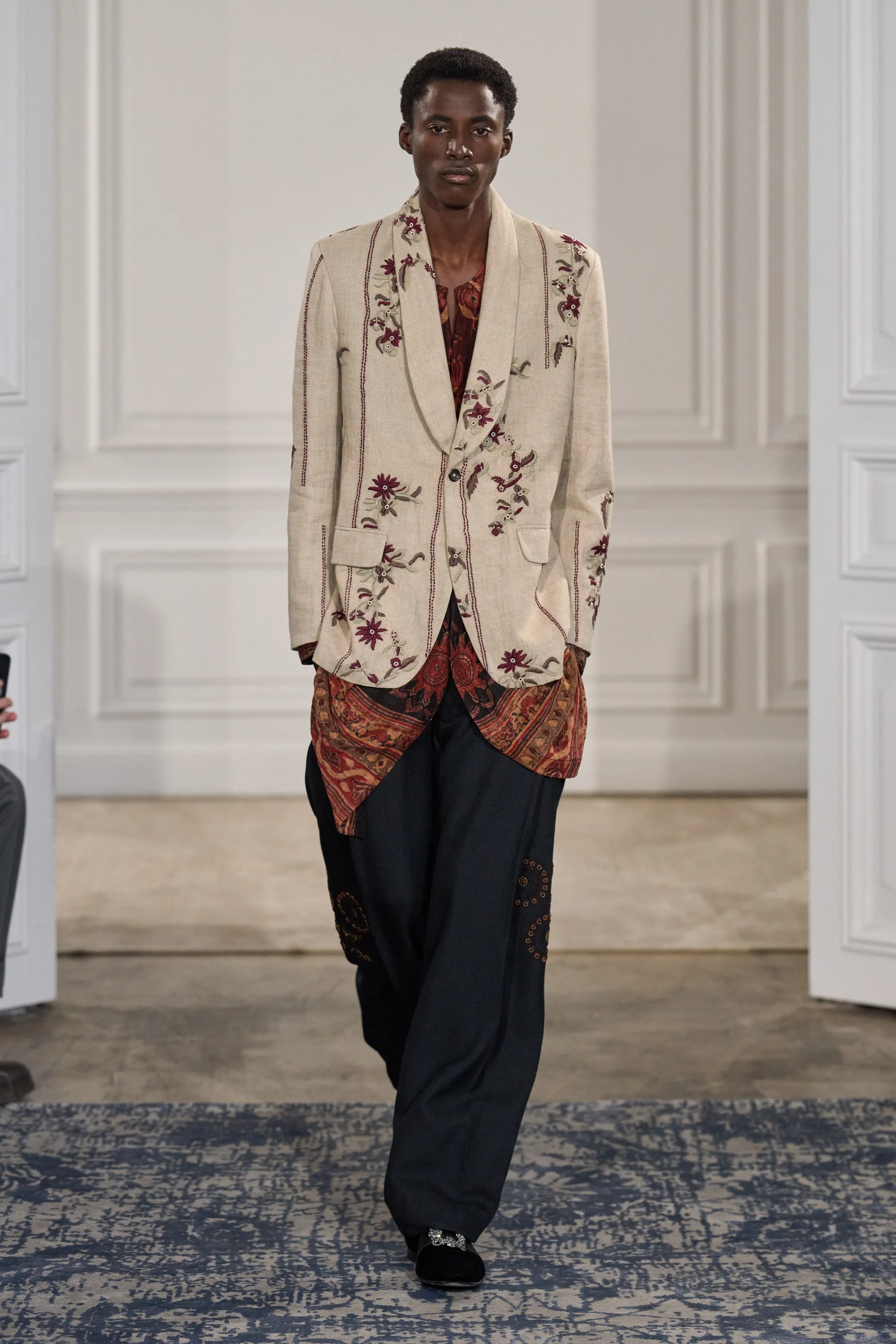
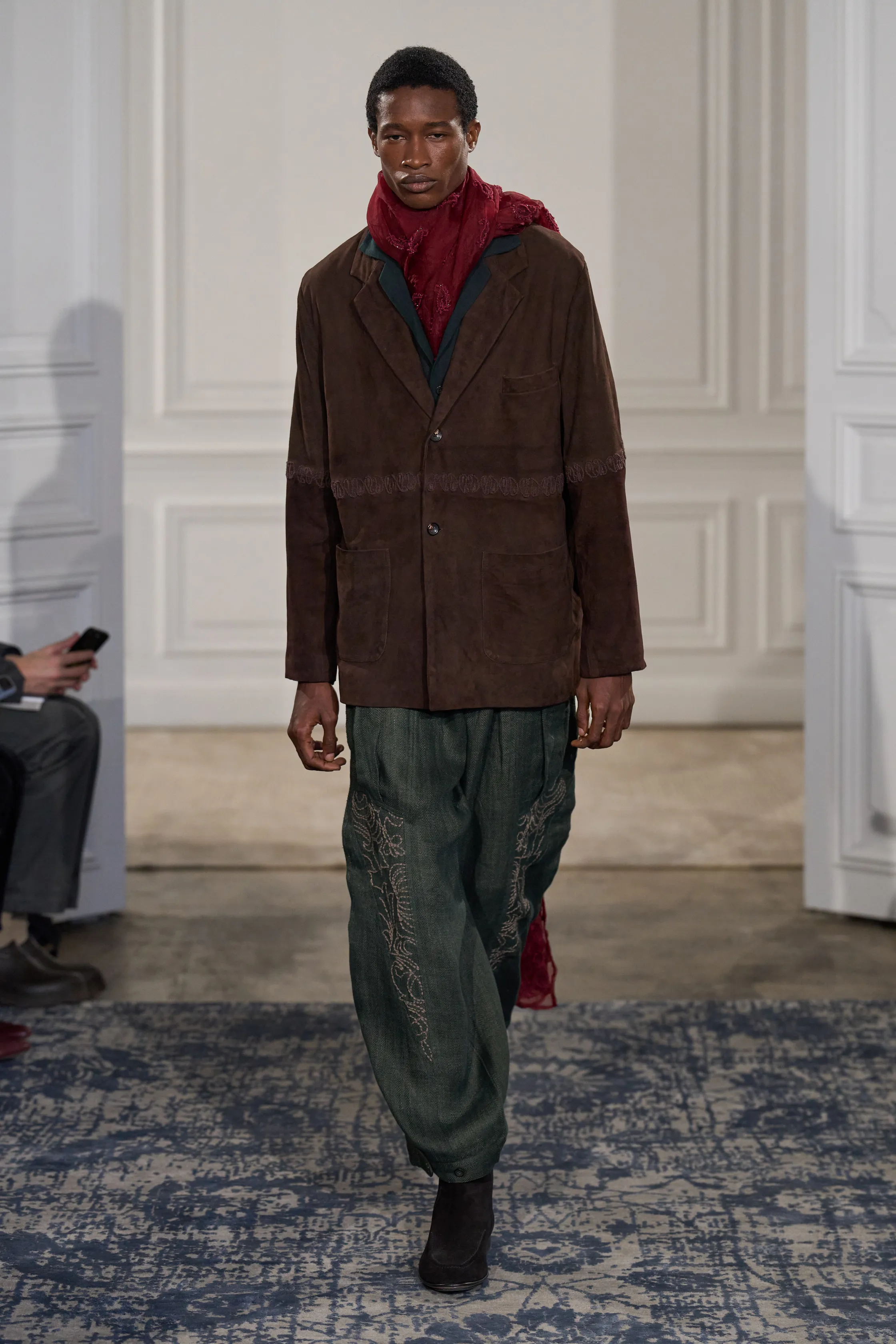
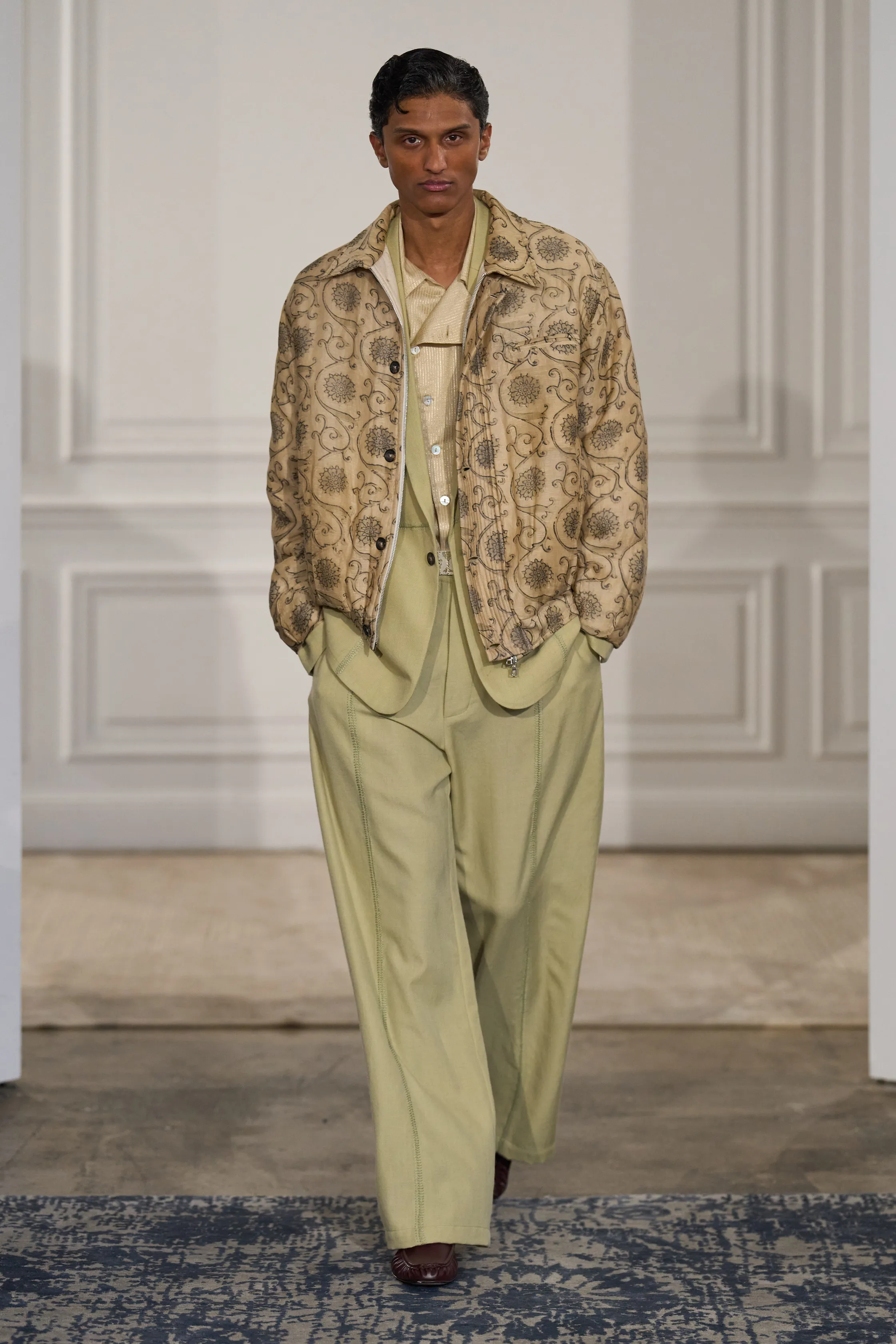
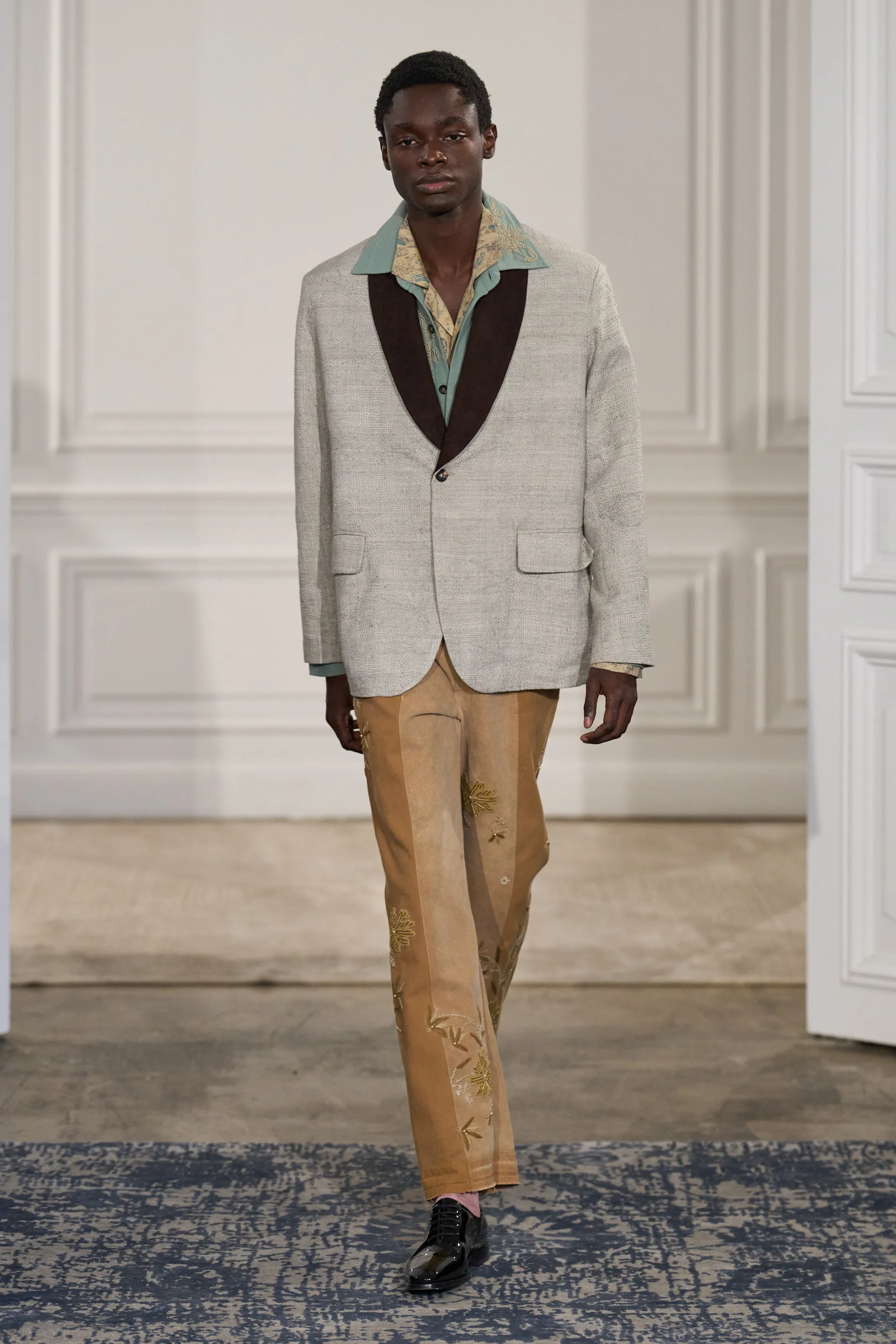
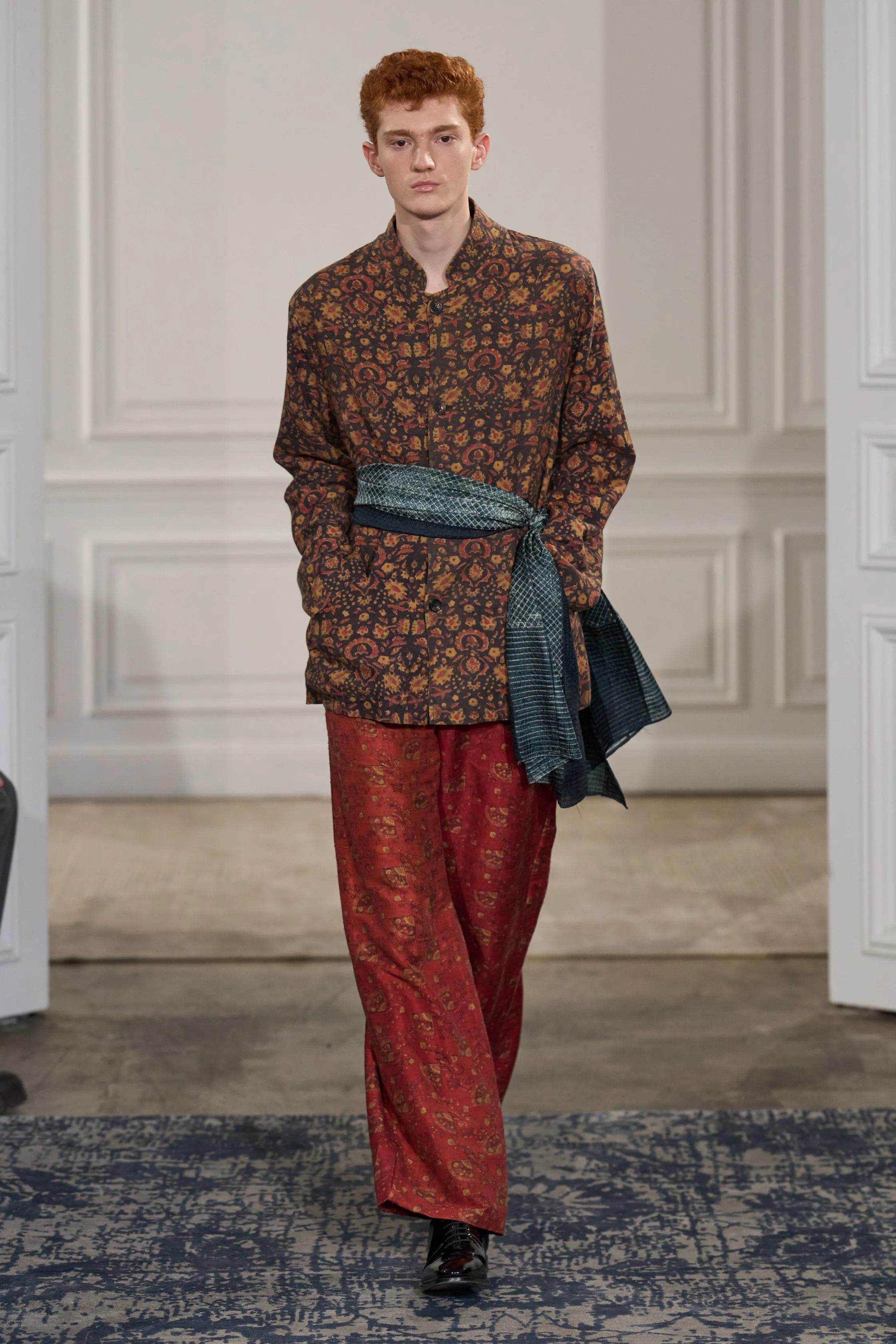
Outerwear stands out. A beige barn jacket traced with glittering embroidered vines feels poetic yet grounded, while a pale grey, fully hand-embroidered kantha tuxedo jacket reimagined as formalwear through a craft-first lens. The palette moves confidently between mango-toned silks, earthy cottons, indigo corduroy, and burgundy suede - luxurious, tactile, and deeply intentional.
What makes the fall 2026 collection compelling is its refusal to treat Indian craft as archival. Historic techniques are brought forward with urgency, reframed as tools for modern dressing rather than cultural artifacts. Styled with restraint, the clothes feel contemporary and lived-in, designed for real bodies and real lives.
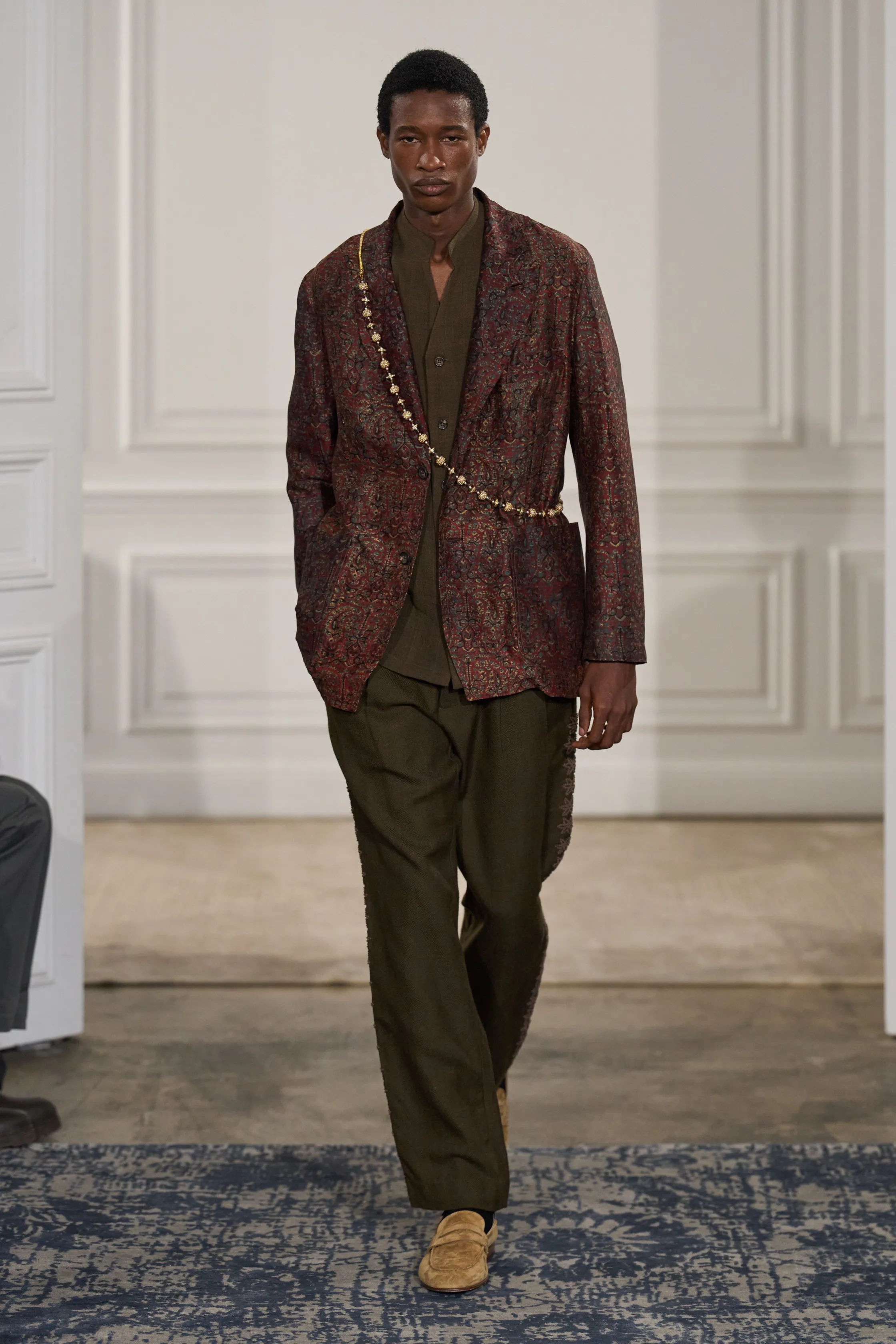
Kartik Research continues to prove that craft, when handled with intelligence and conviction, doesn’t need translation. This was fashion as relevance - not symbolism for symbolism’s sake, but clothes that carry belief, labor, and modernity in equal measure.
images courtesy of Kartik Research
That connection between clothing and conviction had already surfaced earlier this month, when Zohran Mamdani took his oath as New York City’s mayor wearing a brown eri silk tie from Kartik Research. It was a quiet, but potent, moment - one that spoke to core values, cultural lineage, and intention rather than optics. For Kumra, it wasn’t a stunt but a natural alignment, reinforcing how his work resonates far beyond the runway.
With global trade pressures threatening the livelihoods of the scores of Indian artisans he collaborates with, this season felt like a deliberate doubling down on why Kartik Research exists in the first place. The clothes are richer, denser, and more expressive than before.
Tailored trousers embroidered with shimmering floral motifs and patchwork paisley are boldly placed across the body. Silk jackets and cotton shirting become canvases for intricate handwork, while still maintaining ease and wearability. Kumra continues to walk that tightrope well: decorative without drifting into ceremony, expressive without becoming costume.
Outerwear stands out. A beige barn jacket traced with glittering embroidered vines feels poetic yet grounded, while a pale grey, fully hand-embroidered kantha tuxedo jacket reimagined as formalwear through a craft-first lens. The palette moves confidently between mango-toned silks, earthy cottons, indigo corduroy, and burgundy suede - luxurious, tactile, and deeply intentional.
What makes the fall 2026 collection compelling is its refusal to treat Indian craft as archival. Historic techniques are brought forward with urgency, reframed as tools for modern dressing rather than cultural artifacts. Styled with restraint, the clothes feel contemporary and lived-in, designed for real bodies and real lives.
Kartik Research continues to prove that craft, when handled with intelligence and conviction, doesn’t need translation. This was fashion as relevance - not symbolism for symbolism’s sake, but clothes that carry belief, labor, and modernity in equal measure.
images courtesy of Kartik Research


Must Reads
Must Reads


we are MOLTN
●
we are MOLTN
●
we are MOLTN
●
we are MOLTN
●
we are MOLTN
●
we are MOLTN
●
we are MOLTN
●
we are MOLTN
●
we are MOLTN
●
we are MOLTN
●
we are MOLTN
●
Subscribe to MOLTN

© We Are MOLTN
2026
we are MOLTN
●
we are MOLTN
●
we are MOLTN
●
we are MOLTN
●
we are MOLTN
●
we are MOLTN
●
we are MOLTN
●
we are MOLTN
●
we are MOLTN
●
we are MOLTN
●
we are MOLTN
●
Subscribe to MOLTN
© We Are MOLTN
2026
we are MOLTN
●
we are MOLTN
●
we are MOLTN
●
we are MOLTN
●
we are MOLTN
●
we are MOLTN
●
we are MOLTN
●
we are MOLTN
●
we are MOLTN
●
we are MOLTN
●
we are MOLTN
●
Subscribe to MOLTN
© We Are MOLTN
2026