
Inside Wāpasī: AMPM's Quietest, Most Personal Store Yet
Lifestyle
•
August 20, 2026

Pavan Premaney
Chief Editor

Priyanka Modi built her new Kala Ghoda flagship to feel like her own living room, and after seven years away from Mumbai, that's exactly the point.
AMPM's return to Mumbai after seven years arrives under the name Wāpasī, Hindi for "return," and anyone expecting a splashy reintroduction to the city is going to be disappointed in the best possible way. There is no confetti energy here. No oversized signage screaming for attention on a street already crowded with heritage architecture and louder brands. What there is, instead, is a store that seems almost reluctant to call itself one.
That reluctance is the point.
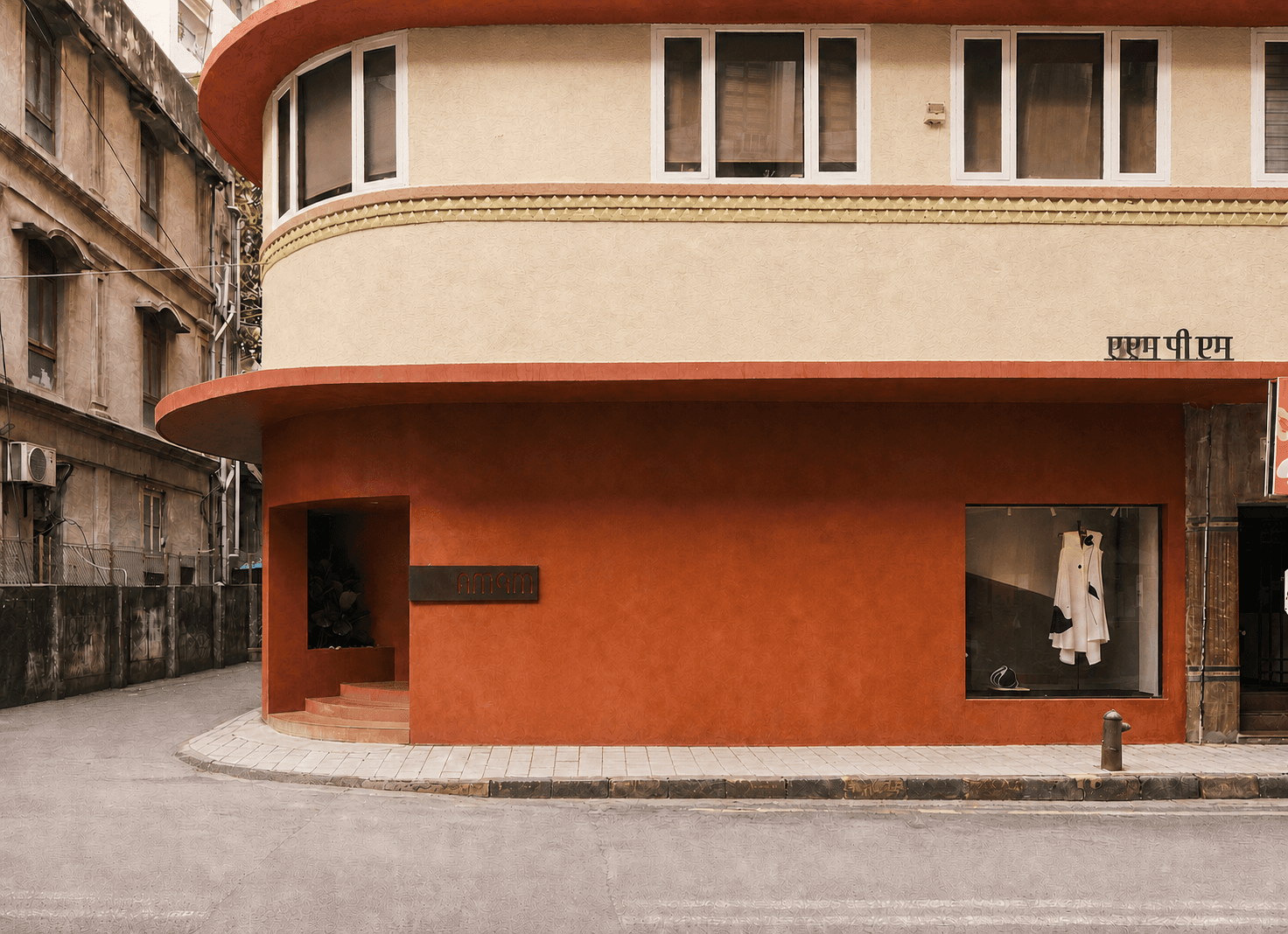

According to the brand's own concept note, the store did not begin as a retail project at all. It began with Priyanka Modi's personal practice of Sadhana, specifically Gyan Marg, a path of self-inquiry that had her turning the same hard questions on AMPM that she was turning on herself. What actually mattered. What the brand had always meant to be, underneath twenty-five years of collections and expansion. What was worth keeping.
The answer, apparently, was almost everything and also almost nothing. AMPM stripped back to what its team now calls "quiet luxury for the everyday," rooted in craftsmanship and built to make modern life easier rather than more complicated. From a label that has spent this long figuring out what it actually wants to say, it reads more like a mission statement than a slogan.
The Kala Ghoda space is where that thinking gets a physical form, and the details matter more than the square footage. The entire shell runs on a single material, which sounds austere on paper but reportedly plays out as calm rather than cold. A sculptural staircase, clad in that same material, anchors the centre of the store and doubles as the kind of visual moment that photographs well without trying to. Wood shows up next, deliberately, to warm up what would otherwise be a stark canvas, and the brief for that choice is oddly personal: AMPM says the wood elements were built to recreate the feeling of Modi's own lounge at home. Benches. Low tables. Corners built for sitting rather than scanning racks.
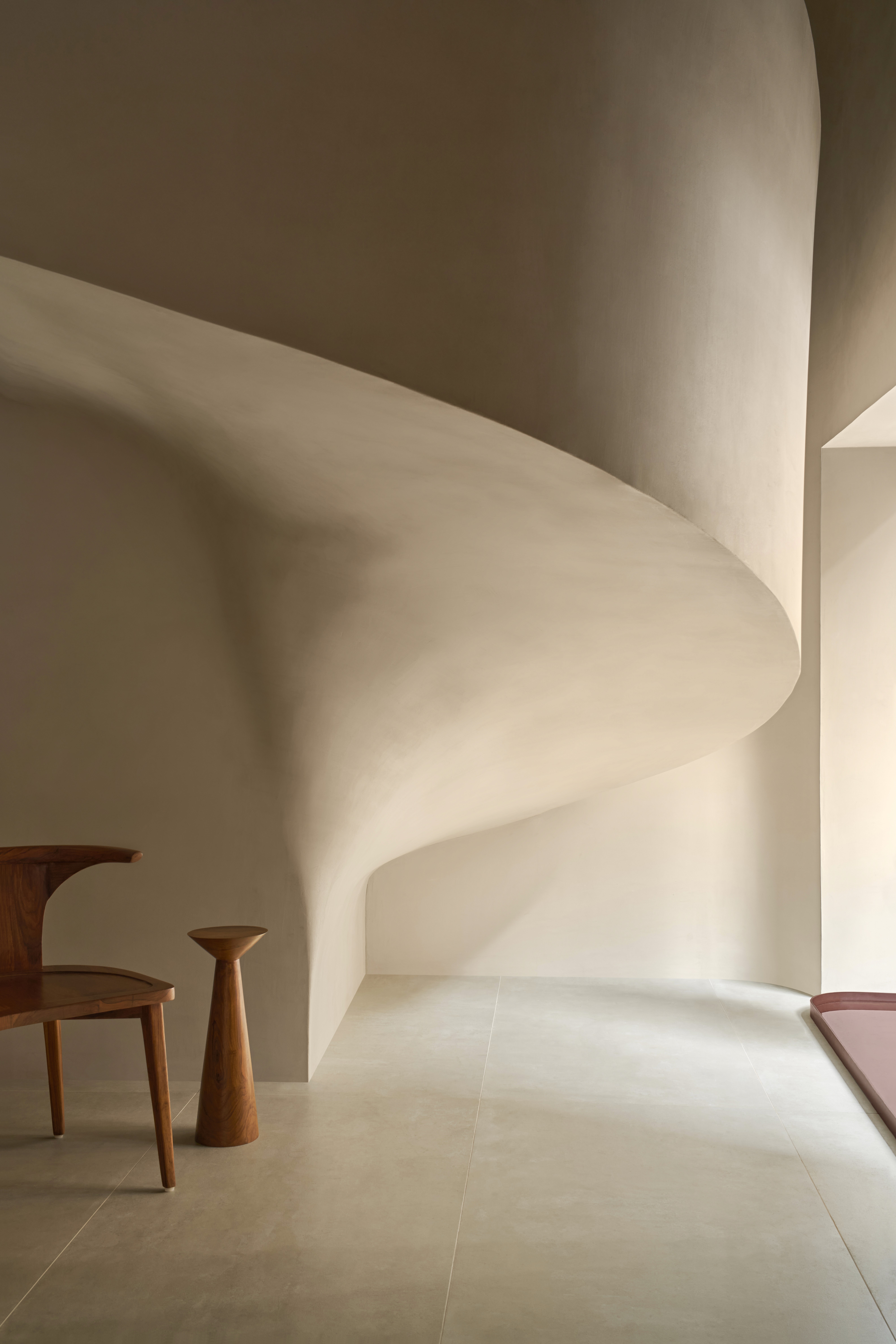

Merchandise density has been dialled down on purpose too. Fewer pieces on the floor, more room around each one. It's a decision that costs a brand real revenue per square foot in the short term, and it only makes sense if you actually believe, the way AMPM claims to, that the garments deserve to be seen properly rather than browsed past. The windows facing the street carry the same logic outward: designed to protect the privacy of whoever is inside while still giving passersby just enough of a glimpse to wonder what they're missing.
None of this is new territory for luxury retail as a concept. Quiet, considered, discovery-led spaces have become something of a genre. What separates Wāpasī from a well-executed trend piece is the specificity of its origin story. This isn't a mood board of minimalism borrowed from European flagship stores. It's a return to one woman's actual home, filtered through a personal philosophy she's been sitting with for years, applied to a brand that has existed long enough in Mumbai to have something to come back to.
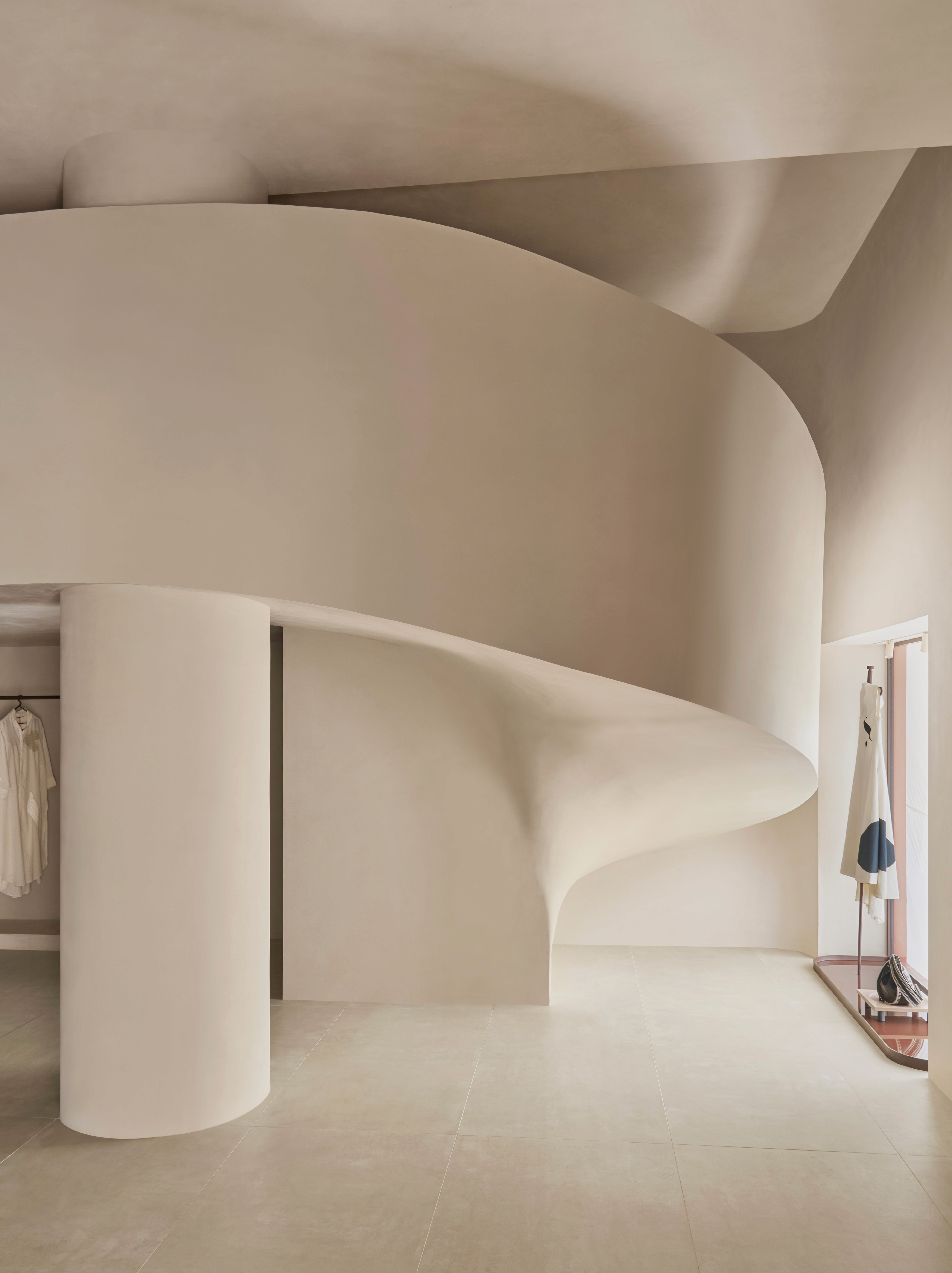
Whether Wāpasī reads as a homecoming or a reinvention probably depends on how long you've been watching AMPM. Either way, the brand isn't asking Bombay to show up for a launch. It's asking the city to slow down, take a seat on one of those benches, and stay a while. For a market this fast-moving, that's the more interesting bet.
Wāpasī is now open at Kala Ghoda, Mumbai.
AMPM's return to Mumbai after seven years arrives under the name Wāpasī, Hindi for "return," and anyone expecting a splashy reintroduction to the city is going to be disappointed in the best possible way. There is no confetti energy here. No oversized signage screaming for attention on a street already crowded with heritage architecture and louder brands. What there is, instead, is a store that seems almost reluctant to call itself one.
That reluctance is the point.
According to the brand's own concept note, the store did not begin as a retail project at all. It began with Priyanka Modi's personal practice of Sadhana, specifically Gyan Marg, a path of self-inquiry that had her turning the same hard questions on AMPM that she was turning on herself. What actually mattered. What the brand had always meant to be, underneath twenty-five years of collections and expansion. What was worth keeping.
The answer, apparently, was almost everything and also almost nothing. AMPM stripped back to what its team now calls "quiet luxury for the everyday," rooted in craftsmanship and built to make modern life easier rather than more complicated. From a label that has spent this long figuring out what it actually wants to say, it reads more like a mission statement than a slogan.
The Kala Ghoda space is where that thinking gets a physical form, and the details matter more than the square footage. The entire shell runs on a single material, which sounds austere on paper but reportedly plays out as calm rather than cold. A sculptural staircase, clad in that same material, anchors the centre of the store and doubles as the kind of visual moment that photographs well without trying to. Wood shows up next, deliberately, to warm up what would otherwise be a stark canvas, and the brief for that choice is oddly personal: AMPM says the wood elements were built to recreate the feeling of Modi's own lounge at home. Benches. Low tables. Corners built for sitting rather than scanning racks.
Merchandise density has been dialled down on purpose too. Fewer pieces on the floor, more room around each one. It's a decision that costs a brand real revenue per square foot in the short term, and it only makes sense if you actually believe, the way AMPM claims to, that the garments deserve to be seen properly rather than browsed past. The windows facing the street carry the same logic outward: designed to protect the privacy of whoever is inside while still giving passersby just enough of a glimpse to wonder what they're missing.
None of this is new territory for luxury retail as a concept. Quiet, considered, discovery-led spaces have become something of a genre. What separates Wāpasī from a well-executed trend piece is the specificity of its origin story. This isn't a mood board of minimalism borrowed from European flagship stores. It's a return to one woman's actual home, filtered through a personal philosophy she's been sitting with for years, applied to a brand that has existed long enough in Mumbai to have something to come back to.
Whether Wāpasī reads as a homecoming or a reinvention probably depends on how long you've been watching AMPM. Either way, the brand isn't asking Bombay to show up for a launch. It's asking the city to slow down, take a seat on one of those benches, and stay a while. For a market this fast-moving, that's the more interesting bet.
Wāpasī is now open at Kala Ghoda, Mumbai.


Must Reads
Must Reads


we are MOLTN
●
we are MOLTN
●
we are MOLTN
●
we are MOLTN
●
we are MOLTN
●
we are MOLTN
●
we are MOLTN
●
we are MOLTN
●
we are MOLTN
●
we are MOLTN
●
we are MOLTN
●
Subscribe to MOLTN

© We Are MOLTN
2026
we are MOLTN
●
we are MOLTN
●
we are MOLTN
●
we are MOLTN
●
we are MOLTN
●
we are MOLTN
●
we are MOLTN
●
we are MOLTN
●
we are MOLTN
●
we are MOLTN
●
we are MOLTN
●
Subscribe to MOLTN
© We Are MOLTN
2026
we are MOLTN
●
we are MOLTN
●
we are MOLTN
●
we are MOLTN
●
we are MOLTN
●
we are MOLTN
●
we are MOLTN
●
we are MOLTN
●
we are MOLTN
●
we are MOLTN
●
we are MOLTN
●
Subscribe to MOLTN
© We Are MOLTN
2026